
Table of Contents:
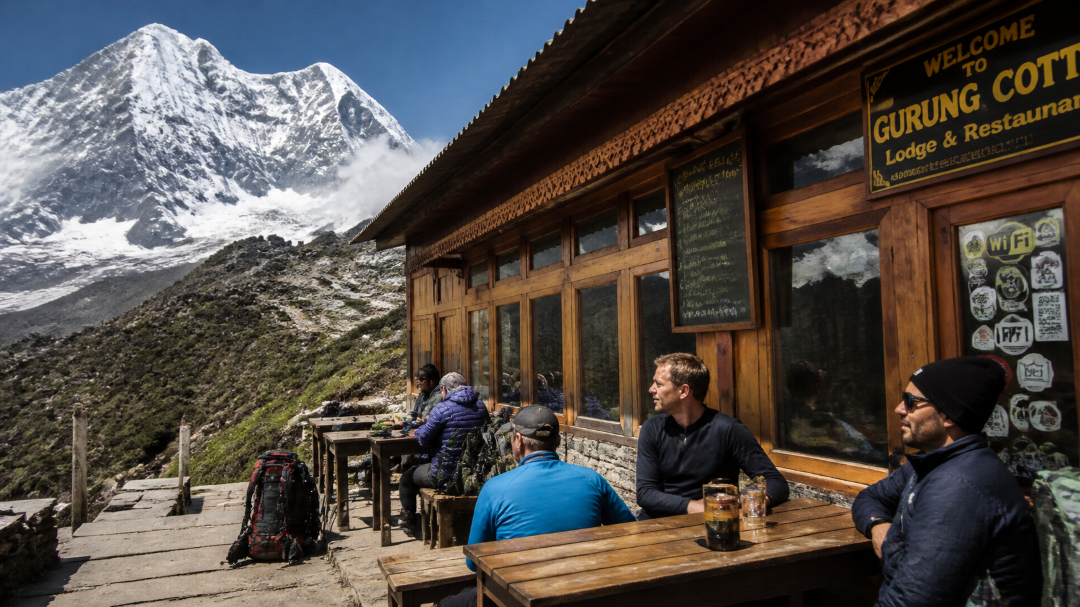
The Nepal teahouse trekking experience is the most popular way to walk in the Himalayas, and it is easy to see why. Instead of camping in tents, you sleep in family-run mountain lodges, eat freshly cooked meals beside a warm stove and meet the people who actually live along the trail. It is real adventure, with a roof over your head and a cup of hot ginger tea waiting at the end of every day.
Whether you are planning the Everest Base Camp Trek, the Annapurna Base Camp Trek or a quieter route, knowing what the Nepal teahouse trekking experience looks like in practice helps you pack better, budget realistically and enjoy every day on the trail. This guide covers the rooms, the food, the daily rhythm, the costs, the safety basics and the small habits that make you a welcome guest in mountain villages.

1. What Is Teahouse Trekking in Nepal?
Teahouse trekking is a trekking style in which travellers stay in locally owned lodges along established trails. These lodges are called teahouses because they began as simple places where porters, traders and pilgrims stopped for tea. Today they provide a bed, hot meals and a warm common room for trekkers after a long day of walking.
On a camping trek, a crew carries tents, kitchen equipment and food, and the group sleeps in a campsite. On a teahouse trek you carry only a daypack (or your guide and porter team carries the rest), walk from village to village and use the lodges that are already there. This keeps your costs lower, your luggage lighter and your contact with local communities much closer, which is why the Nepal teahouse trekking experience suits first-time trekkers so well.
Popular routes for teahouse trekking in Nepal include:
- Everest Base Camp Trek
- Annapurna Base Camp Trek
- Ghorepani Poon Hill Trek
- Langtang Valley Trek
- Manaslu Circuit Trek
Facilities change with the region, the village and the altitude, so the Nepal teahouse trekking experience on one trail can feel quite different from another.
| Feature | Teahouse Trek | Camping Trek |
|---|---|---|
| Accommodation | Simple lodge rooms | Tents at campsites |
| Meals | Cooked at the lodge from a set menu | Cooked by a camp kitchen crew |
| Staff needed | Fewer | Larger crew of cooks, helpers and porters |
| Cost | Generally lower | Generally higher |
| Local interaction | High, you stay in village homes and lodges | Lower, you stay in a separate camp |
| Best for | Most trekkers on established routes | Remote areas with few or no lodges |
2. What Does a Typical Day on a Nepal Teahouse Trek Look Like?
Every day of the Nepal teahouse trekking experience starts early. The mornings are usually the clearest, and the mountains often hide behind cloud by afternoon, so most groups leave soon after breakfast. After eating, you pack your daypack, settle your bill if you are moving on, and start walking towards the next village.
The schedule varies with the route, the weather and the walking distance, but a normal day looks like this:
| Time | Daily Activity |
|---|---|
| 6:00–7:00 AM | Wake up and enjoy the mountain views |
| 7:00–8:00 AM | Breakfast at the teahouse |
| 8:00 AM–12:00 PM | Trek towards the next destination |
| 12:00–1:00 PM | Lunch break at a trailside lodge |
| 1:00–3:00 PM | Continue walking |
| 3:00–4:00 PM | Arrive at the next teahouse and choose a room |
| 4:00–6:00 PM | Rest, explore the village or enjoy the scenery |
| 6:00–8:00 PM | Dinner, tea and conversation in the dining room |
Trekkers usually walk five to seven hours a day, with plenty of tea stops. Days on high passes start much earlier, sometimes before sunrise, so you cross before the wind and afternoon weather build up. Most people are asleep by 8:30 or 9:00 PM, because the walking, the altitude and the cold all make an early night easy.
The best part of this rhythm is how much changes along the way. In a single week you can pass through rhododendron forest, terraced farmland, suspension bridges, stone-walled villages and open alpine valleys.
3. What Is the Food Like in Nepalese Teahouses?
Food is a big part of the Nepal teahouse trekking experience. Almost every lodge serves a printed menu with traditional Nepali dishes and a few familiar international choices, all cooked fresh after you order. At busy times the kitchen can be slow, so order dinner when you arrive rather than waiting until you are hungry.
Common meals include:
- Dal bhat: rice, lentil soup, vegetable curry and pickles, usually with free refills.
- Tibetan bread: a fried bread eaten at breakfast, often with honey or jam.
- Noodles: served as soup or fried.
- Fried rice and momos: filling and widely available on popular trails.
- Soups: garlic, vegetable and noodle soups are popular warm-ups, and garlic soup is a long-standing favourite at altitude.
- Pancakes, porridge and eggs: common breakfast choices.
Dal bhat is the trekker favourite because it is filling, balanced and offers refills, which is why guides and porters rely on it every day. Vegetarian options are easy to find, and meat is often best avoided at higher altitudes because it may have been carried for days without refrigeration. Menus shrink and prices rise as you climb, since every supply has to come in by porter, mule or yak.

4. What Are Teahouse Rooms and Facilities Like?
Rooms are the part of the Nepal teahouse trekking experience that surprises first-timers most. Teahouse accommodation is simple and practical. Most lodges offer twin-sharing rooms with two single beds, a mattress, a pillow and a blanket. The walls are often thin, and the rooms are usually unheated. Only the dining room has a stove, so that is where trekkers gather in the evening.
Depending on the lodge, you may find:
- Basic private or shared rooms.
- Shared bathrooms, with squat or Western-style toilets, in many locations.
- Hot showers at some lodges for an additional charge.
- A dining room with a central stove, usually fuelled by wood, yak dung or gas.
- Charging points, sometimes for an extra fee.
- Wi-Fi in selected villages and lodges, often paid and slow.
Do not expect hotel-style luxury in remote mountain areas. The purpose of a teahouse is to give you a warm, safe and comfortable place to rest. To get a feel for how comfort changes between regions, use this quick comparison:
| Region | What to Expect |
|---|---|
| Everest | Well-established lodges and bakeries in the lower villages. Prices rise steadily with altitude, and Wi-Fi, charging and hot showers usually cost extra. |
| Annapurna | Some of the most developed lodges in Nepal, with a wide choice of rooms and menus, especially on the Ghorepani Poon Hill route. |
| Langtang | Friendly, modest lodges in a rebuilt valley, with simpler facilities as you go higher. |
| Manaslu | More basic lodges and fewer choices, in a restricted area that requires special permits and a licensed guide. |
5. Is Hot Water Available During Teahouse Trekking?
Hot showers are available in some teahouses, but they are not guaranteed everywhere. In popular regions, many lodges heat water with gas or solar systems. In remote and higher locations, hot water may be limited, and at the highest villages cold temperatures can make a shower unattractive anyway.
Hot water is a small part of the Nepal teahouse trekking experience, and most teahouses charge an extra fee for a hot shower. Carry wet wipes, a small quick-dry towel and basic hygiene supplies as an alternative. A bucket of hot water from the kitchen is another option in some lodges. Never plan on a shower after arriving late on a cold afternoon, because staying warm and dry matters more than staying perfectly clean.
6. How Much Does Teahouse Accommodation Cost?
The cost of the Nepal teahouse trekking experience depends on the trekking region, the altitude, the season and the facilities. At lower elevations rooms can be very inexpensive, and some lodges give low room rates to guests who also eat their meals there. Higher up, prices increase because supplies are carried in on foot or by animal.
Your total budget should also consider:
- Accommodation.
- Breakfast, lunch and dinner.
- Drinking water, and the cost of boiled or treated water.
- Hot showers.
- Charging facilities and Wi-Fi.
- Trekking permits and entry fees.
- Guide and porter costs, where applicable.
- Tips for your trekking team.
Carry enough cash in Nepali rupees, preferably in small notes, because ATMs are unreliable once you leave the larger towns and cards are rarely accepted in the mountains. For an accurate budget, check the details of your selected package and read our guide to trekking permits and entry fees. Prices can change with the season and the location.

7. Do You Need to Book Teahouses in Advance?
Booking requirements depend on the route and the season. During the busy spring and autumn months, popular villages such as Namche Bazaar, Ghorepani and Dhunche can fill up, and the last lodge before a high pass is often the first to sell out. Reserving rooms ahead of time helps you avoid long searches in the dark or sleeping in a dining room.
On quieter routes or during less crowded months, your guide can usually arrange rooms a day ahead by phone or through the lodge network. If you are trekking independently, research your route and sleeping stops before you set out, and keep your plans flexible in case of weather delays. For restricted or regulated areas, follow the permit and guide requirements that currently apply. Our team can confirm these for your dates.
8. What Should You Pack for a Teahouse Trek?
Packing well makes the Nepal teahouse trekking experience far more comfortable. You do not need to carry everything you own. Focus on practical clothing, personal essentials and equipment suited to the route and the season. A good rule is to pack light, since every extra kilogram feels heavier at altitude.
Useful packing essentials include:
- Comfortable, broken-in trekking boots.
- Warm layers and thermal clothing.
- A down jacket for evenings and early starts.
- Waterproof jacket and trousers.
- Trekking socks and a spare pair for the evening.
- Gloves and a warm hat.
- A sleeping bag suitable for the expected temperatures.
- Reusable water bottle and water purification tablets or a filter.
- Headlamp or flashlight with spare batteries.
- Personal toiletries, toilet paper and hand sanitiser.
- Sunscreen, lip balm and sunglasses.
- Basic first-aid supplies and any personal medication.
- Power bank and charging cables.
- Trekking poles, earplugs and sandals for the lodge.
Adjust your list for the altitude, weather and length of your trek. You can find a complete breakdown in our trekking gear checklist with 45 essential items for Nepal, and you can rent or buy any missing items in Thamel before you leave Kathmandu.
9. Is Teahouse Trekking Suitable for Beginners?
Yes, the Nepal teahouse trekking experience suits beginners who prepare sensibly. Villages come frequently, you never need to carry food or a tent, and help is always nearby. The difficulty still depends on the destination, the altitude, the daily distance and the trail conditions.
For first-time trekkers, a route such as Ghorepani Poon Hill (about 3,210 metres at its highest) is a gentle introduction to Himalayan trekking. Longer and higher journeys such as Everest Base Camp (about 5,364 metres) and the Manaslu Circuit (crossing the Larkya La at about 5,160 metres) demand more fitness, more time and more careful planning.
Choose a trek that matches your experience, available time and fitness. Start light training at least two months before you travel, with hill walking, stair climbing and long days on your feet. If you are unsure, our guide to the top 10 Himalayan trekking routes in Nepal can help you compare options for different skill levels.
10. How Do You Stay Safe During a Teahouse Trek?
Safety comes first in every Nepal teahouse trekking experience. Before you start, understand the route, check the weather, and make sure your permits, insurance and local arrangements are in place.
Keep these points in mind:
- Follow a sensible acclimatisation schedule and take rest days at higher altitude.
- Above about 3,000 metres, avoid raising your sleeping altitude by more than roughly 500 metres a day.
- Stay hydrated throughout the trek and drink only boiled, filtered or treated water.
- Do not rush towards higher altitudes, and never climb higher with worsening symptoms.
- Follow your guide’s safety advice.
- Check the weather and trail conditions each morning.
- Carry suitable clothing and equipment.
- Learn the symptoms of altitude sickness, which include headache, nausea, dizziness and poor sleep.
- Take out travel insurance that covers high-altitude trekking and emergency helicopter evacuation.
- Seek professional medical advice if you experience concerning symptoms, and descend if they worsen.
Read the Nepal Tourism Board’s mountain safety guidance before your trip, and learn more about hypoxia and altitude sickness and travel insurance for trekking on our website.
11. What Makes the Nepal Teahouse Trekking Experience Special?
Teahouse trekking is more than walking through mountains. It lets you experience local culture and daily life in Himalayan communities, and it puts your money directly into the villages you pass through. Many trekkers say the people they met mattered as much as the peaks.
Along the route, you may:
- Meet local families and lodge owners.
- Taste traditional Nepali food cooked from local ingredients.
- Explore traditional mountain villages, monasteries and prayer-flag ridges.
- Experience local customs and warm hospitality.
- Enjoy sunrise views over spectacular Himalayan landscapes.
- Learn about the lifestyle of mountain communities.
Teahouse Etiquette: How to Be a Good Guest
A few simple habits improve your Nepal teahouse trekking experience and show respect for your hosts:
- Eat your meals at the lodge where you sleep, since this is how teahouses keep room prices low.
- Greet people with a smile and a “Namaste”.
- Walk clockwise around stupas, prayer wheels and mani walls.
- Step to the uphill side of the trail when yaks and mules pass.
- Ask permission before photographing people or their homes.
- Dress modestly in villages and monasteries.
- Carry out your rubbish, and reduce plastic by using a refillable bottle with purification.
Every village and every region offers something different, which is why the Nepal teahouse trekking experience stays memorable long after the trek is over.
12. Best Time for Teahouse Trekking in Nepal.
The best time for your Nepal teahouse trekking experience depends on your destination and the weather you prefer. Check the latest conditions before choosing your dates, and read our guide to the trekking seasons in Nepal for a region-by-region breakdown.
Spring (March–May)
Spring is a popular trekking season. Many trails offer pleasant daytime temperatures, blooming rhododendrons and good mountain views, although afternoon haze and cloud are possible.
Autumn (September–November)
Autumn is the other peak season, known for stable weather, crisp air and clear mountain views. Popular trails and teahouses can be very busy, so book early.
Winter (December–February)
Winter trekking is possible on selected routes. Expect cold nights, short days and quiet trails, but snow can affect trail access and some lodges at higher elevations may close.
Monsoon (June–August)
The monsoon brings frequent rain, leeches at low altitude, slippery trails and possible travel disruptions. Some rain-shadow regions, such as Upper Mustang and Dolpo, can offer much drier conditions.

Final Thoughts: Your Nepal Teahouse Trekking Experience Awaits.
The Nepal teahouse trekking experience gives you a rare chance to explore the Himalayas while connecting with local communities, enjoying traditional meals and sleeping in welcoming mountain lodges. From the warmth of a village dining room to the sight of snow peaks glowing at sunrise, every day brings something new.
Whether you want a short Himalayan adventure or a longer journey, choosing the right route, preparing properly and understanding teahouse life will make your trek smoother and more enjoyable. If you would like help planning, our local team can recommend routes, arrange permits, guides and porters, and prepare an itinerary that suits your time, budget and fitness.
Ready to explore Nepal’s mountains? Visit The Nepal Trekking Company to discover trekking options, or contact us to start planning your own Nepal teahouse trekking experience.
Frequently Asked Questions (FAQs)
1. What is a teahouse in Nepal?
A teahouse is a locally operated mountain lodge that provides basic accommodation and meals for trekkers along popular trekking routes. Most are run by local families.
2. What should I expect from the Nepal teahouse trekking experience?
Expect simple twin-sharing rooms, shared bathrooms, freshly cooked meals from a set menu and a warm dining room in the evening. Comfort, prices and facilities change with altitude and region, and rooms are usually unheated.
3. Do Nepal teahouses provide blankets?
Most teahouses provide blankets, but availability and quality vary. Carrying a suitable sleeping bag is recommended, especially for higher-altitude treks and colder seasons.
4. Can I get vegetarian food during teahouse trekking?
Yes. Many teahouses offer vegetarian meals, including dal bhat, vegetable noodles, fried rice, soups and potatoes.
5. Is Wi-Fi available in Nepal teahouses?
Wi-Fi is available in some teahouses, particularly on popular routes. Connectivity, speed and additional charges vary by location, so do not rely on it for important work.
6. Can I charge my phone during a teahouse trek?
Many teahouses provide charging facilities, sometimes for an additional fee. Carrying a power bank is a useful backup, and keeping devices warm helps the battery last.
7. Are Nepal teahouses clean?
Standards vary between lodges. Many popular trekking routes have well-established teahouses, but facilities are generally basic in remote mountain villages. Carrying a sleeping bag liner and hand sanitiser helps.
8. Do I need a sleeping bag for teahouse trekking?
A sleeping bag is recommended, particularly during colder seasons and high-altitude treks. Your guide or trekking company can advise on the right type for your route.
9. Is tap water safe to drink on a teahouse trek?
No. Drink only boiled, filtered or treated water. Many lodges sell boiled or filtered water, and purification tablets or a filter bottle are a cheaper and more eco-friendly option than buying bottled water.
10. How much cash should I carry on a teahouse trek?
Carry enough Nepali rupees to cover meals, rooms, showers, charging, snacks and tips for the whole trek, plus a small reserve. ATMs are unreliable in the mountains and cards are rarely accepted. Ask us for a budget estimate for your chosen route.
11. Which is the best teahouse trek in Nepal?
Popular options include Everest Base Camp, Annapurna Base Camp, Langtang Valley and Ghorepani Poon Hill. The best choice for your Nepal teahouse trekking experience depends on your experience, schedule and trekking preferences.


