
Table of Contents:
Ask ten trekkers what a guide does and you will hear ten different answers. Some say “shows you the way.” Others say “carries the tea orders.” The truth is far bigger. Nepal trekking guide responsibilities cover safety, navigation, culture, logistics and people management, all at altitude and often far from the nearest road.

At The Nepal Trekking Company (TNTC), we believe an informed trekker is a confident trekker. This article explains Nepal trekking guide responsibilities in plain language, from the day you land in Kathmandu to the moment you wave goodbye at the airport. If you plan to hire a trekking guide in Nepal, this is what you should expect.
Why a Trekking Guide in Nepal Matters.
Nepal is home to eight of the world’s fourteen highest peaks, as listed in this overview of the eight-thousand-metre mountains. Trails climb through rhododendron forests, cross suspension bridges and rise above 5,000 metres. Weather changes quickly, signs can be scarce, and help may be days away.
Nepal’s rules reflect this reality. Trekking in national parks and conservation areas is regulated, and the government has moved towards requiring trekkers to be accompanied by a licensed trekking guide in protected areas. Rules are updated from time to time, so check the latest information with the Nepal Tourism Board and your trekking company before you travel.
Beyond the rules, a guide makes the trek safer, smoother and far richer. That is the real value behind Nepal trekking guide responsibilities.
7 Core Nepal Trekking Guide Responsibilities at a Glance.
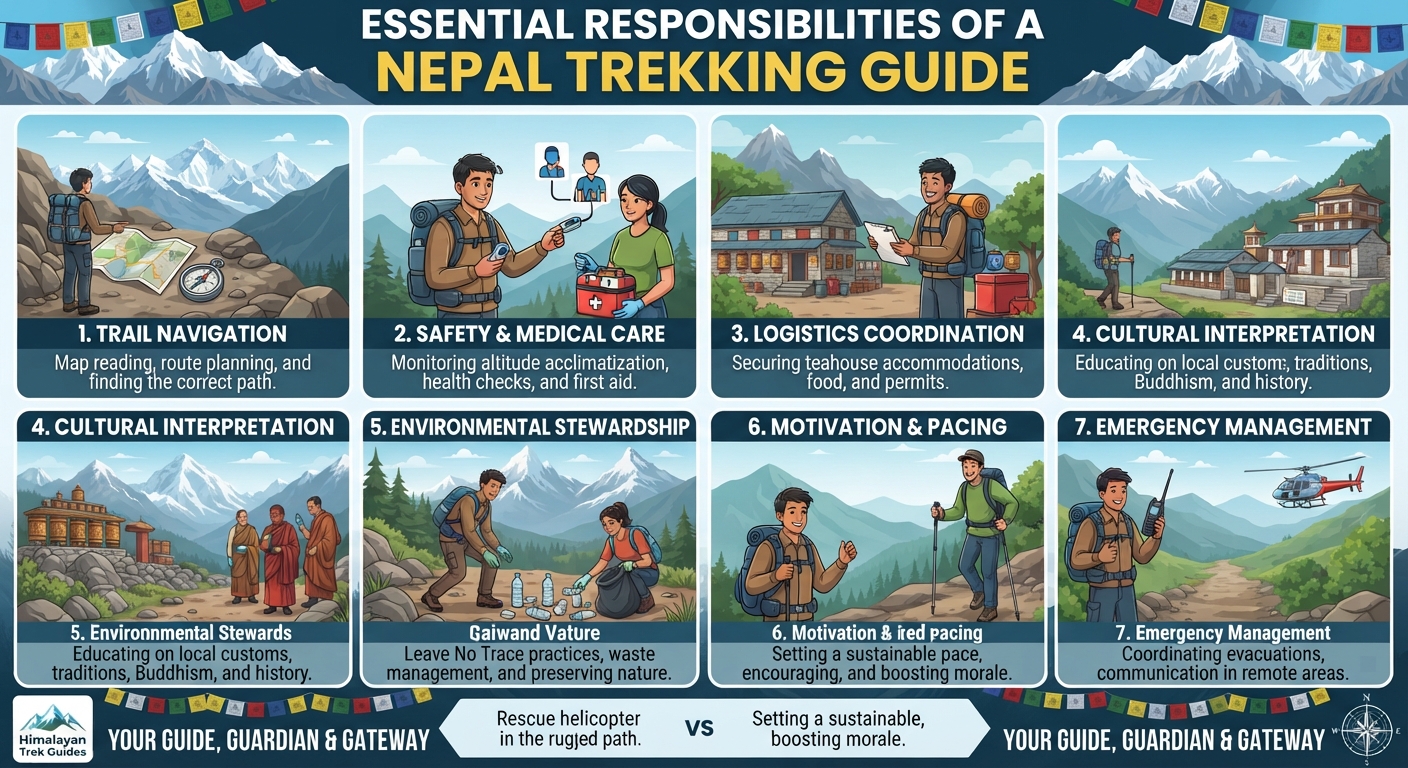
A professional trekking guide in Nepal wears many hats on the same day. In a single morning, one person may act as navigator, medic, translator, cultural storyteller and team leader. The seven main Nepal trekking guide responsibilities are:
- Leading the trek and setting a safe, steady pace for the group.
- Planning the route and adjusting it to weather, trail conditions and your fitness.
- Protecting your health through altitude monitoring and first aid.
- Communicating clearly with trekkers, porters, lodge owners and villagers.
- Sharing local knowledge about culture, religion, food and wildlife.
- Coordinating logistics such as permits, accommodation, meals and transport.
- Handling emergencies calmly, including rescue coordination if needed.
Route Planning and Daily Itinerary Management.
The first of the Nepal trekking guide responsibilities starts long before the first step on the trail. A guide studies the route, the season and the group, then builds a plan that is exciting enough to inspire you and cautious enough to keep you safe.
Before the trek.
- Reviews the itinerary for sensible acclimatization days and realistic daily distances.
- Checks the weather outlook, trail closures, landslide reports and bridge conditions.
- Confirms that permits and entry paperwork are in order.
- Briefs you on gear, daily schedules and what to expect on the trail.
On the trail.
Each morning, the guide reviews the day ahead: distance, elevation gain, trail type and where lunch and tea stops will be. Starting early matters in the Himalayas, because clouds and wind often build by afternoon.
If the weather turns, a landslide blocks the path or someone feels unwell, the guide adapts. That might mean a shorter day, a rest day or an alternative trail. This judgment, built on years of experience, is what separates a licensed trekking guide from a simple map.

Safety, Health and Altitude Management.
Safety is the most important of all Nepal trekking guide responsibilities. Altitude sickness can affect anyone, regardless of age or fitness, and early recognition is critical. You can read more about the condition in this summary of altitude sickness symptoms and prevention. Good Himalayan trekking safety depends on a guide who knows the warning signs.
Altitude monitoring.
- Sets a gradual ascent pace and follows the “climb high, sleep low” principle where possible.
- Checks in with each trekker daily about headaches, nausea, appetite, sleep and energy.
- Uses a pulse oximeter to track oxygen saturation and heart rate.
- Encourages hydration, proper eating and rest.
- Makes the call to stop, rest or descend when symptoms appear. A good guide always puts your safety ahead of the summit or the schedule.
First aid and emergencies.
Licensed guides complete training that includes first aid and mountain safety, and they carry a first aid kit on the trail. They can treat blisters, minor injuries and stomach upsets, and recognise when a situation is serious.
In a real emergency, the guide stays calm, stabilises the person, contacts the office and arranges evacuation by porter, horse or helicopter. Your travel insurance should cover high-altitude evacuation, and your guide will help coordinate the paperwork and communication. This is one of the Nepal trekking guide responsibilities you hope never to need, and will be glad to have.
Food and water safety.
Guides also help you choose safe meals and drinking water along the way. They know which lodges keep clean kitchens and which dishes are best for energy at altitude.
Communication: With You, Locals and the Team.
Communication is a quiet but powerful part of Nepal trekking guide responsibilities. A guide is the link between everyone on the mountain.
- With trekkers: explains the plan, the risks and the reasons behind decisions in clear, friendly English or another shared language.
- With porters and assistants: gives clear directions, shares loads fairly and makes sure everyone is rested, fed and respected.
- With lodge owners and villagers: negotiates rooms, orders meals in advance and helps you connect with local people.
- With the company office: sends updates on progress, weather and any change of plans, so family and staff in Kathmandu know you are safe.
Good communication also means honest feedback. A guide will tell you plainly when you are moving too fast, when you need to eat more or when it is time to turn around.
Local Knowledge: Culture, Language and Trail Wisdom.
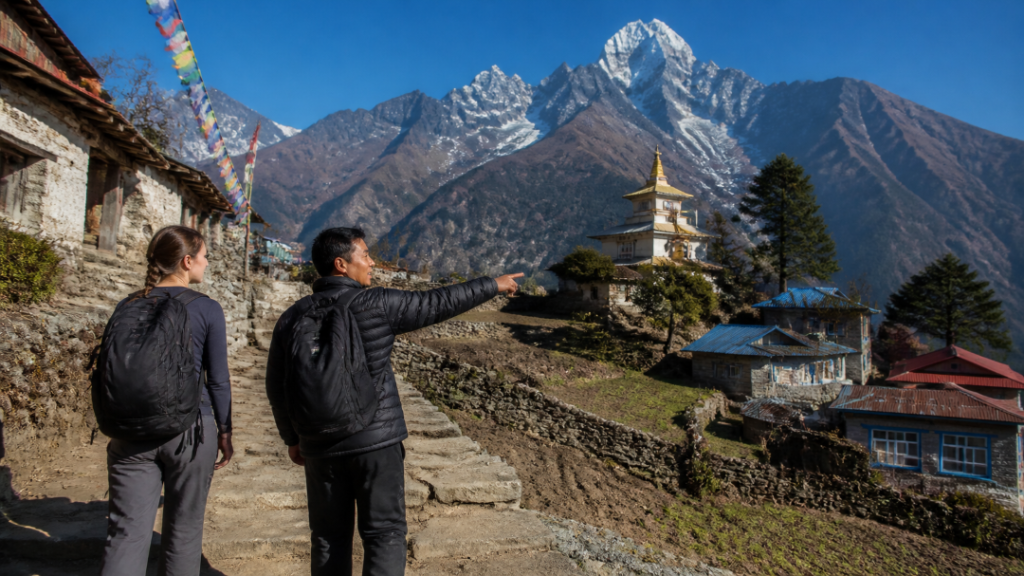
This is where a guide turns a walk into a journey. Many guides grew up in the mountain communities you pass through, so they offer insight no guidebook can match. Sharing that knowledge is among the most loved Nepal trekking guide responsibilities.
- Culture and religion: why prayer flags fly, why you pass mani walls on the left, and what to do at monasteries and shrines.
- Etiquette: how to greet people with “Namaste” or “Tashi Delek,” how to dress respectfully and what to ask before taking photographs.
- Food and lodges: why dal bhat is the best fuel for a long day and which tea houses are worth stopping at.
- Nature and wildlife: the names of peaks, the birds, the trees and the Himalayan animals you might spot.
- Trail secrets: the best viewpoints, quiet side trails and the safest places to cross rivers and slopes.
Language skills matter too. A guide who speaks local languages helps you share stories, buy a cup of tea and understand village life in a way that would be hard to do alone.
Coordination: Porters, Lodges, Permits and Logistics.
Behind every smooth trek is a guide quietly managing dozens of details. These coordination duties are a major part of Nepal trekking guide responsibilities.
- Permits and checkpoints: carries the required documents and registers the group at checkpoints along the route.
- Accommodation: secures rooms in busy seasons, often by calling ahead, so you are not left searching at the end of a long day.
- Meals: arranges meal times and orders so food is ready when the group arrives.
- Porters: organises porter assignments, checks load weights and makes sure staff have suitable clothing and equipment. Responsible operators follow fair-treatment standards, such as those promoted by the Trekking Agencies’ Association of Nepal.
- Transport: works with the office on airport transfers, jeep rides and domestic flights, including backup plans when flights are delayed by weather.
- Budget and payments: handles expenses on the trail transparently, so there are no surprises.
Nepal Trekking Guide Responsibilities: Quick Summary Table.
| Area | What the guide does | Why it matters to you |
|---|---|---|
| Route planning | Builds and adjusts the daily plan using weather, trail and group fitness | A safer, better-paced trek |
| Safety and health | Monitors altitude symptoms, carries first aid, manages emergencies | Early action when something goes wrong |
| Communication | Connects trekkers, porters, villagers and the office | Clear decisions and fewer misunderstandings |
| Local knowledge | Shares culture, history, language and nature insight | A deeper, more meaningful experience |
| Coordination | Manages permits, lodges, meals, porters and transport | A stress-free journey from start to finish |
| Leadership | Sets pace, motivates the group, makes the final call on safety | Confidence on difficult days |
In short, Nepal trekking guide responsibilities protect your health, your time and your experience.
Qualities of a Great Trekking Guide in Nepal.
Certificates matter, but character matters just as much. When we select guides at TNTC, we look for people who can carry out every one of the Nepal trekking guide responsibilities listed above, and who bring these qualities:
- A valid trekking guide licence and recognised training in first aid and mountain safety.
- Years of experience on your specific route and season.
- Strong English or the language of the group.
- Patience, humour and calm leadership under pressure.
- Respect for local culture, the environment and the porters who support every trek.
How to Hire a Trekking Guide in Nepal.
When you hire a trekking guide in Nepal, ask the questions below. A trustworthy operator will answer them openly, and the answers show whether the company takes Nepal trekking guide responsibilities seriously.
- Is the guide a licensed trekking guide, and how many years has he or she led this route?
- What first aid and altitude training has the guide completed?
- Is the guide a direct company employee, or hired at the last minute?
- How are guides and porters paid, insured and equipped?
- What is the emergency and evacuation plan?
A well-treated, well-trained guide delivers a better trek for you, and a fairer livelihood for mountain communities.
Ready to plan your Himalayan adventure with an experienced, licensed team? Explore our trekking packages at The Nepal Trekking Company or contact our team for a free, no-pressure consultation.
Frequently Asked Questions About Nepal Trekking Guide Responsibilities:
What does a trekking guide do in Nepal?
Nepal trekking guide responsibilities include leading the group, planning each day’s route, monitoring health and altitude, communicating with locals and staff, sharing cultural knowledge and coordinating permits, lodges, meals and porters. In an emergency, the guide takes charge of first aid and rescue arrangements.
Do I need a trekking guide in Nepal?
In many popular regions, trekking with a licensed trekking guide is now required or strongly encouraged, especially in national parks and conservation areas. Rules change, so confirm the current requirements for your route with your trekking company before you travel.
What is the difference between a trekking guide and a porter?
A guide leads, navigates, manages safety and handles communication and logistics. A porter carries luggage and supports the team. Nepal trekking guide responsibilities are broader, because they cover decision-making and the safety of the whole group. Some porters grow into porter-guides and later licensed guides as they gain training and experience.
How many trekkers can one guide look after?
This depends on the route and group. Larger groups usually need an assistant guide so that the group can stay safe if someone needs to slow down or descend. Ask your operator about its guide-to-trekker ratio.
Can a guide help with altitude sickness?
Yes. Himalayan trekking safety is a core part of Nepal trekking guide responsibilities. Guides are trained to recognise early symptoms, adjust the pace, use a pulse oximeter and organise descent or evacuation when necessary. They cannot replace a doctor, so share any health conditions before the trek.
Should I tip my trekking guide in Nepal?
Tipping is customary and appreciated, although it is never obligatory. Many groups pool a tip at the end of the trek to thank the guide and the porters. Ask your operator for a sensible range.
What qualifications should a Nepal trekking guide have?
Look for a government-recognised trekking guide licence, first aid and mountain safety training, experience on your chosen route, and good communication skills in your language.
Final Thoughts:
Understanding Nepal trekking guide responsibilities helps you see that a guide is much more than someone who walks in front. A guide is your navigator, safety officer, translator, storyteller and problem solver, all in one.
Choose a licensed trekking guide who is trained, experienced and genuinely cares for you, the team and the mountains. With the right person beside you, the trail becomes safer, the culture comes alive and the Himalayas feel a little closer.
Planning your trek? The Nepal Trekking Company’s licensed guides are ready to help. Get in touch today and let us design a journey that fits your pace, your goals and your dreams.