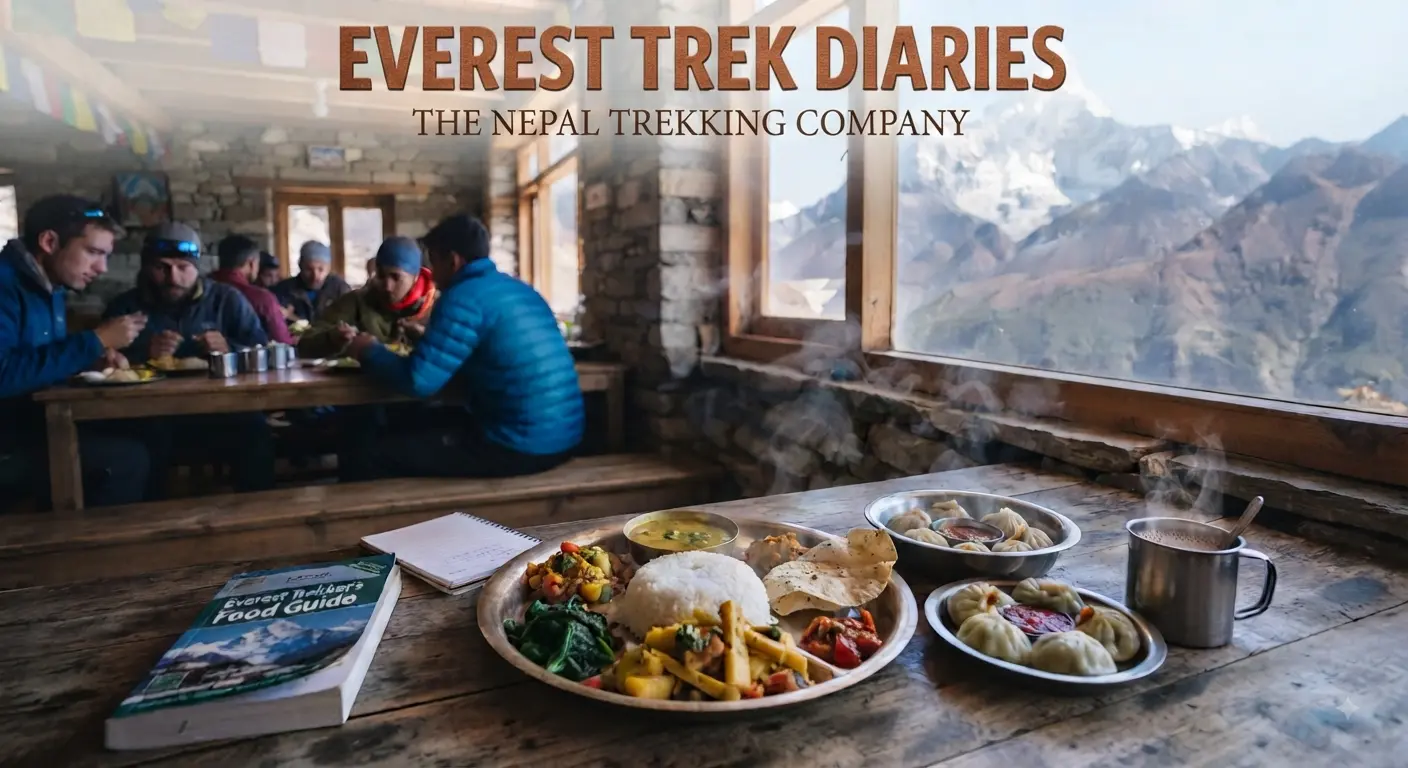

This Nepali food guide covers what to eat in the days before your trek, what to order at teahouses along the trail, and how to recover properly once you’re back down. If you’re still finalizing your itinerary, our complete Nepal travel guide covers permits, packing, and route planning to go with this food guide.
Table of Contents:
- Why Food Strategy Matters on a Nepal Trek
- What to Eat Before a Trek
- 1. Dal Bhat
- 2. Thukpa
- 3. Momo
- 4. Sherpa Stew (Shyakpa)
- 5. Tsampa
- 6. Gundruk
- 7. Dhido
- Best Trail Snacks to Pack
- Eating at Teahouses on the Trail
- Hydration and Altitude Eating Tips
- What to Eat After a Trek
- Food Safety Tips While Trekking
- FAQ
Why Food Strategy Matters on a Nepal Trek.
A single day of trekking at altitude can burn 3,000–5,000 calories, yet appetite often shrinks the higher you climb. As a result, knowing what to eat — and when — becomes just as important as your boots or sleeping bag. This Nepali food guide focuses on foods that are calorie-dense, easy to digest, and widely available along popular routes like Everest Base Camp and Annapurna Circuit.
What to Eat Before a Trek.
In the 2–3 days before you start trekking, focus on carbohydrate-rich meals that build glycogen stores, along with iron-rich foods to support oxygen-carrying capacity at altitude. Kathmandu and Pokhara both have excellent restaurants for loading up before you head into the mountains.
- Good pre-trek meals: dal bhat, pasta, rice-based dishes, lentil soups
- Traveller tip: Avoid heavy, greasy street food the night before departure to prevent stomach issues on day one.
1. Dal Bhat.
Dal bhat — lentil soup, rice, and vegetable curry, often with pickle and greens — is the single most important dish in any Nepali food guide for trekkers. It’s typically served with unlimited refills, making it one of the best value, most filling meals on the trail.
- Where to get it: Every teahouse along every major trekking route
- Traveller tip: Locals say “dal bhat power, 24 hour” for a reason — it’s the trekker’s fuel of choice.
2. Thukpa.
This hearty Tibetan-influenced noodle soup, packed with vegetables and sometimes meat, is ideal for cold evenings at higher elevation. It’s warming, easy to digest, and rehydrating thanks to its broth base.
- Where to get it: Teahouses in the Everest and Langtang regions especially
- Traveller tip: Order thukpa on chilly nights above 3,500 meters — the warm broth helps with hydration too.
3. Momo.
Nepal’s beloved dumplings, filled with vegetables, buffalo meat, or cheese, are a trekking staple found at nearly every teahouse. They’re satisfying and calorie-dense, though best eaten earlier in the day rather than right before bed at altitude.
- Where to get it: Kathmandu, Pokhara, and most teahouse menus
- Traveller tip: Steamed momo digests more easily at altitude than fried versions.
4. Sherpa Stew (Shyakpa).
A traditional Sherpa dish made with potatoes, vegetables, and sometimes yak meat, shyakpa is a high-altitude comfort food built specifically for cold mountain evenings.
- Where to get it: Namche Bazaar and villages throughout the Khumbu region
- Traveller tip: It’s one of the more substantial dishes on the menu — great after a long, cold trekking day.

5. Tsampa.
Roasted barley flour, often mixed with butter tea, tsampa is a traditional high-altitude staple used by Sherpa and Tibetan communities for centuries. It’s lightweight, easy to carry, and provides sustained energy.
- Where to get it: Higher-altitude teahouses in the Everest and Mustang regions
- Traveller tip: Try it mixed into butter tea for a traditional, energy-dense trail snack.
6. Gundruk.
This fermented leafy green dish is a traditional Nepali side, often served as a soup or pickle alongside dal bhat. It’s rich in probiotics, which can help support digestion during long trekking days.
- Where to get it: Most teahouse menus as a side dish
- Traveller tip: Ask for gundruk soup if your stomach feels unsettled — many trekkers find it soothing.
7. Dhido.
A thick, dense porridge made from buckwheat or millet flour, dhido is a traditional hill-region staple that’s extremely filling and calorie-dense — useful fuel for a demanding trekking day.
- Where to get it: Mid-hill villages, especially in the Annapurna region
- Traveller tip: Pair it with gundruk soup for a classic, hearty combination.
Best Trail Snacks to Pack Alongside Meals.
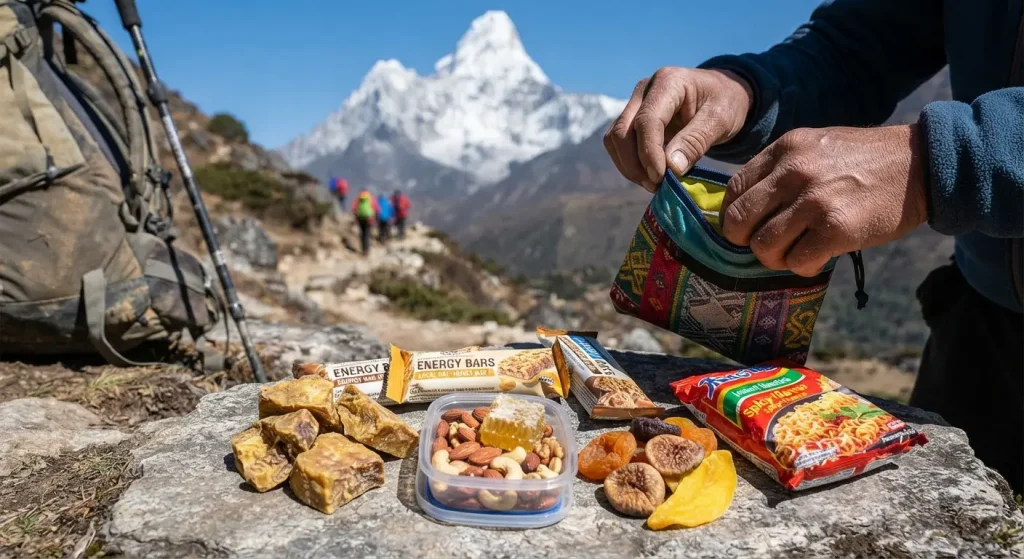
Even with three solid meals a day, long trekking hours between teahouses mean snacks matter. Lightweight, high-calorie options travel well and keep energy steady between stops.
-
Dried yak cheese (chhurpi):
a chewy, long-lasting protein source sold in most trail-town shops
-
Local honey and roasted nuts:
compact, calorie-dense, and easy to carry in a jacket pocket
-
Instant noodles and energy bars:
useful backups on longer stretches between villages
-
Dried fruit:
a good source of quick-digesting sugar for steep climbs
Pack a small daily stash rather than relying only on teahouse meal times, especially on longer trekking days above 4,000 meters where stops can be far apart.
Eating at Teahouses on the Trail.
Teahouse menus along popular routes are surprisingly extensive, often listing everything from momo to pizza. However, sticking closer to local dishes like dal bhat generally means fresher ingredients, since they’re cooked most frequently and in higher volume.
- Order dal bhat when possible — freshest, most reliable option at altitude
- Avoid meat dishes at very high elevations, where refrigeration is limited
- Ask fellow trekkers or guides which teahouses are known for good food on your specific route
Hydration and Altitude Eating Tips.
Appetite naturally decreases with altitude, but calorie needs go up. As a result, sipping warm soups, teas, and broths throughout the day is often easier than forcing down large solid meals. According to the Wilderness Medical Society, staying well-hydrated and maintaining carbohydrate intake are both critical for reducing altitude sickness risk.
- Drink 3–4 liters of water daily, more at higher elevations
- Add garlic soup to your rotation — a traditional remedy locals recommend for altitude adjustment
- Eat smaller, more frequent meals if appetite drops significantly
Nepali Food Guide: What to Eat After a Trek.
Once you’re back in Kathmandu or Pokhara, your body needs protein and micronutrients to recover from days of calorie deficit and muscle fatigue. Meanwhile, this final part of the Nepali food guide is also the perfect time to enjoy the wider range of Nepali and international food options unavailable on the trail.
-
Good post-trek meals:
grilled meats, fresh vegetables, buffalo curry, fruit, yogurt (dahi)
-
Traveller tip:
Rehydrate with electrolyte drinks in addition to food — days of altitude trekking leave most trekkers mildly dehydrated.
Food Safety Tips While Trekking.
- Stick to bottled, boiled, or filtered water — avoid tap water entirely
- Choose freshly cooked, hot food over anything sitting out or lukewarm
- Carry basic rehydration salts in case of stomach upset
- Peel fruit yourself rather than eating pre-cut fruit from street vendors
Final Thoughts.
Following a proper Nepali food guide before, during, and after your trek can make a real difference in your energy levels, digestion, and overall experience on the trail. From a steaming plate of dal bhat to a warming bowl of thukpa, Nepal’s traditional dishes aren’t just delicious — they’re built for exactly the kind of demanding trekking days you’re about to take on.
Frequently Asked Questions.
What is the best food to eat before a Nepal trek?
As this Nepali food guide explains, carbohydrate-rich meals like dal bhat, rice dishes, and pasta are ideal in the 2–3 days before a trek, since they help build glycogen stores for sustained energy.
What should I eat on the trail during a trek?
Dal bhat is the most reliable trail meal because it’s freshly cooked and offers unlimited refills, though thukpa, momo, and tsampa are all good energy-dense alternatives.
Is it safe to eat meat while trekking at high altitude?
It’s best to avoid meat dishes at very high elevations, where refrigeration is limited and freshness can’t always be guaranteed.
What should I eat after finishing a trek to recover?
Protein-rich foods, fresh vegetables, fruit, and electrolyte drinks all support faster recovery after the calorie deficit of a multi-day trek.