
Choosing between the Annapurna Circuit vs ABC is one of the most common dilemmas trekkers face when planning a trip to Nepal’s Annapurna region. Both routes start from the same conservation area, both end in teahouses stacked with dal bhat and hot lemon tea, and both deliver views of 7,000m and 8,000m peaks that stop you mid-stride. But that’s where the similarity ends.
The Annapurna Circuit is a long, high-altitude loop that crosses the legendary Thorong La Pass at 5,416 meters. The Annapurna Base Camp (ABC) trek is a shorter, out-and-back journey into a glacial amphitheatre ringed by Annapurna I and Machhapuchhre. One demands 10–18 days and serious altitude preparation; the other can be done in as little as 7–10 days by a reasonably fit beginner.
This guide breaks down the Annapurna Circuit vs ABC debate across nine practical categories — duration, difficulty, cost, scenery, permits, and more — so you can decide which is genuinely the best Annapurna trek for your fitness level, schedule, and travel goals. If you’re still weighing Nepal’s other classic routes, see how both compare in our Everest Base Camp vs Annapurna Base Camp guide.
Table of Contents.
- Quick Comparison Table
- Annapurna Circuit Trek Days vs ABC Duration
- Difficulty and Altitude: Thorong La Pass vs Annapurna Sanctuary
- Annapurna Base Camp Itinerary Overview
- Classic Annapurna Circuit Itinerary Overview
- Teahouse Trek Annapurna: Accommodation and Food
- Cost Comparison
- Permits Required
- Scenery and Culture
- Which Is the Best Annapurna Trek for You?
- FAQs: Annapurna Circuit vs ABC
Quick Comparison Table
| Feature | Annapurna Circuit | Annapurna Base Camp (ABC) |
|---|---|---|
| Trek days | 10–18 days (classic route 14–21 days) | 7–12 days |
| Max altitude | 5,416 m (Thorong La Pass) | 4,130 m (ABC) |
| Difficulty | Strenuous, high-altitude | Moderate |
| Route type | Point-to-point loop | Out-and-back |
| Guide requirement | Mandatory (foreigners) | Mandatory (foreigners) |
| Permits | ACAP | ACAP |
| Best for | Experienced trekkers, altitude seekers | Beginners, time-limited travelers |
Annapurna Circuit Trek Days vs ABC Duration
The single biggest difference in the Annapurna Circuit vs ABC comparison is time on the trail.
The Annapurna Circuit trek days typically range from 10 to 18 days, depending on the starting point and whether you take jeep transfers on the lower sections. The classic circuit runs 14 to 18 days for proper acclimatization, while a modern short circuit using jeep transfers to Chame or Dharapani can be completed in 10 to 12 days. Purists who still walk the full historic route from Besisahar to Pokhara can expect roughly 21 days on the trail.
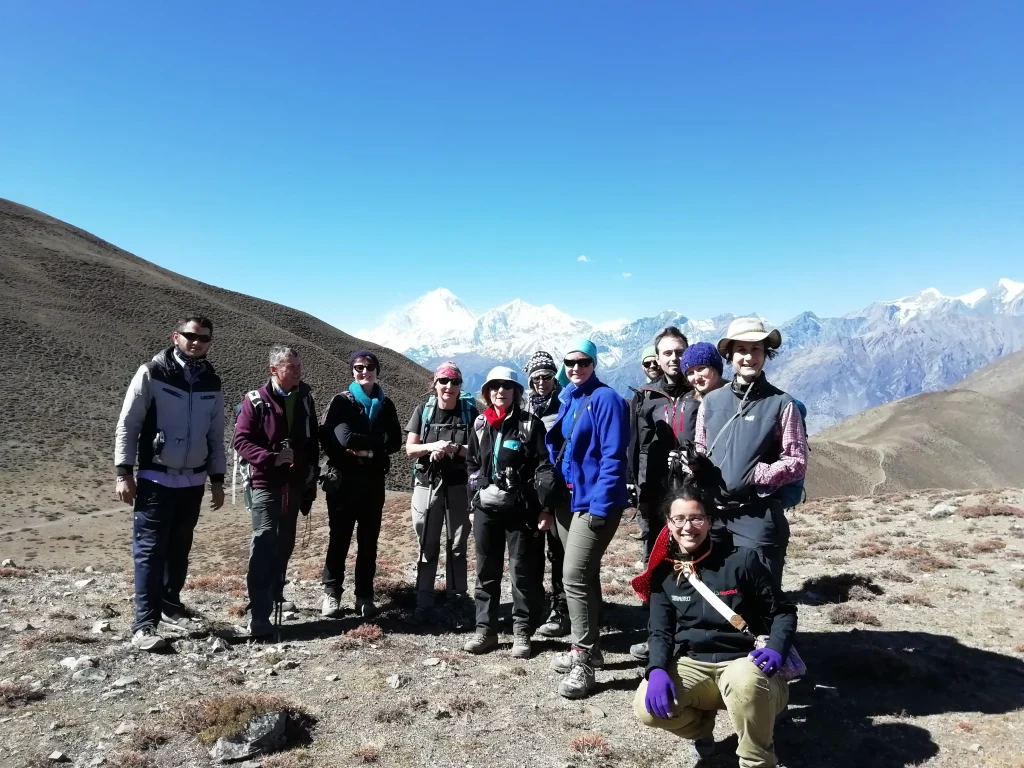
ABC, by contrast, is a compact trek. The standard itinerary takes 10 days starting and ending in Pokhara, and many operators now offer condensed Annapurna Base Camp itinerary options of 7 to 9 days for trekkers with limited holiday time. Most ABC packages last 7 to 12 days in total.
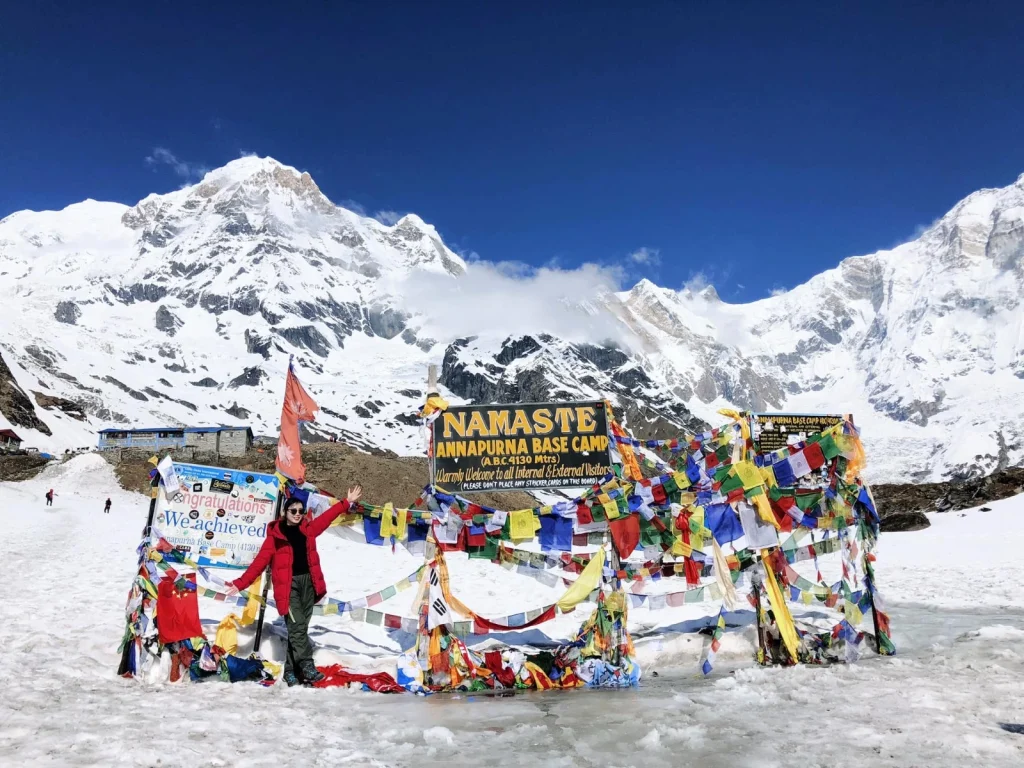
Bottom line: if your leave from work is under two weeks, ABC is the far more realistic choice. If you have three weeks or more and want the complete Himalayan crossing experience, the Circuit is worth the extra days. Not sure your fitness matches either timeline? Our Annapurna trek difficulty guide breaks down training benchmarks for both routes.
Difficulty and Altitude: Thorong La Pass vs Annapurna Sanctuary
This is where the two treks diverge most sharply — and it’s the factor that should weigh heaviest in your decision.
The Annapurna Circuit’s defining challenge is the Thorong La Pass, the highest point of the entire trek. Sitting at an altitude of 5,416 meters (17,769 feet) above sea level, Thorong La is the highest point and the ultimate highlight of the classic Annapurna Circuit trek. At its summit there is only half the oxygen available at sea level, so warm gear and careful acclimatization are essential.

Crossing day is genuinely demanding. The push from Thorong Phedi to Muktinath is a 12-to-16-kilometer journey that takes 8 to 10 hours of grueling movement, with pre-dawn temperatures at High Camp dropping to -15°C. The final approach from the pass summit to Muktinath covers roughly 14 kilometers of steep descent, which is often harder on the knees than the climb itself.
ABC’s high point is far gentler by comparison. The trek reaches a maximum elevation of 4,130m at the Annapurna Sanctuary, a glacial amphitheatre enclosed by 13 peaks above 6,000m, including Annapurna I at 8,091m. There’s no single brutal pass-crossing day — altitude is gained gradually over the approach through Chhomrong, Bamboo, Deurali, and Machhapuchhre Base Camp, which makes ABC a realistic goal for fit beginners as well as veteran trekkers.
In short: the Annapurna Circuit is a high-altitude mountaineering-adjacent trek that punishes rushed itineraries. ABC is a moderate trek where altitude sickness risk is real but manageable with a sensible pace. For a deeper dive into symptoms and prevention on either route, read our altitude sickness guide for Nepal treks.
Annapurna Base Camp Itinerary Overview
A typical Annapurna Base Camp itinerary looks something like this:
- Day 1–2: Drive/fly Kathmandu to Pokhara, then transfer to Nayapul and trek to Tikhedhunga or Ghandruk
- Day 3–4: Ghandruk to Chhomrong, then on to Bamboo or Dovan
- Day 5: Bamboo/Dovan to Deurali or Machhapuchhre Base Camp (MBC)
- Day 6: MBC to Annapurna Base Camp (4,130m) and back down to Bamboo or Sinuwa
- Day 7–8: Descend via Jhinu Danda (natural hot springs) to Nayapul
- Day 9–10: Drive back to Pokhara, fly/drive to Kathmandu
This route is a natural, gradual climb through rhododendron forest, bamboo groves, and high alpine terrain, with the reward of waking up inside the amphitheatre itself on summit morning. See our full Annapurna Base Camp itinerary breakdown for day-by-day distances and elevation gain.
Classic Annapurna Circuit Itinerary Overview
A representative Annapurna Circuit route runs:
- Day 1–3: Kathmandu/Besisahar to Chame via Jagat and Dharapani
- Day 4–6: Chame to Manang, with an acclimatization day built in
- Day 7–8: Manang to Yak Kharka to Thorong Phedi
- Day 9: Cross Thorong La Pass (5,416m) and descend to Muktinath
- Day 10–12: Muktinath to Jomsom to Tatopani (optionally combined with a Jomsom flight to shorten the trek)
- Day 13–14: Tatopani to Ghorepani (Poon Hill sunrise optional) and down to Nayapul/Pokhara
A full rest day in Manang at 3,540m is the standard approach used to prepare the body for the pass crossing, and skipping this day is one of the most common mistakes inexperienced trekkers make. For the full day-by-day breakdown, check our Annapurna Circuit itinerary and elevation guide.
Teahouse Trek Annapurna: Accommodation and Food
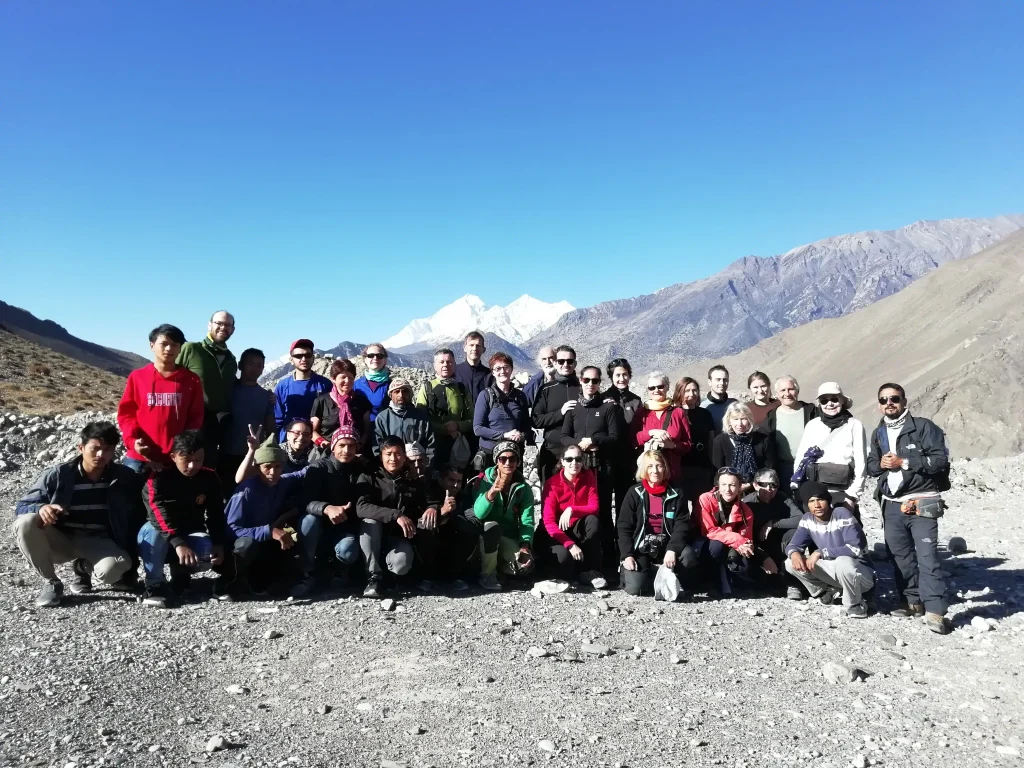
Both routes are classic teahouse trek Annapurna experiences — you won’t need to camp or carry a tent on either. Family-run lodges line both trails, offering a private room, a communal dining hall with a wood stove, and a menu built around dal bhat, noodles, momos, and porridge.
That said, the trail infrastructure differs slightly:
- ABC: Teahouses are frequent, well-established, and rebuilt after the 2015 earthquake with sturdier construction. Wi-Fi and hot showers are widely available lower down the trail, though they thin out near base camp itself.
- Annapurna Circuit: Guesthouses along the route have become more comfortable and decent in recent years, making the trek more accessible, but options become more basic above Manang, and many teahouses close above Manang during heavy winter snow.
Both treks now benefit from road access at their lower elevations, which has shortened walking days and improved supply chains to remote lodges — good news for anyone worried about running out of hot water or phone charging at 4,000 meters. Curious what to pack for either lodge-based trek? Our tea house trekking packing list covers gear for both routes.
Cost Comparison
Because ABC is shorter, it’s generally the cheaper option overall — fewer trekking days mean fewer lodge nights, meals, and guide/porter day-rates.
- ABC: A standard guided trek typically runs USD 800 to 1,100 per person in 2026, and budget-conscious trekkers starting from Pokhara can bring this down further.
- Annapurna Circuit: Costs scale with trek length — a 14–18 day circuit with guide, porter, permits, and teahouse accommodation commonly runs from USD 900 to over USD 1,500 per person, depending on group size and whether you fly out from Jomsom to skip the lower valley walk.
Guide and porter rates are similar on both routes, generally $20–$40 per day depending on experience and season. For a full expense breakdown, see our Annapurna trekking cost guide.
Permits Required
Permit rules are one area where the Annapurna Circuit vs ABC comparison is nearly identical — both fall inside the same protected zone.
- ACAP (Annapurna Conservation Area Permit): Costs NPR 3,000 (about US$23) per foreign trekker and is mandatory for both the Circuit and ABC.
- TIMS Card: Requirements have shifted in recent years. The TIMS card is no longer required for the Annapurna Base Camp trek — it was officially discontinued in 2023. For the wider Annapurna region including the Circuit, TIMS still appears in older regulations, but checkpoints across the Annapurna region now verify only the ACAP permit in practice.
- Guide requirement: As of April 2023, and strictly enforced for the 2026 season, all foreign trekkers must be accompanied by a licensed guide, and solo trekking for foreigners is effectively banned in the Annapurna Conservation Area. This rule applies equally to both routes.
Always confirm current permit fees and rules directly with the Nepal Tourism Board or NTNC before departure, since regulations are updated periodically. Our Annapurna permits and TIMS guide is updated each season with the latest fees.
Scenery and Culture
Both treks pass through the Annapurna Conservation Area, but the visual experience is genuinely different.
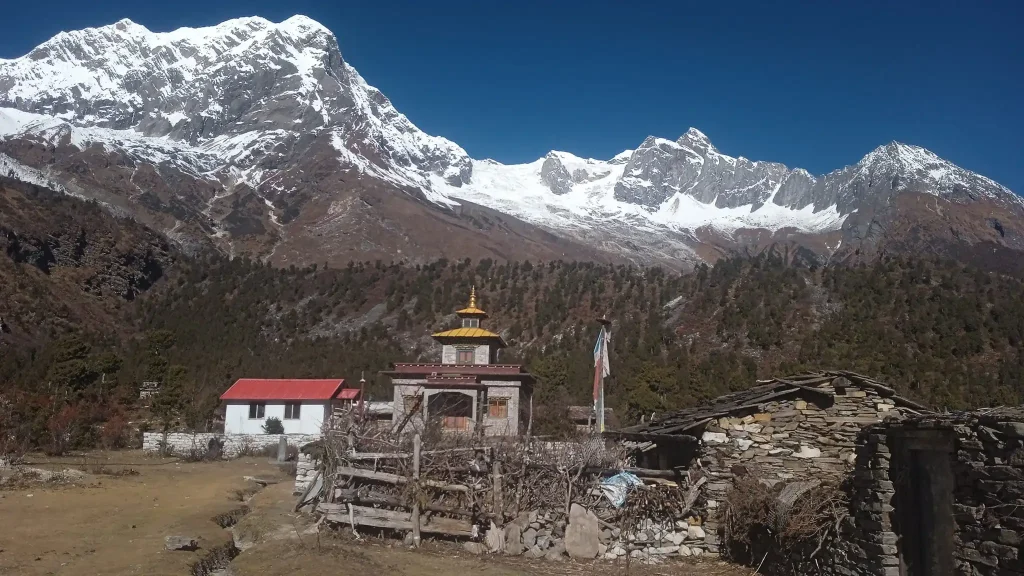
Annapurna Circuit: Covers dramatic climate zones — from subtropical rice terraces near Besisahar, through pine and rhododendron forest, into the high-altitude desert of Manang and Mustang, which feels closer to the Tibetan plateau than to lowland Nepal. The trail passes rice paddy fields, dense rhododendron forests, and barren rocky lands with no trees, and the Annapurna Conservation Area is home to wildlife including snow leopards and blue sheep. Along the way you’ll pass through Gurung and Thakali villages, Tibetan-influenced Manang, and the sacred pilgrimage site of Muktinath.
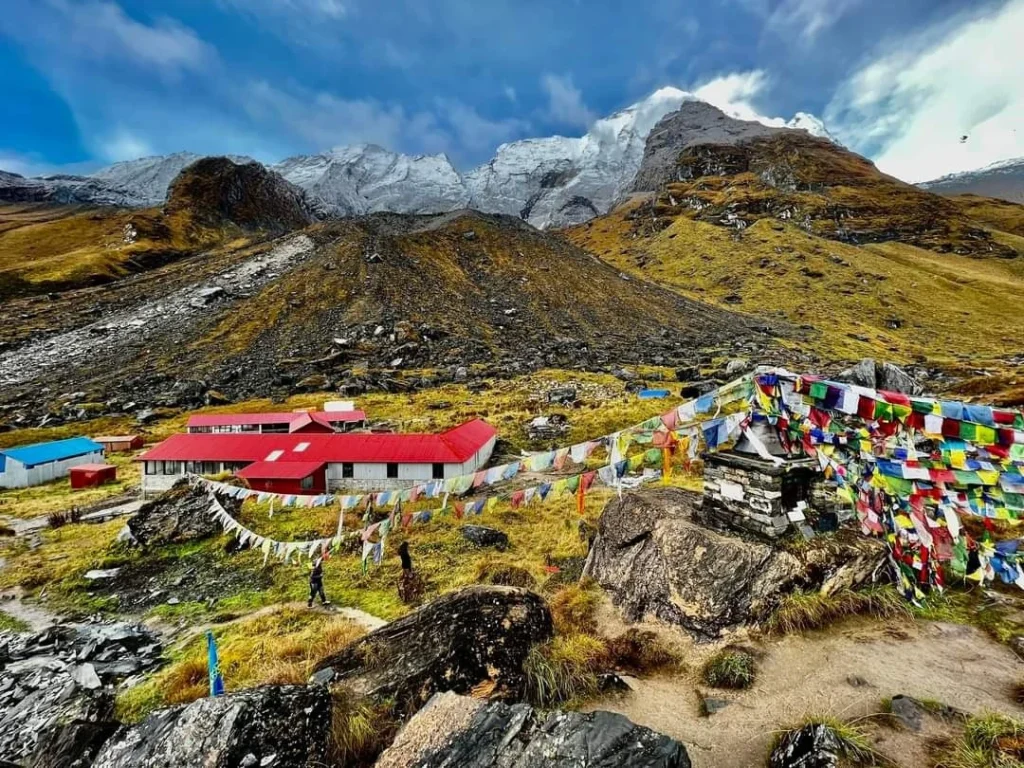
Annapurna Base Camp: A more compressed but arguably more intimate mountain experience — the trail funnels you directly into the Annapurna Sanctuary, a natural bowl surrounded on all sides by 6,000m-plus peaks including Annapurna I, the tenth highest mountain in the world. The cultural mix leans Gurung, with stops in villages like Ghandruk and Chhomrong, plus a well-earned soak in the Jhinu Danda hot springs on the way down.
If you want maximum landscape diversity and a genuine high-mountain pass crossing, the Circuit wins. If you want to stand inside a Himalayan amphitheatre surrounded by 8,000m peaks in the shortest possible time, ABC wins.
Which Is the Best Annapurna Trek for You?
There’s no single “best Annapurna trek” — it depends entirely on your fitness, time, and goals.
Choose the Annapurna Circuit if you:
- Have 12+ days available
- Want to cross a genuine high-altitude Himalayan pass
- Have prior trekking experience or are training seriously beforehand
- Want maximum landscape and cultural diversity in one trek
Choose Annapurna Base Camp if you:
- Have 7–10 days available
- Are a first-time Himalayan trekker or trekking with less-experienced companions
- Want big 8,000m mountain views without extreme altitude risk
- Prefer an out-and-back trek with a dramatic, singular destination
Both are unmistakably “teahouse trek Annapurna” experiences, both require an ACAP permit and licensed guide in 2026, and both deliver world-class Himalayan scenery. The real deciding factor is simple: how much time do you have, and how much altitude do you want to take on?
Related Guides
- Best Time to Trek Annapurna: Season-by-Season Guide
- Annapurna Circuit Packing List for 2026
- Mardi Himal vs Annapurna Base Camp
FAQs: Annapurna Circuit vs ABC
Is Annapurna Circuit harder than ABC? Yes. The Circuit reaches 5,416m at Thorong La Pass versus ABC’s 4,130m, and involves more consecutive high-altitude days, making it significantly more demanding physically and in terms of altitude sickness risk.
Can beginners do the Annapurna Circuit? Fit beginners can complete a well-paced Circuit itinerary with proper acclimatization days, but ABC is generally the safer and more accessible starting point for first-time Himalayan trekkers.
How many Annapurna Circuit trek days do I need? Most trekkers should budget 10–18 days depending on the route variation chosen, with 14+ days recommended for the safest acclimatization schedule around Thorong La Pass.
Do I need a guide for both treks? Yes. As of the current regulations, all foreign trekkers require a licensed guide for both the Annapurna Circuit and Annapurna Base Camp routes.
Which trek has better mountain views? Both are spectacular. ABC delivers a concentrated, 360-degree amphitheatre of 6,000–8,000m peaks in a short trek, while the Circuit offers more varied terrain and a wider range of landscapes across its longer route.
Planning your trek? Always verify current ACAP fees, guide requirements, and seasonal trail conditions with the Nepal Tourism Board or a licensed local trekking agency before booking (The Nepal Trekking Company).