

Table of Contents:
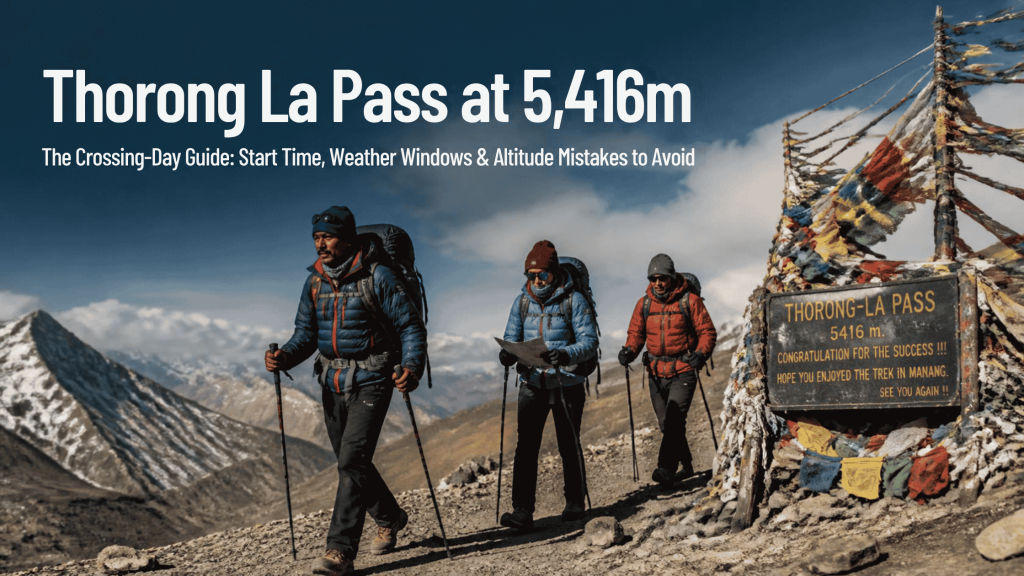
Thorong La Pass is the make-or-break moment of the Annapurna Circuit. At 5,416 metres (17,769 ft), it is the highest point of the trek, and the single day when good planning matters most. Weeks of walking through rhododendron forest, apple orchards, and high desert all lead to a few hours of cold, thin air and a long, knee-punishing descent.
This guide covers everything you need for crossing day: the right Thorong La Pass start time, how to read the weather window, what to pack, how to pace yourself, and the altitude mistakes that turn a great day into a dangerous one. Read it before you reach Manang, not after.
What Is Thorong La Pass?
Thorong La Pass sits in Nepal’s Manang and Mustang districts and links the Marsyangdi valley (east side) with the Kali Gandaki valley (west side). Trekkers on the classic Annapurna Circuit cross it counter-clockwise, climbing from Manang (3,540m) to the pass and dropping to Muktinath (about 3,760m).
The pass is not technical. You do not need ropes, crampons (in normal conditions) or climbing experience. What makes the Thorong La Pass crossing hard is the altitude, the cold, the wind and the sheer length of the day. You gain roughly 500 metres from High Camp, then lose more than 1,600 metres on the other side.
Fitness helps, but it does not protect you from altitude illness. Strong, young trekkers get sick all the time, while slower, well-acclimatised walkers cross comfortably. The mountain rewards patience.
For background reading on the geography, see the Thorong La entry on Wikipedia.
<a name=”route”></a>
The Route: Phedi, High Camp and Muktinath
Most trekkers reach the pass through this standard sequence:
- Manang (3,540m): the main acclimatisation hub, usually two nights.
- Yak Kharka (4,018m) or Letdar (about 4,200m): a short, gentle gain.
- Thorong Phedi (4,450m): the last teahouse base at the foot of the climb.
- High Camp (4,925m): an optional higher sleeping spot, about 400-500m above Phedi.
- Thorong La Pass (5,416m): the summit of the crossing.
- Muktinath (about 3,760m): the pilgrimage town and the end of the descent.
The climb from Thorong Phedi to High Camp is steep and takes around 1-2 hours. From High Camp, the walk to the pass takes roughly 3-4 hours, depending on pace and conditions. From the pass, expect another 3-4 hours down to Muktinath.
The total crossing from Phedi often runs 9-11 hours, including breaks. Plan your whole day around that number, not around the best-case scenario.
<a name=”start-time”></a>
Best Start Time for the Thorong La Pass Crossing.
The most common question about the Thorong La Pass start time has a simple answer: leave early, usually between 3:30 and 5:00 AM.
There are three solid reasons for this:
1. Wind. The pass funnels air between high peaks. Winds are typically calmer in the early morning and often rise from late morning onward. Crossing in the afternoon can mean a punishing headwind at the exact moment you are most tired.
2. Snow and ice. Early in the day, snow is firmer and easier to walk on. Later, sun-softened snow becomes slushy, and you can post-hole with every step.
3. Daylight for the descent. The downhill to Muktinath is long. Starting early means you finish in daylight, with energy to spare for a hot meal.
How to choose your exact start time
- From High Camp: most groups leave between 4:00 and 5:00 AM. Because you are higher and closer, you can start slightly later than people at Phedi.
- From Thorong Phedi: start around 3:00 to 4:00 AM, since you have a longer climb.
- Cold, windy or snowy morning: wait. An hour of extra warmth and visibility is better than rushing out into a storm.
- Slow acclimatiser or slower walker: start earlier, and set a turnaround time (more on this below).
A practical rule: aim to be at the pass by 9:00-10:00 AM. If you are still climbing at noon, conditions will probably be worse and you will be exhausted. Talk to your guide or teahouse owner the night before. Locals read the sky better than any app.

Thorong La Pass Weather and Weather Windows.
Thorong La Pass weather can change quickly. A clear dawn can turn to cloud and wind by midday, and temperatures at the top can be far below freezing even in the best seasons. Expect roughly -10°C to -20°C (14°F to -4°F) with wind chill on a typical morning, and colder in winter or early spring.
What is a “weather window”?
A weather window is a stable stretch of one to three days with low wind, little or no precipitation and decent visibility. Your goal is to cross inside one.
How to read the window.
- Talk to people coming over. Trekkers and guides descending from the pass offer the best real-time report. Ask about wind, snow depth and trail conditions.
- Check the forecast, but do not trust it blindly. Mountain forecasts at 5,000m+ are imprecise. Use them for trends, not certainty.
- Watch the evening sky. A clear, calm evening at Phedi or High Camp is a good sign. Heavy cloud, sudden warmth or a fast-rising wind is not.
- Look for fresh snow. New snowfall raises avalanche risk on parts of the approach and slows the whole crossing.
- Build in a spare day. If your schedule has no flexibility, you will be tempted to cross in bad weather. A buffer day is the cheapest safety tool you own.
Respect the history.
In October 2014, a severe blizzard linked to a cyclone struck the Annapurna region and caused many deaths on and around the pass. Most trekkers who cross never see anything like it, but it is a sober reminder: forecasts can fail, and the pass is not a place to push through bad conditions to keep a schedule.
For official travel guidance and trekking requirements, check the Nepal Tourism Board and confirm permits with a registered agency before you go.
Best Season to Cross Thorong La Pass.
Two seasons dominate:
- Autumn (October-November): clear skies, stable weather and the busiest trails. Late October into November gets noticeably colder.
- Spring (March-May): warmer, with rhododendrons blooming lower down. Afternoon cloud and occasional snow are more common than in autumn.
Winter (December-February) brings heavy snow, extreme cold and a real chance the pass closes. Monsoon (June-August) is wetter on the south side, though the Manang and Mustang side is a rain shadow and can still be trekked by prepared walkers. Either way, check conditions locally before committing.
If you want the best balance of stable weather and manageable crowds, mid-October and late March to April are popular choices. Be aware that popular windows mean busy teahouses, so book ahead where you can.
Crossing-Day Timeline, Hour by Hour.
Here is a realistic schedule from High Camp:
| Time | What happens |
|---|---|
| 3:30 AM | Wake up, drink warm fluids, eat something even if you are not hungry |
| 4:30 AM | Depart with headlamp, gloves and all layers |
| 6:00-7:00 AM | Sunrise lights up the peaks; temperatures are at their lowest |
| 8:30-9:30 AM | Reach Thorong La Pass: photos, tea, a short rest |
| 9:45 AM | Start descending; do not linger |
| 12:00 PM | Cross the steep scree sections carefully |
| 1:00-2:30 PM | Arrive in Muktinath for lunch and a hot shower |
From Thorong Phedi, add 1-2 hours at the start. There is a small teahouse at the pass itself, which sometimes serves hot tea. Do not rely on it for food, and never plan your hydration around it.
What to Wear and Pack for the Crossing.
You will start the day freezing and end it hot. Layering is everything.
Core layers
- Moisture-wicking base layer (top and bottom)
- Mid-layer fleece or light insulated jacket
- Down jacket (rated for sub-zero temperatures)
- Windproof and waterproof shell jacket and pants
Extremities
- Warm hat covering your ears, plus a buff or balaclava
- Liner gloves and heavy insulated mittens or gloves
- Wool socks (and a spare pair in your pack)
- UV-rated sunglasses or glacier glasses (snow glare is brutal)
Gear
- Sturdy, broken-in boots with good ankle support
- Trekking poles (a real help on the descent)
- Light microspikes or traction devices if there is ice or hard snow
- Headlamp with fresh or spare batteries
Food and water
- 2-3 litres of fluid, with insulated bottle sleeves so water does not freeze
- Snacks: nuts, chocolate, energy bars
- Hot flask of tea or lemon-ginger drink
Medical and safety
- Sunscreen and lip balm with SPF
- Basic first-aid kit and blister care
- Any prescription medication, including altitude medication prescribed by your doctor
- Emergency contact details and travel insurance that covers high-altitude trekking and helicopter evacuation
Keep your phone and water bottle warm, because cold drains batteries and freezes liquid quickly. Store them close to your body.
9 Altitude Mistakes to Avoid on Thorong La Pass.
Most problems on the Thorong La Pass crossing are not caused by the pass. They are caused by decisions made days earlier. Avoid these.
1. Ascending too fast.
The classic rule is to sleep no more than about 300-500 metres higher each night above 3,000m, with a rest day every 1,000m or so. Rushing from Manang to Phedi in two short days is the most common cause of altitude sickness on this trek.
2. Skipping the acclimatisation day
The extra night in Manang, with a hike up to Gangapurna Lake or Ice Lake, is not a luxury. It trains your body for the next stage. Do the “climb high, sleep low” walk, and do not turn it into a race.
3. Ignoring early symptoms
Headache, nausea, dizziness, and loss of appetite are signs of acute mountain sickness (AMS). Many trekkers call it “just a bad night” and keep climbing. Treat any headache at altitude as AMS until proven otherwise, and do not go higher while symptoms persist.
4. Drinking too little (or too much)
Dry air and effort dehydrate you quickly. Aim for roughly 3-4 litres per day at altitude. Pale yellow urine is a decent guide. Overdoing it can also be a problem, so drink steadily rather than forcing litres at once.
5. Using alcohol or sleeping pills
Alcohol dehydrates you and can worsen sleep quality at altitude. Sedatives can suppress breathing. Skip both on the nights before crossing.
6. Relying on medication as a substitute for acclimatisation
Some trekkers take acetazolamide (Diamox) to speed acclimatisation, but it is not a free pass to climb faster. Talk to a doctor or travel clinic before your trip about whether it suits you and what dose is appropriate. Never take someone else’s pills.
7. Starting too late or too fast
Leaving at 7:00 AM because you slept in puts you in the wind and soft snow. Starting too fast burns energy you will need at 5,000m. Walk slowly and breathe steadily. If you can’t talk in short sentences, you are going too fast.
8. Under-eating
Appetite drops at altitude, but your body needs fuel. Eat a proper breakfast, even if it is only porridge and tea, and snack every hour on the trail.
9. Underestimating the descent
The way down is long, steep and loose. Tired legs and cold-numbed concentration cause twisted ankles and falls. Use poles, shorten your stride and stay focused until you are back in Muktinath.
Signs You Should Turn Back (or Descend Immediately).
Pride has no place at 5,000 metres. Turn around or descend straight away if you or a companion have:
- A severe, worsening headache that does not respond to rest and fluids
- Persistent vomiting
- Loss of balance or coordination (try walking in a straight line heel-to-toe)
- Confusion, unusual drowsiness or irrational behaviour
- Breathlessness at rest, a wet cough or gurgling breath, which can signal pulmonary oedema
- Extreme exhaustion that doesn’t ease with rest
Severe AMS, HAPE and HACE are medical emergencies. The primary treatment is to descend, even if it is dark or inconvenient. Tell your guide or teahouse staff immediately and arrange evacuation if needed. This article is general information, not medical advice. Consult a doctor or travel clinic before you trek.
Set a turnaround time before you leave. For example: “If we are not at the pass by 10:30 AM, we go back down.” Deciding in advance removes emotion from the decision.
Thorong Phedi or High Camp: Where Should You Sleep?
This is one of the biggest planning debates on the circuit.
Sleeping at Thorong Phedi (4,450m)
- Pros: lower altitude, better sleep for most people, easier on the body
- Cons: longer crossing day, earlier start, steep climb to High Camp first thing
Sleeping at High Camp (4,925m)
- Pros: shorter crossing day, later start
- Cons: higher sleeping altitude, higher risk of AMS, colder and more basic accommodation
A widely recommended compromise is to walk from Phedi up to High Camp in the afternoon for acclimatisation, then return to sleep at Phedi. This follows “climb high, sleep low” and helps you cross more comfortably the next morning. Many guides prefer Phedi for exactly this reason.
If you do sleep at High Camp, make sure you are well acclimatised and symptom-free. Do not go up if you already feel unwell.

Frequently Asked Questions About Thorong La Pass.
How high is Thorong La Pass?
Thorong La Pass stands at 5,416 metres (17,769 feet) above sea level. It is the highest point on the Annapurna Circuit trek.
What is the best start time for Thorong La Pass?
Most trekkers start between 3:30 and 5:00 AM. From Thorong Phedi, leave around 3:00-4:00 AM. From High Camp, 4:00-5:00 AM is typical. The aim is to reach the pass by mid-morning, before the wind picks up.
How long does it take to cross Thorong La Pass?
Expect 9-11 hours in total from Thorong Phedi to Muktinath. From High Camp, the climb takes about 3-4 hours and the descent 3-4 hours.
Is Thorong La Pass dangerous?
It is not technically difficult, but the altitude, cold and weather make it serious. Most problems come from ascending too fast, ignoring symptoms or crossing in poor conditions. With proper acclimatisation and good judgement, most trekkers cross safely.
When is the best time to cross Thorong La Pass?
October-November and March-May offer the most stable conditions. Winter brings heavy snow and extreme cold, and the pass can close.
Do I need a guide to cross Thorong La Pass?
Rules and requirements change, so verify current regulations before you go. Even if a guide is not mandatory for your route, many trekkers hire one for safety, route-finding and altitude monitoring, especially in shoulder seasons or bad weather.
Should I take Diamox for Thorong La Pass?
Some trekkers use acetazolamide to support acclimatisation, but it is not a substitute for a sensible itinerary. Speak with a doctor or travel clinic before your trek.
What should I do if I feel sick on the pass?
Stop ascending and descend if symptoms are moderate or severe. Alert your guide or teahouse staff and arrange evacuation if needed. Descending is the most effective treatment for altitude illness.
Final Thoughts: Respect the Pass, Enjoy the Day.
The Thorong La Pass crossing is the emotional high point of the Annapurna Circuit, and a day you will remember for years. Standing under a sea of prayer flags at 5,416 metres, with the Himalayas glowing in the early light, makes every cold morning and tired step worthwhile.
The recipe is simple but not easy: acclimatise properly, start early, watch the weather window, dress in layers and listen to your body. Build in a spare day, set a turnaround time and never be embarrassed to descend. The pass will still be there next season.
Plan well, walk slowly, and enjoy the crossing.
Planning your Annapurna Circuit? Explore our related guides: Annapurna Circuit Itinerary | Altitude Sickness Prevention in Nepal | Annapurna Circuit Packing List