
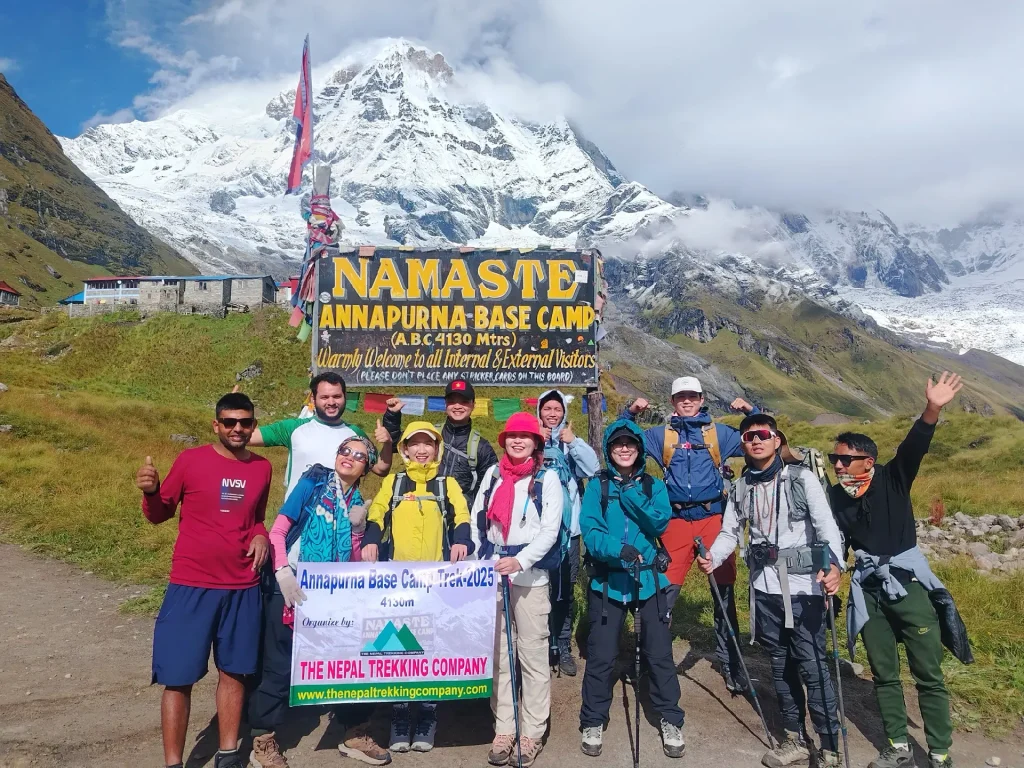
Base Camp Treks Nepal for Beginners.
📋 Table of Contents
- What Is a Base Camp Treks Nepal For Beginners?
- Best Base Camp Treks Nepal for Beginners.
- Everest Base Camp Trek for Beginners
- Annapurna Base Camp Trek for Beginners
- EBC vs ABC: Which Is Better for Beginners?
- Difficulty Level & Fitness Requirements
- Best Time for Base Camp Trek Nepal
- Trekking Permits & Costs
- Packing List for Beginners
- Altitude Sickness: Prevention & Tips
- Training Guide for First-Time Trekkers
- FAQ
If you’ve ever dreamed of standing at the foot of the world’s highest mountains, gazing up at Everest or Annapurna with nothing but Himalayan sky above you — you’re not alone. Every year, tens of thousands of first-time trekkers fly into Kathmandu or Pokhara with the singular goal of completing a Base Camp Treks Nepal For Beginners. And the good news? You don’t need to be a mountaineer or a marathon runner to do it.
This guide is written specifically for beginners who are curious about base camp trekking Nepal for beginners but don’t know where to start. Whether you’re weighing the iconic Everest Base Camp (EBC) trek against the stunning Annapurna Base Camp (ABC) trek, or wondering how fit you need to be, what permits cost, or which season to book — this comprehensive 2026 guide has every answer you need.
💡 Quick Answer: The Annapurna Base Camp trek is the most beginner-friendly base camp trek in Nepal, with a maximum altitude of 4,130m and excellent teahouse infrastructure. The Everest Base Camp trek is more challenging but absolutely doable with 2–3 months of dedicated preparation.
1. What Is a Base Camp Treks Nepal For Beginners?
A base camp trek is a high-altitude trekking route that leads to the base camp — the staging ground at the foot of a major Himalayan peak — used by mountaineering expeditions before their summit attempts. Unlike technical climbing, base camp trekking requires no ropes, crampons, or mountaineering experience. You walk on established trails, sleep in teahouses (mountain lodges), and gradually ascend over multiple days.
Nepal is home to eight of the world’s fourteen 8,000-metre peaks, making it the undisputed capital of base camp trekking. The two most famous routes for beginners are:
- Everest Base Camp (EBC) — 5,364m, in the Khumbu region, Sagarmatha National Park
- Annapurna Base Camp (ABC) — 4,130m, in the Annapurna Sanctuary, Annapurna Conservation Area
Both treks pass through traditional Sherpa and Gurung villages, ancient Buddhist monasteries, rhododendron forests, and some of the most jaw-dropping high-altitude landscapes on Earth. For first-time trekkers, these routes represent the perfect blend of challenge, culture, and once-in-a-lifetime scenery.
For official trekking regulations and permit requirements, always refer to the Nepal Tourism Board (NTB) and the Trekking Agencies’ Association of Nepal (TAAN).
2. Best Base Camp Treks Nepal for Beginners.
While Nepal offers dozens of base camp routes — from Manaslu to Makalu — the following three are considered the most beginner-accessible in 2026:
| Trek | Max Altitude | Duration | Difficulty | Best For |
|---|---|---|---|---|
| Annapurna Base Camp | 4,130m | 7–10 days | Moderate | First-timers, shorter time |
| Everest Base Camp | 5,364m | 12–14 days | Moderate–Hard | Bucket-list seekers |
| Mardi Himal Base Camp | 4,500m | 5–7 days | Easy–Moderate | Budget travelers, less crowd |
| Ghorepani Poon Hill | 3,210m | 4–5 days | Easy | Complete beginners, seniors |
For a broader overview of Nepal’s trekking landscape, check our internal guide to Nepal’s top trekking routes for all levels, which covers everything from single-day hikes to multi-week circuit treks.
3. Everest Base Camp Trek for Beginners.
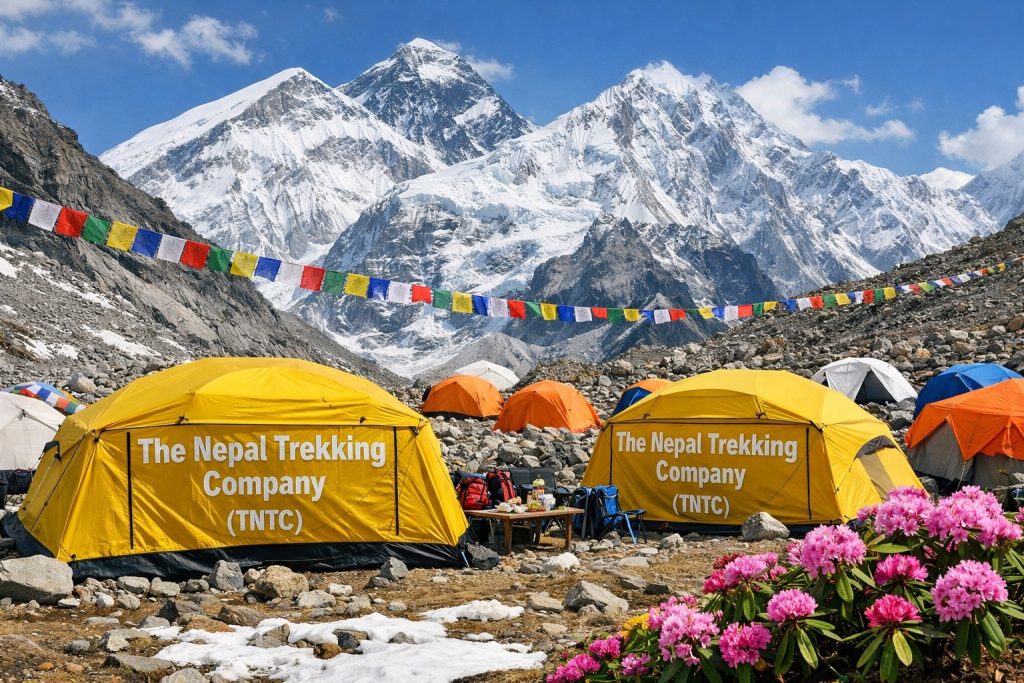
The Everest Base Camp trek is arguably the most iconic trekking route in the world. Starting with a thrilling flight into Lukla airport (one of the world’s most dramatic runways), you trek through the heart of the Khumbu region, passing through the legendary Sherpa trading hub of Namche Bazaar, the sacred Tengboche Monastery, and tiny ice-carved villages clinging to the valley walls.
What to Expect on the EBC Trek.
The standard EBC route covers approximately 130 km round trip over 12–14 days, with a maximum altitude of 5,364m at Everest Base Camp itself. Along the way, you’ll also reach Kala Patthar (5,545m) — the actual viewpoint from which most trekkers get their iconic photograph of Everest’s summit pyramid.
Daily trekking time averages 5–7 hours on terrain that ranges from well-maintained stone paths to boulder-strewn glacial moraine. The famous Hillary Step trail passes yak caravans, fluttering prayer flags, and an endless stream of international trekkers from every corner of the globe.
🌟 Beginner Tip: The EBC trek is considered moderately difficult to hard for beginners, primarily due to altitude. However, thousands of first-time trekkers complete it every year with proper preparation. The key is slow ascent, adequate acclimatization days in Namche Bazaar (3,440m) and Dingboche (4,410m), and listening to your body.
EBC Trek Highlights.
- Flying into Lukla (Tenzing-Hillary Airport) — an experience in itself
- Namche Bazaar — the vibrant hub of the Khumbu, with cafes, bakeries, and a famous Saturday market
- Tengboche Monastery — the largest Buddhist monastery in the Khumbu, with Ama Dablam as a backdrop
- Gorak Shep and Kala Patthar — the closest viewpoint to Everest’s summit you can reach on foot
- Khumbu Glacier — one of the highest and most dramatic glaciers in the world
For the most current and detailed Everest Base Camp trek information, the Lonely Planet EBC trekking guide is an excellent starting resource for beginners.
4. Annapurna Base Camp Trek for Beginners.
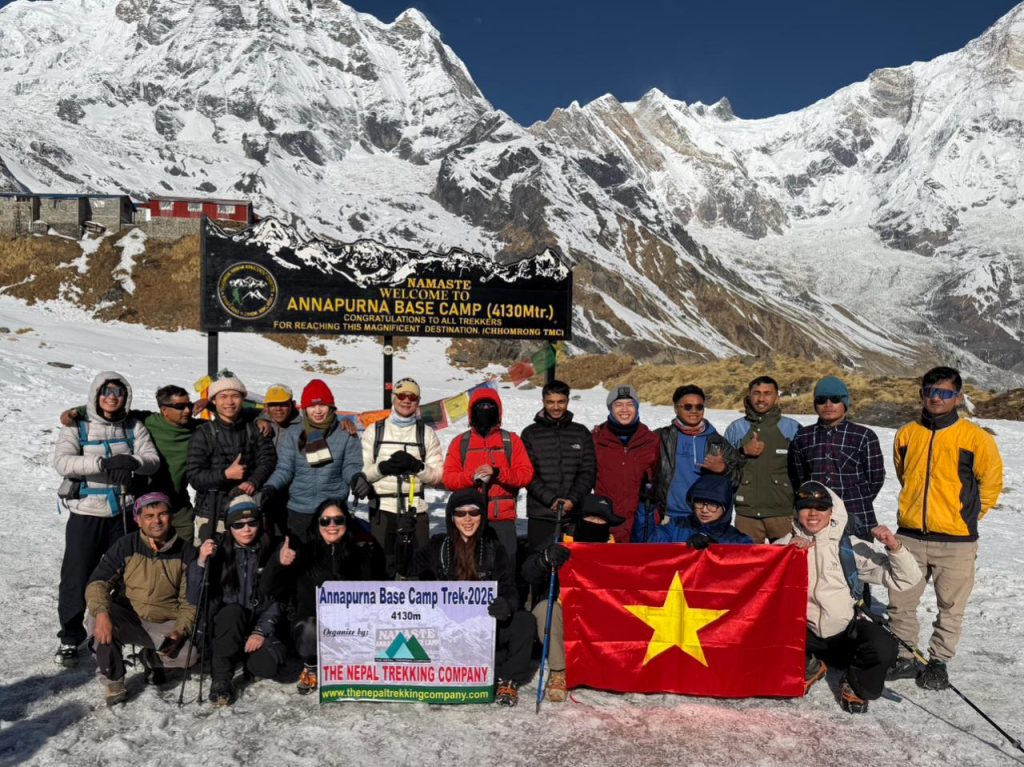
If the EBC trek is the world’s most famous, the Annapurna Base Camp trek is arguably Nepal’s most beautiful. It takes you into the heart of the Annapurna Sanctuary — a natural amphitheater ringed by thirteen peaks above 6,000m, including Annapurna I (8,091m), Machapuchare (Fishtail, 6,993m), and Hiunchuli (6,441m).
Starting from Pokhara — a lakeside tourist hub 200km west of Kathmandu — the ABC trek ascends through lush subtropical forests, traditional Gurung villages like Ghandruk, bamboo groves, and alpine meadows before reaching the dramatic high-altitude sanctuary. This variety of landscapes, compressed into just 7–10 days, makes the ABC trek one of the most rewarding short treks in the Himalayas.
Why ABC Is the Best Base Camp Trek for Beginners.
Several factors make the Annapurna Base Camp trek particularly well-suited to first-time trekkers in Nepal:
- Lower maximum altitude (4,130m vs 5,364m) significantly reduces altitude sickness risk
- Excellent teahouse infrastructure — warm food, hot showers, and charging facilities available throughout
- Shorter duration (7–10 days) fits tighter travel schedules
- Well-marked trails with consistent signage and heavy foot traffic
- No flight required — you can reach the trailhead by road or bus from Pokhara
⚠️ Important: Despite being beginner-friendly, the ABC trek still involves consecutive days of trekking 5–7 hours on diverse terrain, including stone staircases, steep ascents through Ulleri, and challenging descents near Chhomrong. Don’t underestimate the cumulative physical demand of multiple trekking days back-to-back.
5. EBC vs ABC: Which Is Better for Beginners?
Verdict: For absolute beginners, Annapurna Base Camp is the better starting point. It’s shorter, lower, more affordable, and logistically simpler. If you’ve already done some multi-day hiking at altitude, or if the Everest name is the reason you came to Nepal, go for EBC — just give yourself 2–3 months of dedicated physical preparation.
6. Difficulty Level & Fitness Requirements.
One of the most common questions from first-time trekkers is: “Am I fit enough to do a base camp trek in Nepal?” The honest answer: most reasonably healthy adults can complete the ABC trek with the right preparation. The EBC trek demands more.
Annapurna Base Camp — Fitness Requirements.
The ABC trek is rated as moderate difficulty. It’s not an extreme challenge, but it is a sustained physical effort. Before attempting it, you should be comfortable with:
- Walking 8–10 km per day on uneven terrain
- Climbing stairs continuously for 30–45 minutes without stopping
- Carrying a daypack of 5–8 kg
- Being on your feet for 5–6 hours daily over consecutive days
Everest Base Camp — Fitness Requirements.
The EBC trek is more demanding due to the higher altitude (5,364m), longer duration, and more challenging terrain above 4,000m. You should be able to:
- Complete long-distance cardio exercise (running, cycling, swimming) for 60+ minutes
- Trek 6–8 hours daily carrying a daypack
- Handle some rocky, uneven terrain and glacial moraine
- Manage exposure at altitudes above 5,000m during acclimatization days
🎯 Quick Fitness Test: If you can walk 5 km briskly in under 35 minutes without stress, you’re at a good base fitness level for the ABC trek. For EBC, aim to be comfortable with an hour of continuous uphill walking at a moderate pace.
7. Best Time for Base Camp Trek Nepal For Beginners.
Choosing the right season is one of the most important decisions for a successful base camp trek in Nepal. Nepal has four distinct seasons, but only two are ideal for trekking:
| Season | Months | Conditions | Recommended? |
|---|---|---|---|
| Autumn (Peak) | Sep – Nov | Clear skies, stable weather, crisp air, excellent mountain views | ✅ Best season |
| Spring (Peak) | Mar – May | Rhododendrons in bloom, warm days, some haze in late May | ✅ Excellent |
| Winter | Dec – Feb | Cold, clear, quiet. Some high passes may close. Requires extra gear. | ⚠️ Experienced trekkers only |
| Monsoon | Jun – Aug | Heavy rain, leeches, poor visibility, trail landslides, Lukla flight delays | ❌ Not recommended |
For beginners, October–November is the absolute best time to do a base camp trek in Nepal. Skies are crystal clear after the monsoon, temperatures are comfortable (warm days, cold nights), and the mountains are postcard-perfect. Spring (March–April) is a close second, with the added bonus of blooming rhododendrons along the Annapurna trails.
8. Trekking Permits & Costs (2027).
All trekkers in Nepal’s national parks and conservation areas must carry valid trekking permits. Here’s what you’ll need for each trek:
Permits for Everest Base Camp Trek.
- TIMS Card (Trekkers’ Information Management System) — NPR 2,000 (~USD 15) for TAAN-organized groups; NPR 4,000 (~USD 30) for individual trekkers
- Sagarmatha National Park Entry Permit — NPR 3,000 (~USD 22) for SAARC nationals; NPR 3,000 (~USD 22) for others (updated 2024)
- Khumbu Pasang Lhamu Rural Municipality Fee — USD 2
Permits for Annapurna Base Camp Trek.
- TIMS Card — NPR 2,000 to 4,000 depending on trek type
- Annapurna Conservation Area Permit (ACAP) — NPR 3,000 (~USD 22) for foreigners; NPR 100 for SAARC nationals
💡 Where to get permits: Both TIMS cards and national park permits can be obtained at the Nepal Tourism Board office in Kathmandu (Pradarshani Marg) or Pokhara. Some agencies arrange permits on your behalf as part of a package. Always carry physical copies plus a digital backup.
Total Cost Breakdown for Beginners (Approximate).
| Expense Category | EBC (USD) | ABC (USD) |
|---|---|---|
| Permits & fees | 50–70 | 40–50 |
| Guide (per day) | 25–35/day | 20–30/day |
| Porter (optional) | 22–30/day | 15–20/day |
| Teahouse accommodation | 5–15/night | 5–15/night |
| Food (3 meals/day) | 35–50/day | 15–25/day |
| Flights (Kathmandu–Lukla) | 257–280 each way | N/A |
| Total estimate | 1,200–2,200 | 700–1,300 |
For a complete, up-to-date breakdown of Nepal trekking costs, see our detailed guide to how much a Nepal trek costs in 2026.
9. Packing List for Base Camp Treks Nepal Beginners.
Packing right is critical. Too heavy and you’ll exhaust yourself on every uphill section; too light and you’ll be dangerously exposed above 4,000m. Here’s a tried-and-tested packing list for beginners doing either the EBC or ABC trek:
Clothing
- Moisture-wicking base layer tops (x3) and thermal bottoms (x2)
- Fleece mid-layer jacket
- Down jacket (essential above 3,500m — can be rented in Kathmandu for USD 1–3/day)
- Waterproof, windproof outer shell jacket
- Trekking trousers (x2) — convertible zip-off style ideal
- Warm hat (wool or fleece), balaclava for EBC
- Sun hat or cap for lower elevations
- Gloves: liner gloves + waterproof outer gloves
- Wool or synthetic trekking socks (4–5 pairs)
- Camp sandals or lightweight shoes for teahouse evenings
Footwear
- Waterproof ankle-support trekking boots — broken in for at least 40 hours before departure
- Gaiters (useful during winter months and on EBC’s upper section)
Gear & Equipment
- Trekking poles — strongly recommended for knee protection on descents
- Sleeping bag rated to -10°C (can be rented in Kathmandu)
- Daypack (25–30L) with rain cover
- Headlamp with spare batteries
- Sunglasses with UV400 protection (very important above 4,000m)
- Water purification tablets or UV pen (Steripen)
- 2× water bottles (1L each) or hydration bladder
- Portable power bank (outlets are available but unreliable at high altitude)
Health & Safety.
- Diamox (acetazolamide) — consult your doctor before use for altitude sickness prevention
- Blister kit: moleskin, Compeed, medical tape
- Ibuprofen and paracetamol
- Oral rehydration salts (ORS)
- Sunscreen SPF 50+ and lip balm with SPF
- Hand sanitizer
- Travel insurance documents (helicopter evacuation must be covered)
⚠️ Travel Insurance is Non-Negotiable: Medical evacuation by helicopter from high altitude in Nepal can cost USD 3,000–8,000. Always purchase travel insurance that explicitly covers high-altitude trekking and helicopter rescue before you depart. Recommended providers include World Nomads and True Traveller.
10. Altitude Sickness: Prevention & Essential Tips.
Acute Mountain Sickness (AMS) is the single biggest risk on any base camp trek in Nepal. It affects trekkers at all fitness levels — even elite athletes can get hit. Understanding it before you go could literally save your life.
Symptoms of Altitude Sickness.
Common AMS symptoms include: headache (usually the first sign), nausea and vomiting, dizziness and fatigue, loss of appetite, and difficulty sleeping. Symptoms typically appear when ascending above 2,500m and can worsen rapidly if you continue ascending.
The Golden Rule: Climb High, Sleep Low.
The most important acclimatization principle is “climb high, sleep low.” This means on acclimatization days (built into your itinerary), you hike to a higher elevation during the day, then descend to sleep at a lower camp. Your body adapts to altitude during rest, not while hiking.
Acclimatization Schedule.
- EBC: Mandatory acclimatization days at Namche Bazaar (3,440m) and Dingboche (4,410m)
- ABC: Natural gradient acclimatization via Chhomrong and MBC; rest day at Chhomrong recommended
- General rule: Above 3,000m, don’t increase your sleeping altitude by more than 300–500m per day
🚨 Descend Immediately If: symptoms include severe headache unresponsive to painkillers, loss of coordination (ataxia), confusion, or breathlessness at rest. These are signs of High Altitude Cerebral Edema (HACE) or High Altitude Pulmonary Edema (HAPE) — both life-threatening conditions that require immediate descent.
For detailed altitude sickness information, the Altitude.org resource is the gold standard reference trusted by Himalayan guides and expedition doctors worldwide.
11. Sample Itinerary for Beginners.
Annapurna Base Camp Trek — 10-Day Itinerary.
For the EBC itinerary and other route variations, see our guide to EBC trek itinerary for first-timers.
12. Training Guide for First-Time Trekkers.
The single biggest mistake beginners make is underestimating the physical demand of consecutive trekking days at altitude. Starting your training program 2–3 months before your trek will make the entire experience more enjoyable and significantly safer.
Monthly Training Plan.
Month 1 — Build Base Fitness.
Focus on cardiovascular endurance. Aim for 30–45 minutes of continuous aerobic exercise (brisk walking, jogging, cycling, swimming) 4–5 times per week. Introduce bodyweight squats, lunges, calf raises, and step-ups to build lower body strength.
Month 2 — Add Hiking Specificity.
Start going on actual hikes with a loaded daypack (5–7kg). Focus on uphill and downhill terrain — the downhill is where most knee injuries occur. Increase weekend hike duration progressively: aim for 4-hour hikes by the end of the month.
Month 3 — Peak Training & Taper.
Complete one or two full-day hikes (6–8 hours) to simulate trek conditions. Practice stair climbing with your loaded pack. Begin tapering 10–14 days before departure — reduce intensity but maintain frequency to stay loose and fresh for arrival day.
🧘 Don’t Forget the Mental Side: The ABC and EBC treks are mental challenges as much as physical ones. Days of basic teahouse accommodation, variable weather, and physical tiredness test your resilience. Practicing meditation, yoga, or simply taking long solo walks can help you build the mental stamina needed to push through the tough moments on the trail.
Gear Testing Before You Go.
Your trekking boots must be fully broken in before you arrive in Nepal. Wearing brand-new boots on the trail is a recipe for debilitating blisters. Aim for at least 40 hours of wear on varied terrain, including long day hikes, before you fly. Test your sleeping bag, pack fit, and trekking poles on training hikes too.
13. Frequently Asked Questions.
Yes, but it requires serious preparation. Thousands of first-time trekkers complete EBC every year. The key factors are 2–3 months of dedicated cardio and hiking training, booking a proper itinerary with acclimatization days, hiring a licensed guide, and having the right gear and travel insurance. Don’t rush the ascent.
As of January 2023, Nepal’s government mandates that all foreign trekkers in national parks and restricted areas must be accompanied by a registered guide. This applies to both EBC and ABC treks. Hiring a guide also dramatically improves safety, navigation, and the cultural richness of your experience. Daily guide fees range from USD 20–35.
The most effective strategies are: ascend slowly (don’t skip acclimatization days), stay well hydrated (3–4 litres of water daily), avoid alcohol during the first few days at altitude, take prescribed Diamox if your doctor recommends it, and descend immediately at the first sign of serious symptoms. Listen to your body — no view is worth your health.
There is no upper or lower age limit. Children as young as 10 and trekkers in their 70s have successfully completed both EBC and ABC. What matters is fitness level, acclimatization, and determination. Older trekkers should consult their doctor before attempting EBC due to the higher altitude involved.
While you must now hire a registered guide, you don’t necessarily need a full packaged tour. Many trekkers book guides directly in Kathmandu or Pokhara, arrange their own accommodation (teahouses don’t require advance booking except in peak season), and manage their own itinerary. Packages, however, offer convenience, fixed pricing, and logistics handled for you — ideal for first-timers.
Yes. Modern teahouses on the EBC and ABC routes offer basic but comfortable rooms, warm meals (dal bhat, pasta, soups, hot drinks), hot showers (for a small fee), and phone charging. Accommodation is simple — usually twin-share rooms with thin mattresses — but the warmth, food, and camaraderie with fellow trekkers more than makes up for it.
Ready to Trek to Base Camp?
Download our free 2026 Nepal Trek Planning Checklist — permits, packing, training, and budgeting all in one printable sheet.
Related Guides You’ll Find Helpful.
- Annapurna Base Camp Trek Cost: Complete 2025 Budget Guide
- Everest Base Camp Packing List: Everything You Actually Need
- Nepal Trekking Permits 2025: TIMS, ACAP, Sagarmatha Explained
- Kathmandu to Lukla Flight Guide: Booking, Cost & Tips
- Is Solo Trekking in Nepal Safe? What You Need to Know in 2026
- Mardi Himal Base Camp: The Hidden Gem Trek for Beginners


