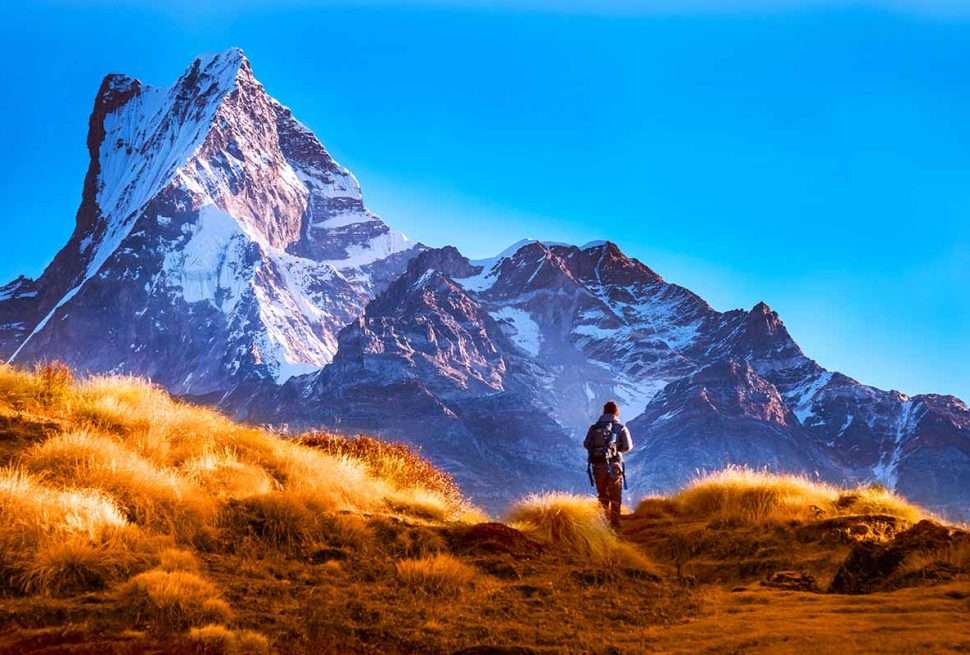

When it comes to choosing your next great Himalayan adventure, the debate of Manaslu Circuit Trek vs Annapurna Circuit is one that every serious trekker eventually faces. Both routes rank among the finest trekking experiences in Nepal, offering dramatic high-altitude passes, ancient Tibetan-influenced culture, and breathtaking views of some of the world’s highest peaks. Yet they are profoundly different journeys — in difficulty, permit requirements, remoteness, cost, and the overall experience they deliver.
In this comprehensive Manaslu Circuit Trek vs Annapurna Circuit comparison, we break down every major factor you need to consider before booking your 2026 trek: difficulty and fitness requirements, permit logistics, cost breakdown, best seasons, day-by-day itineraries, mountain highlights, teahouse accommodation quality, and which trek is the best fit for your experience level and travel style. By the end of this guide, you will know exactly which trail deserves your footsteps.
Quick Overview: Manaslu Circuit Trek vs Annapurna Circuit
Before diving into the details, here is a side-by-side snapshot of the two treks that have captivated Himalayan trekkers for decades.

| Factor | Manaslu Circuit Trek | Annapurna Circuit Trek |
|---|---|---|
| Duration | 14–18 days | 12–21 days |
| Highest Point | Larke La Pass — 5,160 m | Thorong La Pass — 5,416 m |
| Difficulty | Strenuous / Advanced | Moderate to Strenuous |
| Restricted Area | Yes (mandatory guide) | No |
| Permit Cost (approx.) | USD 100–240+ | USD 30–50 |
| Best Season | Mar–May, Sep–Nov | Mar–May, Sep–Nov |
| Crowd Level | Low to Moderate | Moderate to High |
| Trek Style | Teahouse (basic to mid-range) | Teahouse (basic to comfortable) |
| Total Cost (guided) | USD 1,200–1,800 | USD 900–1,400 |
| Main Mountain | Manaslu — 8,163 m (8th highest) | Annapurna I — 8,091 m (10th highest) |
Difficulty and Fitness Requirements: Manaslu Circuit Trek vs Annapurna Circuit
When comparing Manaslu Circuit Trek vs Annapurna Circuit on the basis of difficulty, both treks are demanding by any standard — but they present different types of challenge.
Manaslu Circuit Trek Difficulty
The Manaslu Circuit Trek is rated strenuous to advanced. The trail is rugged, the teahouses are more basic, and the remoteness means slower rescue response if something goes wrong. The critical challenge is the Larke La Pass at 5,160 metres — a long, glaciated crossing that typically starts well before dawn. Trekkers spend multiple days above 3,500 m and must be comfortable in challenging, isolated mountain terrain.
Key physical demands on the Manaslu Circuit include:
- Daily walking hours of 6–8 hours on steep, unpaved trails
- Significant elevation gain and loss each day
- River crossings and exposed ridgeline sections
- Limited medical facilities — the nearest hospital is many hours away
- Larke La Pass crossing requiring pre-dawn starts (typically 3 a.m.)
Annapurna Circuit Difficulty
The Annapurna Circuit is rated moderate to strenuous, making it accessible to fit beginners who prepare adequately. The trail is well-marked, teahouses are plentiful, and the Thorong La Pass at 5,416 m — while higher than Larke La — is crossed from a teahouse village (Thorong Phedi / High Camp) with immediate descent to Muktinath. Infrastructure along the Annapurna Circuit is significantly better developed, with pharmacies, Himalayan Rescue Association aid posts, and reliable mobile connectivity in key villages.
The introduction of jeep roads on portions of the Annapurna Circuit (especially the lower Marsyangdi Valley and the Manang to Mustang section) has changed the character of this route. Many trekkers now start at Chame or Dharapani to avoid the roadside sections and preserve the authentic trail experience.
Verdict on difficulty: If you are a first-time high-altitude trekker, the Annapurna Circuit is the more accessible choice. If you have prior trekking experience above 4,000 m and seek a more challenging, expedition-style adventure, the Manaslu Circuit Trek is the superior test.
Trail Highlights and Scenery: Manaslu Circuit Trek vs Annapurna Circuit

Both routes deliver extraordinary mountain scenery, but the landscapes feel completely different.
Manaslu Circuit Trek Highlights
The Manaslu Circuit circumnavigates Mt. Manaslu (8,163 m), the world’s eighth-highest mountain, through terrain that still feels genuinely wild and unexplored compared to more touristed Nepal trails. Highlights include:
- Lho Village — spectacular close-range views of Manaslu’s north face rising above rice terraces
- Sama Gaun — a remote Tibetan-heritage village at 3,530 m with ancient monasteries and yak herders
- Birendra Tal (Glacier Lake) — a stunning glacial lake near Manaslu Base Camp approach
- Larke La Pass at 5,160 m — panoramic views of Manaslu, Himalchuli (7,893 m), Ngadi Chuli (7,871 m), and the Ganesh Himal range
- Tsum Valley Extension — a semi-restricted sacred valley with medieval Buddhist monasteries and almost zero outside influence, rated among the most spiritually significant regions in the Himalayas
- Bhimtang — a serene alpine meadow on the western descent from Larke La, framed by glaciers
For trekkers seeking complete the Manaslu Base Camp Trek as a side trip from Sama Gaun, the views of the eighth-highest summit from close range are truly extraordinary.
Annapurna Circuit Trek Highlights
The Annapurna Circuit is famous for its extraordinary diversity — in a single journey you pass through subtropical jungle, rhododendron forests, alpine meadows, and the high-altitude Trans-Himalayan desert of Upper Mustang. Highlights include:
- Thorong La Pass at 5,416 m — the highest trekking pass on a standard Nepal circuit route, with sweeping views across the Annapurna and Dhaulagiri massifs
- Manang Valley — a striking high-altitude valley at 3,519 m surrounded by Annapurna III, Gangapurna, and Tilicho Peak
- Tilicho Lake at 4,919 m — one of the world’s highest lakes; a highly recommended acclimatisation side trip
- Muktinath Temple — a sacred Hindu and Buddhist pilgrimage site at 3,760 m
- Marpha and Jomsom — charming villages in the rain-shadow Kali Gandaki Gorge, famous for apple orchards and Thakali cuisine
- Poon Hill Sunrise — accessible at the end of the circuit via the Ghorepani detour, with legendary 360° Himalayan panoramas including Dhaulagiri, Annapurna South, and Machhapuchhre (Fishtail Peak)
Permits and Regulations in 2026: Manaslu Circuit Trek vs Annapurna Circuit
Permit requirements are one of the most significant practical differences in the Manaslu Circuit Trek vs Annapurna Circuit comparison — and they have important cost and logistical implications.
Manaslu Circuit Trek Permits 2026
The Manaslu region is a restricted area designated by the Government of Nepal. As of 2026, you need the following permits:
- Manaslu Restricted Area Permit (RAP) — USD 100 per person per week during September to November (peak season); USD 75 per person per week during other months. This is required for all foreign nationals.
- Manaslu Conservation Area Project (MCAP) Permit — NPR 3,000 (approximately USD 22)
- Annapurna Conservation Area Project (ACAP) Permit — NPR 3,000 (approximately USD 22) — required if you cross into the Annapurna region at Dharapani
- Trekkers’ Information Management System (TIMS) Card — USD 20 (may be bundled)
Critically, the Manaslu Circuit requires a minimum of two trekkers and a licensed Nepali guide at all times within the restricted zone. Solo trekking is not permitted. All permits must be arranged in advance through a registered Nepal trekking company or directly at the relevant government offices in Kathmandu. For official permit information, refer to the Department of Tourism Nepal.
Annapurna Circuit Trek Permits 2026
The Annapurna Circuit is an open trekking area and does not require a restricted area permit. You will need:
- Annapurna Conservation Area Project (ACAP) Permit — NPR 3,000 (approximately USD 22)
- TIMS Card (Trekkers’ Information Management System) — USD 10–20 depending on whether you are trekking independently or with an agency
Independent trekking is fully permitted on the Annapurna Circuit. No minimum group size applies, and a guide is strongly recommended but not legally required. Permits can be obtained in Kathmandu, Pokhara, or at entry checkpoints. For the most up-to-date permit fees and area regulations, always verify with the Nepal Tourism Board (NTB).
Verdict on permits: The Annapurna Circuit wins on permit simplicity and cost. The Manaslu Circuit’s restricted area status adds paperwork, mandatory guide costs, and higher permit fees — but also ensures the trail remains far less crowded and better preserved.
Cost Comparison: Manaslu Circuit Trek vs Annapurna Circuit
Cost is often the deciding factor when comparing Manaslu Circuit Trek vs Annapurna Circuit. Here is a realistic breakdown of what to budget in 2026:
| Cost Item | Manaslu Circuit Trek | Annapurna Circuit Trek |
|---|---|---|
| Permits (all required) | USD 160–260+ | USD 32–45 |
| Guide Fee (per day) | USD 30–40 (mandatory) | USD 25–35 (recommended) |
| Porter Fee (per day) | USD 20–28 | USD 18–25 |
| Teahouse Accommodation (per night) | USD 4–12 | USD 5–20 |
| Meals (per day) | USD 15–25 | USD 20–35 |
| Transport (Kathmandu roundtrip) | USD 40–70 | USD 30–60 |
| Gear rental / miscellaneous | USD 50–100 | USD 50–100 |
| Estimated Total (14–18 days) | USD 1,200–1,800 | USD 900–1,400 |
Both treks can be done more cheaply if you carry your own pack, negotiate directly, and trek in shoulder season. Package deals from a reputable trekking company typically include all permits, guide, porter, accommodation, and meals — making them excellent value for planning a stress-free Himalayan expedition. Check our Manaslu Circuit Trek packages and Annapurna Circuit Trek packages for current 2026 pricing.
Best Season: Manaslu Circuit Trek vs Annapurna Circuit
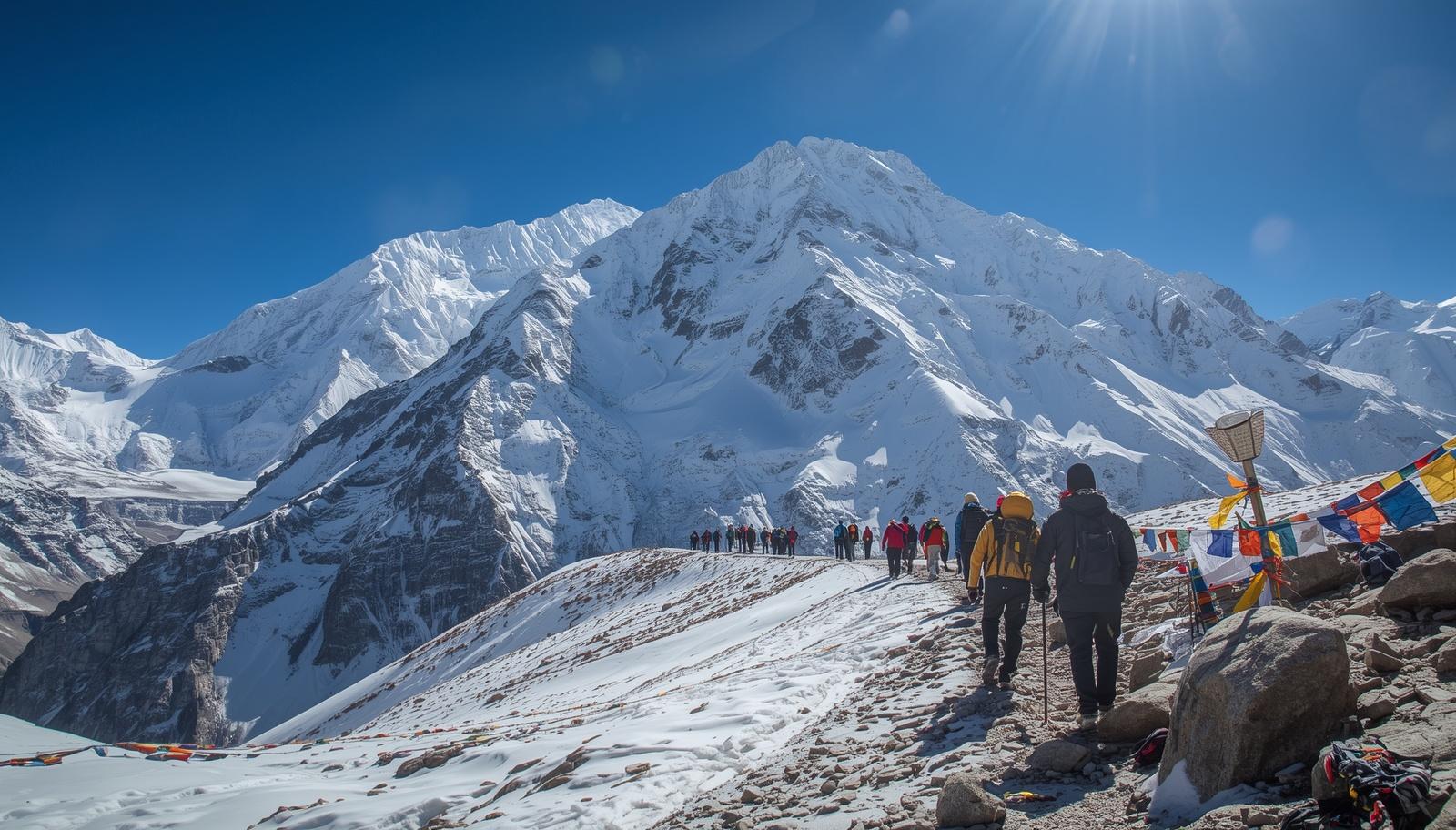
The best trekking seasons in Nepal align closely for both routes, though there are subtle differences worth noting.
Spring: March to May
Spring is an excellent season for both the Manaslu Circuit Trek and the Annapurna Circuit. Rhododendron forests bloom at lower elevations in spectacular reds and pinks. Temperatures are warming, trails are clear of snow below 4,000 m, and the Larke La and Thorong La passes are normally open by late March. Mountain views can be hazy in late April and May due to pre-monsoon heat and dust — but overall conditions are good. This is also climbing season for 8,000-m peaks, which adds an exciting mountaineering energy to base camp regions.
Monsoon: June to August
Trekking in monsoon is generally not recommended for either route. Heavy rainfall increases landslide and flooding risk, trails become slippery, and mountain views are largely obscured by cloud. The Manaslu region receives heavy precipitation during monsoon. However, the rain-shadow area beyond Thorong La on the Annapurna Circuit (Mustang and Manang) is notably drier and some experienced trekkers do visit during this period.
Autumn: September to November
Autumn is the peak trekking season and widely considered the best time for both Manaslu Circuit Trek and Annapurna Circuit. Post-monsoon skies are brilliantly clear, revealing the full panorama of high Himalayan peaks. Trails are dry, temperatures are comfortable, rhododendrons and maples turn golden and red, and wildlife activity is high. October and November are the busiest months on the Annapurna Circuit; the Manaslu Circuit remains quieter even during peak season.
Winter: December to February
Winter trekking is possible but challenging. The Larke La Pass and Thorong La Pass can be closed due to heavy snowfall, temperatures drop severely at high altitude (-20°C and below at the passes), and many teahouses close. Experienced cold-weather trekkers occasionally complete the lower sections of the Annapurna Circuit in winter, but the Manaslu Circuit in winter is for specialists only.
Best overall season recommendation: October–November for both treks, with late September a close second. For fewer crowds specifically on the Manaslu Circuit, April is a superb spring option.
Sample Itineraries: Manaslu Circuit Trek vs Annapurna Circuit
Manaslu Circuit Trek — 16-Day Standard Itinerary
- Day 1: Drive Kathmandu to Soti Khola (7–8 hrs, 710 m)
- Day 2: Soti Khola to Maccha Khola (5–6 hrs, 869 m)
- Day 3: Maccha Khola to Jagat (5–6 hrs, 1,340 m)
- Day 4: Jagat to Deng (5–6 hrs, 1,804 m) — enter restricted zone
- Day 5: Deng to Namrung (6–7 hrs, 2,630 m)
- Day 6: Namrung to Lho (5 hrs, 3,180 m) — first Manaslu views
- Day 7: Lho to Sama Gaun (5 hrs, 3,530 m)
- Day 8: Sama Gaun acclimatisation / Manaslu Base Camp side trip (4,400 m)
- Day 9: Sama Gaun to Samdo (3–4 hrs, 3,875 m)
- Day 10: Samdo to Dharamsala / Larke Phedi (4 hrs, 4,460 m)
- Day 11: Dharamsala over Larke La Pass (5,160 m) to Bhimtang (7–9 hrs, 3,720 m)
- Day 12: Bhimtang to Tilje (5–6 hrs, 2,300 m)
- Day 13: Tilje to Dharapani (3–4 hrs, 1,860 m) — join Annapurna Circuit trail
- Day 14: Drive Dharapani to Besisahar to Kathmandu (8–9 hrs)
Our full Manaslu Circuit Trek itinerary includes optional extensions to the Tsum Valley and Manaslu Base Camp, taking the total to 20+ days for those who wish to go deeper into this extraordinary region.
Annapurna Circuit Trek — 15-Day Classic Itinerary
- Day 1: Drive Kathmandu/Pokhara to Besisahar, trek to Bhulbhule (840 m)
- Day 2: Bhulbhule to Ngadi to Bahundanda (1,310 m)
- Day 3: Bahundanda to Chamje to Tal (1,700 m)
- Day 4: Tal to Dharapani to Chame (2,710 m)
- Day 5: Chame to Upper Pisang (3,300 m)
- Day 6: Upper Pisang to Manang (3,519 m) via Bhraka
- Day 7: Manang acclimatisation — hike to Gangapurna Lake or Ice Lake
- Day 8: Manang to Yak Kharka (4,018 m)
- Day 9: Yak Kharka to Thorong Phedi / High Camp (4,450–4,800 m)
- Day 10: Thorong La Pass (5,416 m) to Muktinath (3,760 m) — epic day
- Day 11: Muktinath to Marpha (2,670 m)
- Day 12: Marpha to Tatopani (1,190 m)
- Day 13: Tatopani to Ghorepani (2,860 m) via Ghandruk or direct
- Day 14: Ghorepani — Poon Hill sunrise (3,210 m), trek to Nayapul
- Day 15: Drive Nayapul to Pokhara, fly or drive to Kathmandu
Accommodation and Food: Manaslu Circuit Trek vs Annapurna Circuit
Teahouse trekking is the standard on both routes, but the quality varies significantly between the two trails.
Manaslu Circuit Accommodation
Teahouses on the Manaslu Circuit Trek are basic to mid-range, especially above Jagat. Rooms are typically twin-bedded with thin walls and shared toilet facilities. Hot showers are available (usually solar-heated or from a wood-fired boiler) in most villages for a small surcharge. Electricity for charging devices is available in most teahouses but may be limited. Wi-Fi is sparse and unreliable above Samagaun. Meals are hearty mountain fare: dal bhat, noodle soups, pasta, potato dishes, eggs, and Tibetan bread. Expect to eat well and warm.
Annapurna Circuit Accommodation
The Annapurna Circuit has the most developed teahouse infrastructure of any trekking route in Nepal, particularly in Manang, Pisang, and the Mustang section. Comfortable guesthouses with private bathrooms, reliable Wi-Fi, well-stocked menus, and even espresso machines exist in larger villages. This higher level of comfort comes with higher meal prices — especially above Manang. The diversity of cuisine on the Annapurna Circuit is remarkable: you will find apple pie in Marpha, excellent Thakali set meals in Jomsom, and fresh bakery goods in multiple villages.
Verdict on accommodation: The Annapurna Circuit is the winner for comfort seekers. The Manaslu Circuit’s simpler teahouses enhance the authentic adventure atmosphere but require realistic expectations about facilities.
Culture and Local Communities
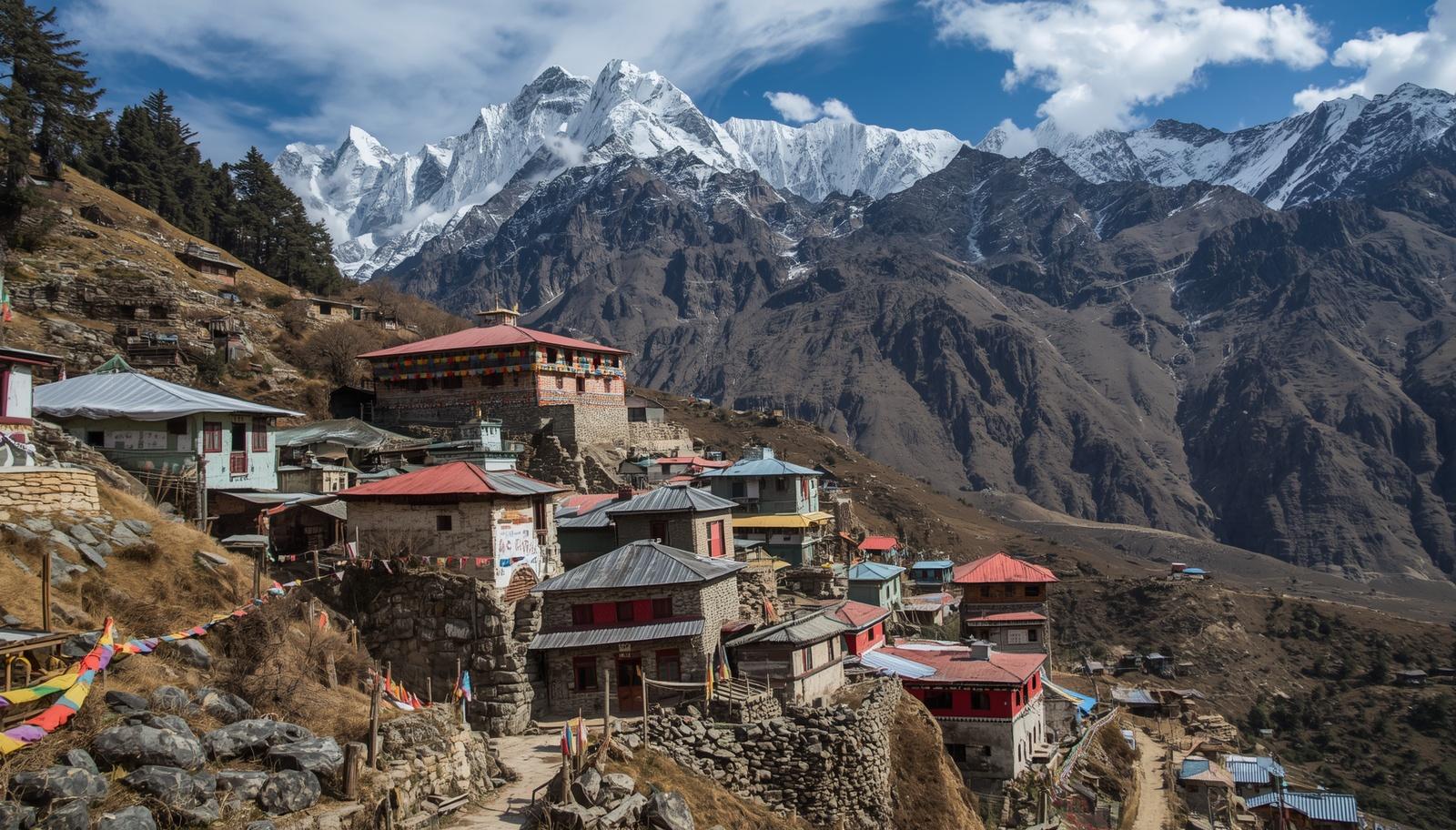
Cultural immersion is a central part of any great Himalayan trek, and both the Manaslu Circuit and Annapurna Circuit deliver powerful cultural encounters — though with different characters.
Manaslu Circuit Trek Culture
The upper Manaslu valley and especially the Tsum Valley are among the last places on earth where ancient Tibetan Buddhist culture survives almost entirely intact, largely because of the region’s restricted area status and the small number of outside visitors. Villages like Sama Gaun, Lho, and Samagaon are home to Gurung, Nubri, and Tsum peoples, many of whom maintain practices — including seasonal yak herding migrations, sky burial traditions, and elaborate religious festivals — that have continued for centuries. Monasteries here date to the 12th century and earlier. The sense of encountering a living, undisturbed culture is deeply moving and is one of the strongest reasons to choose the Manaslu Circuit Trek.
Annapurna Circuit Culture
The Annapurna Circuit passes through a remarkable range of ethnic communities: Gurung and Magar villages in the lower valleys; Manangba Tibetan-origin communities in Manang and Pisang; Thakali traders in the Mustang section; and Brahmin and Chetri Newar settlements on the approaches. The cultural variety is extraordinary. However, decades of high tourist footfall and road development have brought significant Westernisation to many villages, particularly around Muktinath and Jomsom. Prayerflags still snap in the wind, mani walls line ancient trails, and Muktinath’s 108 water spouts remain one of Nepal’s most sacred pilgrimage sites — but the traditional character is more diluted than on the Manaslu Circuit.
Crowds and Remoteness: Manaslu Circuit Trek vs Annapurna Circuit
The difference in visitor numbers is one of the most practically significant factors in the Manaslu Circuit Trek vs Annapurna Circuit debate. According to data published by the Nepal Tourism Board, over 50,000 trekkers complete all or part of the Annapurna Circuit each year, while the Manaslu Circuit receives fewer than 5,000 — a consequence of the restricted area permit system, the mandatory guide requirement, and the greater logistical demands.
On the Annapurna Circuit in October, popular sections near Manang and Thorong La can feel genuinely congested — long queues of trekkers form at the pass in pre-dawn darkness. The trail in sections through Chame and Besisahar now runs alongside a jeep road, further reducing the wilderness feel of the lower valley.
The Manaslu Circuit Trek, by contrast, offers a profoundly quieter experience. You may walk for hours without encountering another foreign trekker. Campsites and teahouses remain uncrowded even in peak October. The trail traverses primary forest, glacial rivers, and high-altitude meadows with a sense of genuine wilderness that is increasingly rare on Himalayan trekking circuits.
For trekkers who value solitude, authenticity, and the feeling of true exploration, the Manaslu Circuit Trek wins this category decisively.
Guide and Porter Requirements
As noted above, the Manaslu Circuit Trek legally requires a licensed Nepali trekking guide for all foreign nationals entering the restricted zone. Trekking without a guide is not permitted and will result in your permit being refused at checkpoints. You must also register with a minimum group of two trekkers (a pair of friends, or two separate clients joined through an agency).
Beyond the legal requirement, hiring a guide on the Manaslu Circuit is strongly advisable for practical reasons: trail markings are less reliable than on the Annapurna Circuit, navigation above the snowline on Larke La requires experience, and a guide provides invaluable support in the event of altitude sickness or injury.
On the Annapurna Circuit, a guide is not legally required but is highly recommended for safety, navigation assistance around the Thorong La crossing, and cultural interpretation. Hiring local guides and porters directly contributes to the livelihoods of mountain communities — a practice strongly encouraged by the Trekking Agencies’ Association of Nepal (TAAN).
At The Nepal Trekking Company, all our guides are certified by the Nepal Government and trained in wilderness first aid. You can read more about our guide services for Nepal treks on our main trekking page.
The Verdict: Which Trek Is Right for You in 2026?
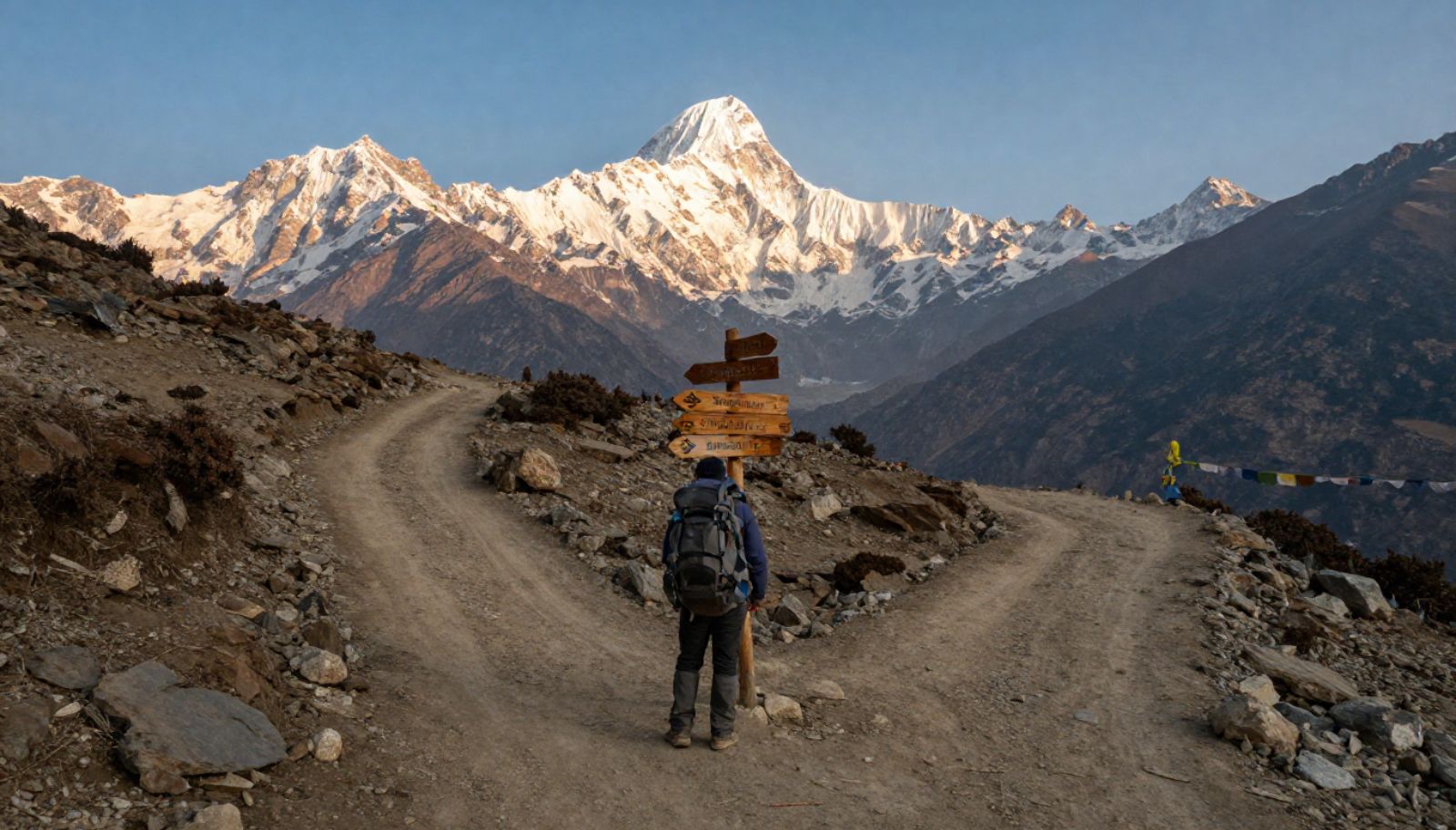
After an in-depth comparison of Manaslu Circuit Trek vs Annapurna Circuit, here is our honest recommendation:
Choose the Manaslu Circuit Trek if you:
- Have prior high-altitude trekking experience (above 4,000 m)
- Want genuine wilderness and minimal tourist crowds
- Are deeply interested in ancient Tibetan Buddhist culture at Sama Gaun, Lho, and potentially the Tsum Valley
- Want close-up views of Mt. Manaslu (8,163 m) — the world’s 8th-highest peak — in a remote and unspoiled setting
- Are travelling with a partner or group (mandatory for the restricted zone)
- Have a slightly higher budget and the time for 16–18 days
- Value authentic Nepal travel that feels far removed from tourism infrastructure
Choose the Annapurna Circuit if you:
- Are a first-time high-altitude trekker or returning trekker who wants reliable infrastructure
- Want the maximum variety of landscapes — jungle, alpine, high desert — in a single trek
- Value comfortable teahouses, diverse food options, and reliable connectivity
- Are trekking solo or in a small group without a mandatory guide
- Are on a tighter budget
- Want to combine your trek with Poon Hill, Tilicho Lake, or Muktinath cultural experiences
- Are comfortable with popular trails and fellow trekkers sharing the trail
In the final analysis, neither the Manaslu Circuit Trek nor the Annapurna Circuit is “better” in absolute terms — they are different Himalayan journeys suited to different trekkers at different points in their adventure travel lives. Many passionate Nepal trekkers do both, treating the Annapurna Circuit as their introduction to Nepal and returning for the Manaslu Circuit Trek once they are hungry for something wilder and more challenging. If you are ready to plan your trek, explore our full range of Nepal trekking packages for 2026 and get in touch with our team for personalised advice.
Frequently Asked Questions: Manaslu Circuit Trek vs Annapurna Circuit
Which is harder: Manaslu Circuit Trek or Annapurna Circuit?
The Manaslu Circuit Trek is generally considered harder than the Annapurna Circuit. Manaslu crosses the Larke La Pass at 5,160 m over remote, less-serviced terrain with restricted area regulations. Annapurna Circuit crosses Thorong La Pass at 5,416 m but has well-developed infrastructure, teahouses, and medical facilities throughout the route.
What permits do I need for the Manaslu Circuit Trek in 2026?
For the Manaslu Circuit Trek in 2026 you need three permits: the Manaslu Restricted Area Permit (RAP), the Manaslu Conservation Area Project (MCAP) permit, and the Annapurna Conservation Area Project (ACAP) permit if your route connects into the Annapurna region. A licensed guide is also mandatory in the restricted zone.
Which trek costs more — Manaslu Circuit or Annapurna Circuit?
The Manaslu Circuit Trek is more expensive than the Annapurna Circuit primarily due to restricted area permits, the mandatory guide requirement, and more remote teahouse infrastructure. Budget approximately USD 1,200–1,800 all-inclusive for Manaslu and USD 900–1,400 for Annapurna Circuit with a guide.
What is the best season for the Manaslu Circuit Trek?
The best seasons for the Manaslu Circuit Trek are spring (March to May) and autumn (September to November). These months offer stable weather, clear mountain views, and safe conditions for crossing the Larke La Pass at 5,160 m.
Can I do the Annapurna Circuit without a guide?
Yes, independent trekking is allowed on the Annapurna Circuit. Unlike the Manaslu Circuit, there is no mandatory licensed guide requirement on the Annapurna Circuit as of 2026. However, hiring a guide or porter is strongly recommended for safety and to support local mountain communities.
How many days does the Manaslu Circuit Trek take?
The standard Manaslu Circuit Trek takes 14 to 18 days depending on your itinerary, acclimatisation schedule, and whether you extend into the Tsum Valley or connect to the Annapurna Circuit via Dharapani.
Which trek has better mountain views: Manaslu or Annapurna Circuit?
Both treks offer spectacular Himalayan scenery. Manaslu Circuit provides close-up views of Mt. Manaslu (8,163 m), Himalchuli, and Ngadi Chuli in a wild, unspoiled setting. Annapurna Circuit rewards trekkers with panoramic views of Annapurna I–IV, Dhaulagiri, Machhapuchhre (Fishtail), and Tilicho Lake.
Ready to Book Your 2026 Nepal Trek?
Whether you choose the Manaslu Circuit Trek or the Annapurna Circuit, The Nepal Trekking Company provides fully guided, permit-inclusive packages with expert certified guides, comfortable teahouse accommodation, and personalised itineraries tailored to your fitness and schedule.
→ View Manaslu Circuit Trek Packages
→ View Annapurna Circuit Trek Packages
→ Contact Our Team for a Custom Itinerary
The Manaslu Circuit Trek vs Annapurna Circuit is ultimately a choice about the kind of trekker you want to be. Both routes offer life-changing experiences, jaw-dropping Himalayan scenery, rich cultural encounters, and the satisfaction of completing a true mountain circuit in one of the world’s greatest trekking destinations. The question is simply: how wild do you want to go?