
Table of Contents:
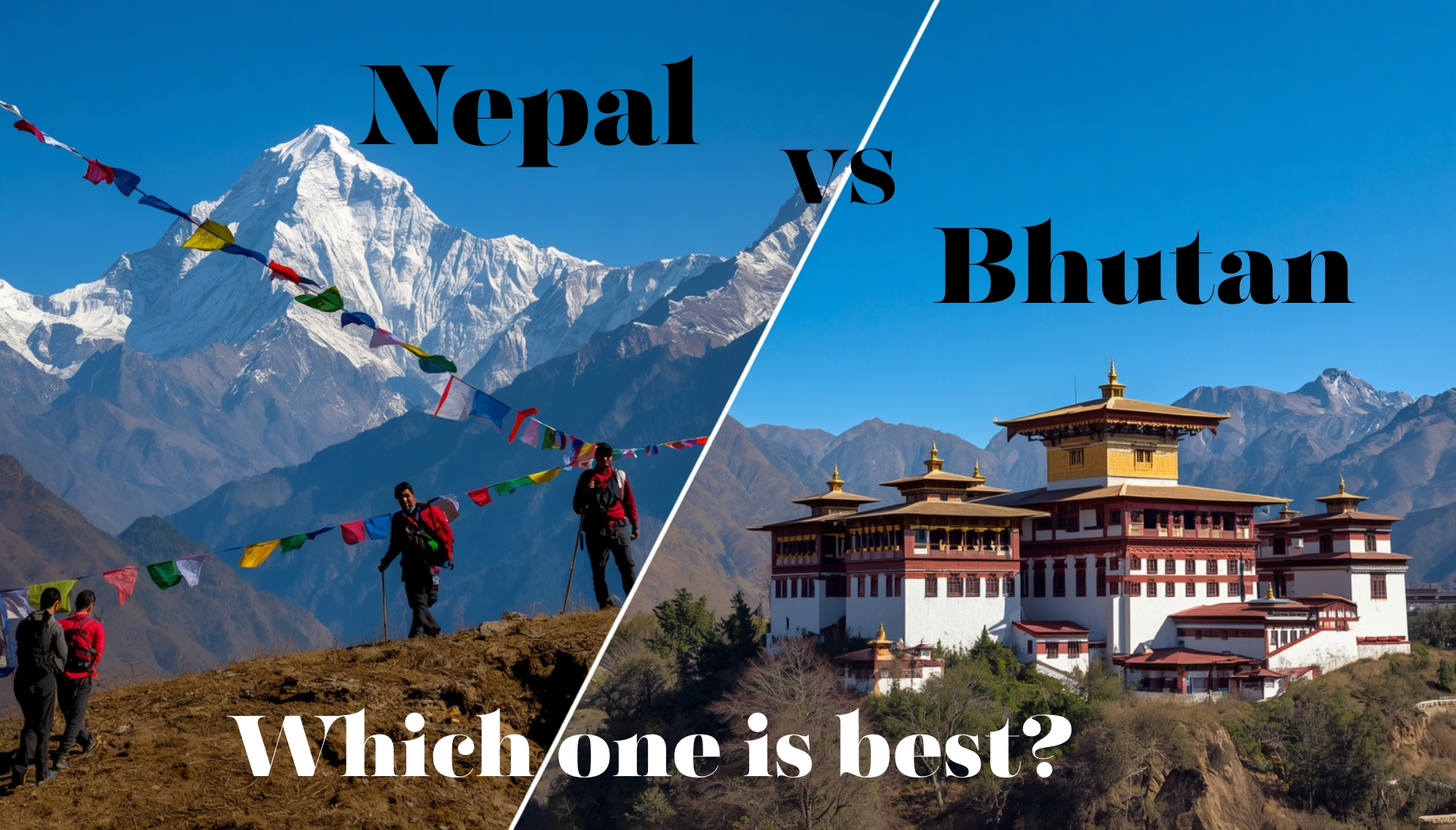
If you are choosing between two Himalayan giants for your next adventure, the Nepal vs Bhutan question is probably the biggest decision on your travel checklist. Both countries sit along the same mountain range, both promise jaw-dropping views of snow-capped peaks, and both offer a culture unlike anything you will find elsewhere in the world. Yet the experience of visiting each one is completely different, and picking the wrong destination for your travel style can mean the difference between the trip of a lifetime and a rushed, expensive disappointment.
In this Nepal vs Bhutan comparison, we break down cost, trekking difficulty, culture, food, permits, wildlife, and the overall travel experience so you can decide with confidence which Himalayan country deserves your vacation days in 2027 / 2028.
Nepal vs Bhutan: Quick Overview.
Before we dive deep into the Nepal vs Bhutan debate, here is a snapshot of what each country is known for.
Nepal is home to eight of the world’s fourteen 8,000-meter peaks, including Mount Everest, and welcomes independent trekkers, backpackers, and luxury travelers alike. Nepal has an open-door tourism policy, a huge trekking infrastructure of teahouses and lodges, and some of the most affordable adventure travel on the planet.
Bhutan, on the other hand, follows a “high value, low volume” tourism model. Every visitor (apart from those from India, Bangladesh, and the Maldives) pays a Sustainable Development Fee and must book through a licensed Bhutanese tour operator. This keeps Bhutan pristine, uncrowded, and deeply traditional, but it also makes it considerably more expensive than Nepal.

Nepal vs Bhutan: Cost of Travel.
Cost is usually the deciding factor in any Nepal vs Bhutan conversation. Nepal is one of the most budget-friendly trekking destinations in the world. A two-week teahouse trek, including permits, guide, porter, food, and accommodation, can cost anywhere between $800 and $1,500 depending on the route and season. Independent travelers can trek in Nepal on a shoestring budget of $25 to $40 per day.
Bhutan works very differently. As of the current tourism policy, visitors pay a daily Sustainable Development Fee on top of accommodation, meals, transport, and a licensed guide, which are usually bundled into a package price. A week in Bhutan can easily cost $2,000 to $3,000 or more per person. When it comes to Nepal vs Bhutan on a budget basis, Nepal wins by a wide margin, making it the better choice for backpackers, students, and long-term travelers.
Nepal vs Bhutan: Trekking and Landscapes.
Trekking is where the Nepal vs Bhutan comparison gets exciting. Nepal offers an enormous variety of trekking routes for every fitness level and interest, from the classic Everest Base Camp Trek and the Annapurna Circuit to remote, restricted-area adventures like the Manaslu Circuit Trek. Trails in Nepal are well established, with teahouses along most popular routes, meaning trekkers do not need to carry camping gear or cook their own food.
Bhutan’s trekking scene is smaller and far less developed in terms of infrastructure. Most treks, such as the famous Druk Path Trek or the demanding Snowman Trek, are fully camping-based, meaning you need a full support crew, tents, and cooking staff. Bhutan’s trails are quieter, cleaner, and arguably more untouched, but there are simply fewer route options compared to Nepal. If your priority is variety and flexibility in trekking difficulty, Nepal has the edge. If you want a handful of pristine, crowd-free trails and do not mind camping, Bhutan delivers a different kind of magic.
Nepal vs Bhutan: Culture and Religion.
Both countries are deeply Buddhist and Hindu-influenced, but the cultural expression differs. Nepal is a melting pot of over 125 ethnic groups and languages, with Hinduism and Buddhism intertwining in daily life. Kathmandu Valley alone holds seven UNESCO World Heritage Sites, including Pashupatinath Temple, Swayambhunath, and Boudhanath Stupa.
Bhutan is almost entirely Vajrayana Buddhist, and its culture feels remarkably preserved because of strict government policies protecting traditional dress, architecture, and customs. Dzongs (fortress-monasteries) dominate the landscape, and the iconic Tiger’s Nest Monastery perched on a cliffside is often the single most photographed site in the country. In the Nepal vs Bhutan cultural comparison, Nepal offers diversity and depth across many traditions, while Bhutan offers a single, remarkably intact Buddhist identity.
Nepal vs Bhutan: Wildlife and National Parks.
Wildlife lovers have plenty to consider in the Nepal vs Bhutan debate as well. Nepal’s Chitwan National Park and Bardia National Park are home to Bengal tigers, one-horned rhinoceroses, and hundreds of bird species, with well-developed jungle safari infrastructure and affordable lodges.
Bhutan’s national parks, such as Jigme Dorji National Park, protect similarly rich biodiversity, including snow leopards, red pandas, and takins (Bhutan’s national animal), but tourism infrastructure for wildlife viewing is far less developed than in Nepal. For dedicated wildlife safaris on a reasonable budget, Nepal is the more practical choice.
Nepal vs Bhutan: Food and Cuisine.
Nepali cuisine centers around dal bhat (lentils, rice, and vegetable curry), momos (dumplings), and a wide range of regional dishes influenced by Tibetan, Indian, and indigenous Newari cooking. Street food culture is vibrant, especially in Kathmandu and Pokhara.
Bhutanese food is spicier and more homogenous, built around ema datshi (chili and cheese stew), red rice, and yak meat dishes. Because most Bhutan trips are guided and catered, you have less freedom to explore street food compared to independent travel in Nepal. Food adventurers who like to wander and try local eateries on their own will find Nepal easier to navigate.
Nepal vs Bhutan: Visa and Entry Requirements.
Nepal offers visa-on-arrival for most nationalities, along with e-visa options, making it simple to plan a spontaneous trip. Independent travelers can arrange their own permits for most trekking regions, though restricted areas like Manaslu and Upper Mustang require a licensed agency and special permits.
Bhutan requires all non-regional tourists to arrange their visa through a licensed Bhutanese tour operator before arrival, along with payment of the Sustainable Development Fee. There is no true independent travel option in Bhutan; everything must be pre-arranged. This is one of the starkest differences in the Nepal vs Bhutan comparison for travelers who value spontaneity and flexibility.
Nepal vs Bhutan: Best Time to Visit.
Both countries share similar peak seasons. The best time to visit Nepal is during spring (March to May) and autumn (September to November), when skies are clear and temperatures are moderate for trekking. Bhutan follows the same pattern, with spring and autumn offering the best mountain visibility and mild weather for festivals like Paro Tshechu and Thimphu Tshechu.
Winter and monsoon season bring challenges to both destinations, from snow-blocked high passes in Nepal to heavy rainfall and leeches on Bhutan’s lower trails. Whichever country you choose in the Nepal vs Bhutan decision, aim for the shoulder seasons for the best experience.
Nepal vs Bhutan: Which Country Suits Your Fitness Level?
Fitness level is an underrated factor in the Nepal vs Bhutan decision. Nepal caters to every ability, from gentle Poon Hill day hikes suited to beginners and families, to grueling high-altitude expeditions like the Three Passes Trek that demand serious stamina and prior trekking experience. Because Nepal has so many trail options at varying elevations and durations, it is easy to match a trek to your exact fitness level, whether that is a five-day taster trek or a month-long expedition.
Bhutan’s treks tend to sit at the more demanding end of the spectrum, since camping-based routes often involve long daily walking hours, high passes, and less opportunity to shorten or modify the itinerary once booked. Beginners in Bhutan are usually steered toward cultural sightseeing in Paro, Thimphu, and Punakha rather than multi-day trekking, while experienced trekkers gravitate toward the legendary Snowman Trek, considered one of the hardest treks on the planet. If matching your fitness level precisely is important, Nepal’s sheer range of trekking options gives it another advantage in the Nepal vs Bhutan comparison.
Nepal vs Bhutan: Solo Travel vs Group Tours.
Solo travelers weighing Nepal vs Bhutan should know that Nepal remains one of the friendliest countries in the world for independent, solo, and even solo-female travel. You can join a trekking group on arrival, hire a local guide for a day or a month, or trek popular routes with just a porter, all without pre-booking anything from home. Nepal’s well-worn trails and busy teahouse culture also make it easy to meet other travelers along the way.
Bhutan does not really offer a “solo travel” experience in the traditional sense, since every visitor is assigned a licensed guide and vehicle as part of their mandatory package, even if they are traveling alone. This can feel more like a private guided tour than backpacking, which some travelers love for the personal attention and others find limiting. If spontaneous, social, budget-driven solo travel is what you are after, Nepal is clearly the better fit in the Nepal vs Bhutan matchup.
Nepal vs Bhutan: Which One Should You Choose?
The right answer to Nepal vs Bhutan ultimately depends on your travel style, budget, and priorities.
- Choose Nepal if: You want budget-friendly travel, a huge variety of trekking routes, independent backpacking freedom, world-class mountain views including Everest, and a mix of adventure with vibrant city life in Kathmandu and Pokhara.
- Choose Bhutan if: You want an exclusive, uncrowded experience, don’t mind paying a premium for guided, all-inclusive travel, and want to see one of the most culturally preserved countries on Earth.
- Choose both if: Many travelers combine a Nepal trek with a short Bhutan cultural tour, since flights connect Kathmandu and Paro directly, giving you the best of both Himalayan worlds in a single trip.
For most trekkers, families, and budget-conscious adventurers, Nepal remains the more practical and rewarding choice, especially with iconic treks like the Manaslu Circuit vs Annapurna Circuit comparison offering something for every fitness level. If you are also weighing a broader family-friendly itinerary, our guide to a family holiday in Nepal covers options beyond high-altitude trekking.
Nepal vs Bhutan: Permits and Sustainable Development Fee.
Permit systems are one of the most misunderstood parts of the Nepal vs Bhutan planning process. In Nepal, most treks require a TIMS card and a national park or conservation area permit, both of which are inexpensive and easy to arrange through a local agency in Kathmandu or Pokhara. Restricted regions such as Manaslu, Upper Mustang, and Nar Phu require a special permit and mandatory licensed guide, but the cost is still far lower than anything comparable in Bhutan.
Bhutan’s Sustainable Development Fee, often shortened to SDF, is charged per person, per night, and is separate from your guide, hotel, and transport costs. The fee funds free education, healthcare, and environmental conservation across the country, and it is the mechanism Bhutan uses to keep tourist numbers low and controlled. When people compare Nepal vs Bhutan permit costs, the difference is night and day: Nepal’s permits are a small line item, while Bhutan’s SDF can be the single largest cost of the entire trip.
Nepal vs Bhutan: Accommodation Options.
Accommodation is another area where the Nepal vs Bhutan experience diverges sharply. Nepal’s trekking routes are lined with teahouses, which are simple family-run lodges offering a bed, blankets, and home-cooked meals at low prices. In cities like Kathmandu and Pokhara, options range from $5-a-night hostels to five-star resorts, giving travelers full control over their budget.
Bhutan’s accommodations are more standardized. The government sets minimum tariffs that already include three-star (or better) hotel stays as part of the guided package, and travelers rarely have the option to downgrade to cheaper local guesthouses. On multi-day treks in Bhutan, camping is the norm rather than lodges, since teahouse-style infrastructure has not been developed the way it has in Nepal. Anyone comparing Nepal vs Bhutan accommodation should know that Nepal offers far more flexibility and price range, while Bhutan offers consistency at a higher fixed cost.
Nepal vs Bhutan: Getting There and Getting Around.
Kathmandu’s Tribhuvan International Airport is well connected to major hubs across Asia, the Middle East, and increasingly Europe, with budget and full-service carriers both flying in regularly. Once inside Nepal, domestic flights, local buses, and jeep hire make it easy to reach trailheads independently.
Bhutan’s Paro International Airport is one of the most challenging airports in the world to land at, tucked between steep mountains, and is served by only two airlines: Druk Air and Bhutan Airlines. Flights tend to be pricier than typical routes into Kathmandu, and internal travel within Bhutan is arranged entirely by your tour operator as part of the package. For travelers who want the freedom to hop on a local bus or negotiate their own taxi, Nepal is considerably easier to navigate than Bhutan.
Nepal vs Bhutan: Health, Safety, and Altitude.
Both countries involve high-altitude travel, so altitude sickness is a real consideration in the Nepal vs Bhutan discussion. Nepal’s popular treks like Everest Base Camp and the Manaslu Circuit climb well above 5,000 meters, and proper acclimatization days are essential. Nepal’s extensive trekking industry means rescue helicopters, travel insurance providers, and medical posts along major routes are well established.
Bhutan’s trekking altitudes can be just as extreme, particularly on routes like the Snowman Trek, but because trekking volumes are much lower, rescue infrastructure is less immediate. Bhutan’s guided-only model does mean you always have a trained professional with you, which some travelers find reassuring. In terms of general safety, both Nepal and Bhutan are considered very safe for tourists, with low crime rates and welcoming local communities.
Nepal vs Bhutan: Festivals and Best Cultural Experiences.
Timing your trip around a festival can transform a good trip into an unforgettable one. In Nepal, Dashain and Tihar are the two biggest festivals, filling cities and villages with lights, kite-flying, and family celebrations, while mountain regions celebrate Buddhist festivals like Mani Rimdu near Everest. Bhutan is famous for its tshechus, colorful masked-dance festivals held at dzongs throughout the year, with Paro Tshechu and Thimphu Tshechu being the most spectacular for visitors.
If cultural festivals are a priority in your Nepal vs Bhutan decision, both destinations deliver incredible experiences, but Bhutan’s tshechus are more tightly linked to the guided tourism calendar, so your operator will need to plan your dates carefully around them.
Nepal vs Bhutan: Sustainability and Environmental Impact.
Bhutan is often celebrated for being the world’s only carbon-negative country, a direct result of its low-volume tourism policy and strict conservation laws protecting over 70 percent forest cover. This makes Bhutan a strong choice for environmentally conscious travelers who want their tourist dollars tied directly to conservation funding.
Nepal, with its higher visitor numbers, faces greater environmental pressure on popular trails, though community-led initiatives, plastic-bottle-free zones, and conservation area fees are steadily improving sustainability. When sustainability is the deciding factor in Nepal vs Bhutan, Bhutan currently has the stronger environmental track record, though Nepal’s trekking communities are making consistent progress.
Nepal vs Bhutan: Sample Itineraries.
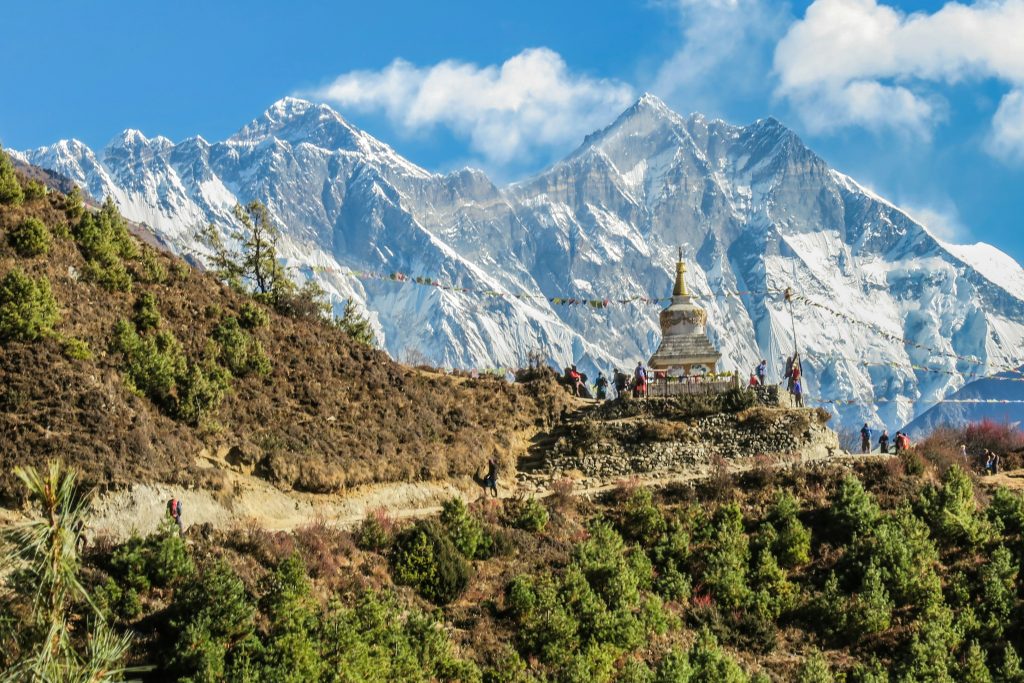
A typical two-week Nepal itinerary might include three days exploring Kathmandu’s UNESCO sites, ten days trekking a route like the Manaslu Circuit or Annapurna Base Camp, and a final day relaxing beside Phewa Lake in Pokhara. This kind of itinerary can be built entirely independently or with a local guide, and costs remain accessible throughout.
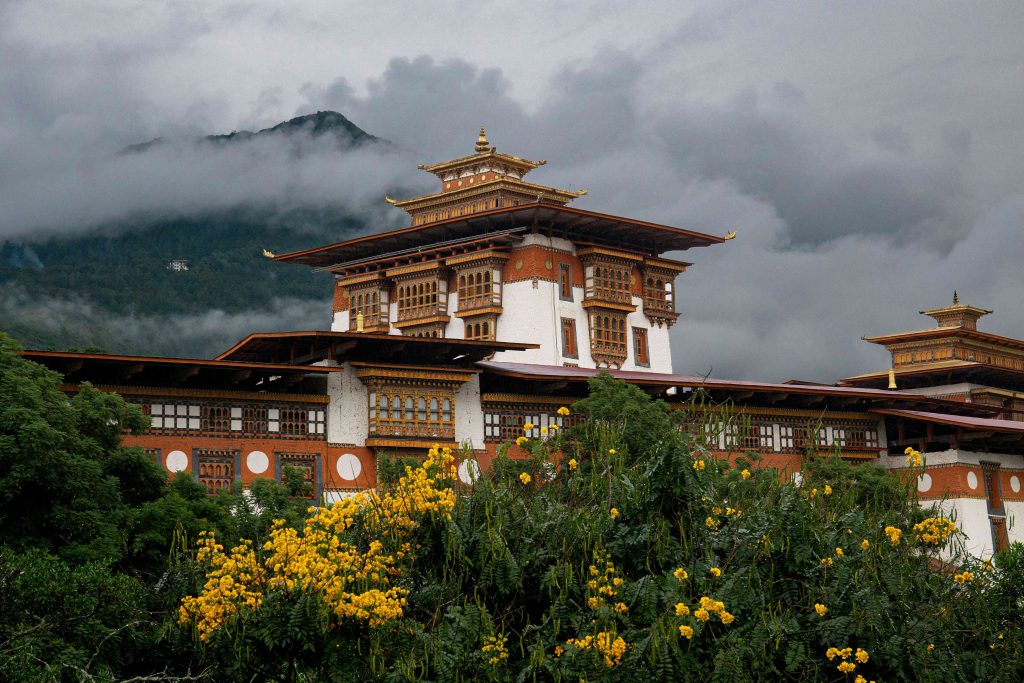
A typical Bhutan itinerary runs shorter, often five to seven days, and might include Paro, Thimphu, and Punakha, with a day hike to Tiger’s Nest Monastery as the highlight. Because every day is pre-planned and guided, Bhutan itineraries feel more structured and less improvised than a typical Nepal trip. Travelers deciding on Nepal vs Bhutan itinerary length should note that Nepal rewards longer stays, while Bhutan is well suited to a shorter, curated visit.
Nepal vs Bhutan: Language and Communication.
Nepali is the official language of Nepal, but English is widely spoken in tourist areas, trekking lodges, and by virtually all licensed guides, making independent travel straightforward even for first-time visitors. Dzongkha is Bhutan’s official language, and while English is also taught in schools and used in tourism, the guided nature of Bhutan travel means you will rarely need to communicate directly with locals outside of your guide. This is a small but meaningful difference for travelers who enjoy connecting with locals directly during their trip.
Nepal vs Bhutan: What to Pack.
Packing needs are broadly similar for both destinations, since both involve high-altitude walking and unpredictable mountain weather. A good down jacket, moisture-wicking base layers, sturdy broken-in trekking boots, a warm sleeping bag rated for sub-zero temperatures, trekking poles, sunglasses with UV protection, and a reliable headlamp are essentials for either country.
For Nepal, a wider temperature range across lower Kathmandu Valley heat and high-altitude cold on treks like the Manaslu Circuit means layering is especially important, and packing a water purification method is wise since bottled water is discouraged on conservation grounds. For Bhutan, since most treks are camping-based, a warmer four-season sleeping bag and a full set of camping layers become even more important, as accommodation will not offer the heated dining rooms typical of Nepali teahouses. Whichever destination you pick, investing in quality gear will make a noticeable difference to your comfort on the trail.
Nepal vs Bhutan: Photography and Scenery.
Photographers rarely leave either country disappointed. Nepal offers dramatic, close-up mountain photography opportunities, with routes like Everest Base Camp and Annapurna Base Camp placing you directly beneath 8,000-meter giants, alongside vibrant street photography in Kathmandu’s ancient squares and colorful prayer flags strung across high passes. Golden hour light hitting peaks like Machhapuchhre is a favorite shot for visiting photographers.
Bhutan offers a different visual style: pristine, uncrowded landscapes, traditional architecture untouched by modern signage, and the unmistakable silhouette of Tiger’s Nest Monastery clinging to a cliff face. Because tourist numbers are capped, photographers in Bhutan often get quieter, less crowded shots of iconic sites compared to increasingly popular viewpoints in Nepal. Both countries reward photographers handsomely, just with a different flavor of Himalayan beauty.

Nepal vs Bhutan: Money and Currency.
Nepal uses the Nepalese Rupee, and ATMs are widely available in Kathmandu, Pokhara, and larger towns, though cash is still king on remote trekking trails. Credit cards are accepted at many hotels and restaurants in the cities. Bhutan uses the Ngultrum, pegged to the Indian Rupee, and since most costs are bundled into your pre-paid package, you will need far less cash on hand during a Bhutan trip compared to an independent Nepal itinerary.
Nepal vs Bhutan: Comparison Table.
| Category | Nepal | Bhutan |
|---|---|---|
| Daily Budget | $25–$40 (independent) | $200+ (Sustainable Development Fee + package) |
| Travel Style | Independent or guided | Guided only, pre-arranged |
| Trekking Infrastructure | Teahouses, well-developed trails | Camping-based, limited trails |
| Highest Peak | Mount Everest (8,849m) | Gangkhar Puensum (7,570m, unclimbed) |
| Visa | Visa on arrival / e-visa | Pre-arranged visa only |
| Best For | Budget travelers, trekkers, backpackers | Luxury cultural travelers, exclusivity seekers |
Frequently Asked Questions: Nepal vs Bhutan.
Is Nepal cheaper than Bhutan?
Yes. Nepal is significantly cheaper than Bhutan because it allows independent travel without a mandatory daily fee, while Bhutan requires a Sustainable Development Fee and pre-booked guided packages that raise the overall cost considerably.
Which is better for trekking, Nepal or Bhutan?
Nepal is generally better for trekking because it offers a wider variety of routes, established teahouse infrastructure, and options for every difficulty level, from short hikes to multi-week expeditions like the Manaslu Circuit Trek.
Can I travel to Bhutan independently like Nepal?
No. Unlike Nepal, Bhutan requires nearly all foreign tourists to book through a licensed Bhutanese tour operator and pay the required fees in advance, so fully independent backpacking is not possible in Bhutan.
Which country has better mountain views, Nepal or Bhutan?
Nepal has the world’s highest peaks, including Mount Everest, and offers closer, more dramatic high-altitude mountain views on treks. Bhutan’s peaks are lower on average but still offer stunning Himalayan scenery, especially around Paro and Bumthang.
Should I visit Nepal or Bhutan first?
If budget and trekking variety matter most, start with Nepal. If you prefer a short, curated, culturally immersive trip and have a larger travel budget, Bhutan can be a rewarding first stop. Many travelers combine both in one Himalayan itinerary.
Official Resources for Planning Your Trip
For up-to-date, official travel information, always cross-check with government tourism bodies. Nepal’s tourism policies, permit rules, and destination guides are published by the Nepal Tourism Board, while trekking regulations and licensed agency listings are maintained by the Department of Tourism, Government of Nepal. Licensed trekking agencies and guide associations can be verified through the Trekking Agencies’ Association of Nepal (TAAN).
Final Verdict: Nepal vs Bhutan.
There is no single right answer to Nepal vs Bhutan because the two countries serve different kinds of travelers. Nepal is the better choice for budget travelers, serious trekkers, and anyone chasing the highest mountains on Earth, while Bhutan suits travelers seeking an exclusive, guided, and deeply preserved cultural experience. Whichever Himalayan country you choose, both promise unforgettable memories, and with the right planning, you may find yourself checking off both destinations from your bucket list.
Ready to start planning your Himalayan adventure? Explore our full range of Nepal treks and tours, or check out our guide to choosing the best travel agency in Nepal to start building your itinerary today.
If you are looking for similar blog, CLICK HERE:


