

Manaslu Circuit Trek Itinerary:
Planning a trip around Mount Manaslu starts with one thing: getting your Manaslu Circuit Trek itinerary right. This guide walks you through the complete Manaslu Circuit Trek itinerary from Machha Khola to Besisahar, stage by stage, with altitude data, walking times, permit checkpoints, and the small details that make the difference between a smooth trek and a miserable one. Our guides have led this Manaslu Circuit Trek itinerary dozens of times across every season, and everything below is built from that field experience rather than recycled brochure copy.
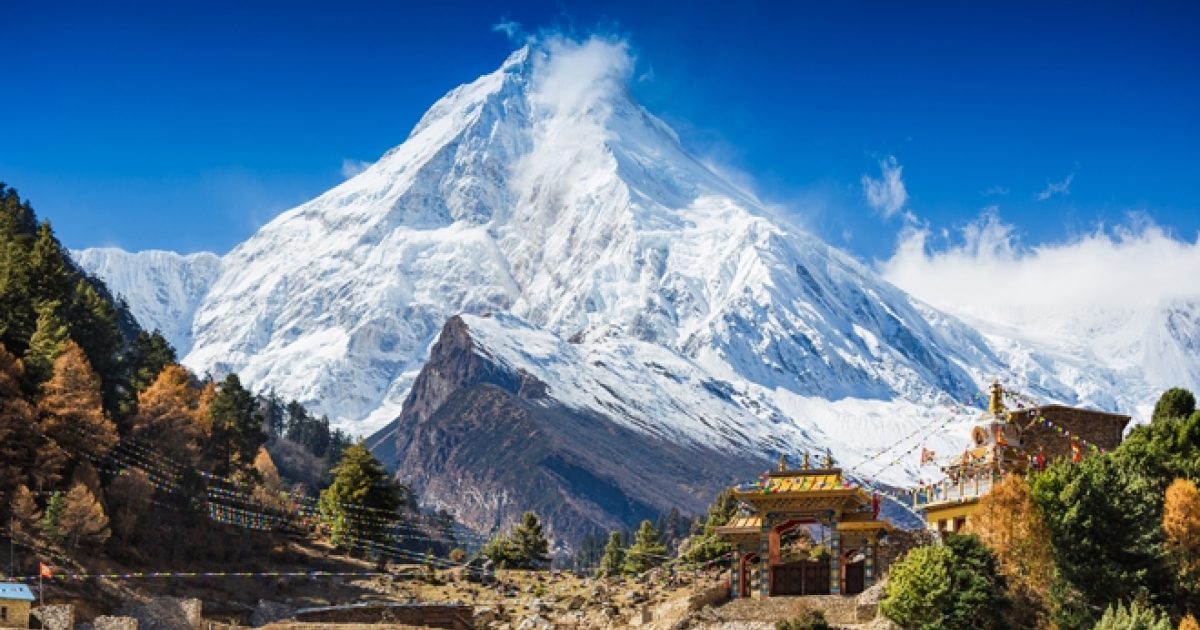
The Manaslu Circuit Trek itinerary circles Mount Manaslu (8,163m), the eighth-highest mountain on earth, crossing the dramatic Larkya La Pass at 5,106m before descending into the Annapurna region near Besisahar. Compared to the Everest and Annapurna trails, a Manaslu Circuit Trek itinerary takes you through a far quieter, restricted corridor of Nepal, where Tibetan-influenced villages, glacier-fed rivers, and genuinely wild terrain remain largely untouched by mass tourism. If you are searching for a Manaslu Circuit Trek itinerary that balances cultural immersion with serious high-altitude trekking, this is the route.

Manaslu Circuit Trek Itinerary Overview.
Before diving into the daily breakdown, here is the full Manaslu Circuit Trek itinerary at a glance. Use this table as your quick-reference summary, then read the detailed day-by-day section below for the practical information you will need on the trail.
| Detail | Information |
|---|---|
| Total Duration | 12 Days (Kathmandu to Kathmandu) |
| Trek Distance | Approximately 177 km |
| Highest Point | Larkya La Pass, 5,106 m |
| Trek Difficulty | Strenuous / Challenging |
| Starting Point | Machha Khola (869 m) |
| Ending Point | Dharapani (1,960 m) |
| Accommodation | Teahouses and lodges |
| Best Season | March–May, September–November |
| Permits Required | MCAP, RAP, ACAP |
| Minimum Group Size | 2 trekkers with a licensed guide |
Manaslu Circuit Trek Itinerary: Day-by-Day Breakdown.
Day 1: Kathmandu to Machha Khola (869 m).
Every Manaslu Circuit Trek itinerary begins with a scenic 7–8 hour drive from Kathmandu to Machha Khola, covering roughly 160 km along the Prithvi Highway before turning north through Arughat. The road becomes rougher past Arughat Bazaar, winding along the Budhi Gandaki River gorge past terraced hillsides and small Gurung and Magar settlements. You will catch your first glimpses of the forested foothills that lead toward the Manaslu Conservation Area, and by the time you reach Machha Khola in the late afternoon, the pace of rural Nepal has already replaced the noise of Kathmandu. Overnight in a teahouse at Machha Khola, where the walking portion of your Manaslu Circuit Trek itinerary officially begins the following morning.
Day 2: Machha Khola to Jagat (1,410 m).
Today’s 6–7 hour walk passes through Tatopani, home to a natural hot spring where trekkers can soak tired legs, before continuing through Doban and Yaruphant. The trail crosses the Budhi Gandaki multiple times on suspension bridges and climbs steadily through subtropical forest. Jagat is where trekking permits are formally checked for the first time, marking the official start of the restricted section of this Manaslu Circuit Trek itinerary.
Day 3: Jagat to Deng (1,860 m).
Covering roughly 20 km over 6–7 hours, this stage of the itinerary takes you through Salleri, Sirdibas, and Ghatta Khola. The valley narrows noticeably here, with the trail hugging steep cliffs above the river. Waterfalls and dense forest dominate the scenery, and you will notice the architecture and prayer flags shifting toward a more Tibetan Buddhist influence as you approach Deng, a sign that the character of the Manaslu Circuit Trek itinerary is beginning to change.
Day 4: Deng to Namrung (2,630 m).
This 5–6 hour stretch marks a significant transition point in the Manaslu Circuit Trek itinerary, as the trail enters the culturally rich Nubri Valley. You will pass through Rana, Bihi Phedi, and Ghap, crossing back and forth over the Budhi Gandaki. Namrung sits at a checkpoint where permits are checked again, and it is often the first place trekkers catch a glimpse of Siringi Himal in clear weather.
Day 5: Namrung to Lho (3,180 m).
A shorter 3–4 hour walking day, deliberately built into the Manaslu Circuit Trek itinerary to support acclimatization. The trail climbs gradually through pine and rhododendron forest, passing Lihi and Sho villages. Lho offers one of the best close-up views of Manaslu (8,163m) and Manaslu North on the entire trek, along with the impressive Ribung Gompa monastery perched above the village.

Day 6: Lho to Samagaon (3,530 m).
Another gentler 3–4 hour day that continues the acclimatization built into this Manaslu Circuit Trek itinerary. The trail passes through Shyala village, with continuous mountain views of Manaslu, Naike Peak, and Manaslu North accompanying you the entire way. Samagaon is a large Tibetan-influenced village and serves as the base for the acclimatization day that follows.
Day 7: Acclimatization Day in Samagaon.
Rather than a full rest day, this is a critical active-acclimatization stop in any well-designed Manaslu Circuit Trek itinerary. Most trekkers hike up to Manaslu Base Camp (around 4,800m) or Birendra Lake, a glacial lake just above the village, before returning to sleep at Samagaon’s lower altitude. This “climb high, sleep low” strategy significantly reduces altitude sickness risk before the higher stages ahead, and it is one of the two acclimatization days built into this Manaslu Circuit Trek itinerary.
Day 8: Samagaon to Samdo (3,860 m).
A short but steadily uphill 3–4 hour walk brings you to Samdo, the last significant village before the Larkya La Pass and just a few kilometers from the Tibetan border. The landscape turns increasingly arid and high-alpine, with juniper scrub replacing forest cover. Samdo is an important spot for a second night of acclimatization, and many trekkers extend their Manaslu Circuit Trek itinerary here with a short side hike toward the Tibet border viewpoint.
Day 9: Samdo to Dharamsala / Larkya Phedi (4,460 m).
This short 3–4 hour stage is intentionally light on distance to preserve energy for the pass crossing ahead. The trail crosses the Budhi Gandaki on a wooden bridge and climbs past ancient moraines with views of the Larkya Glacier. Dharamsala, also called Larkya Phedi, has very basic teahouse facilities, and an early dinner and early bedtime are standard practice on this stage of the Manaslu Circuit Trek itinerary.
Day 10: Dharamsala to Bimthang via Larkya La Pass (5,106 m).
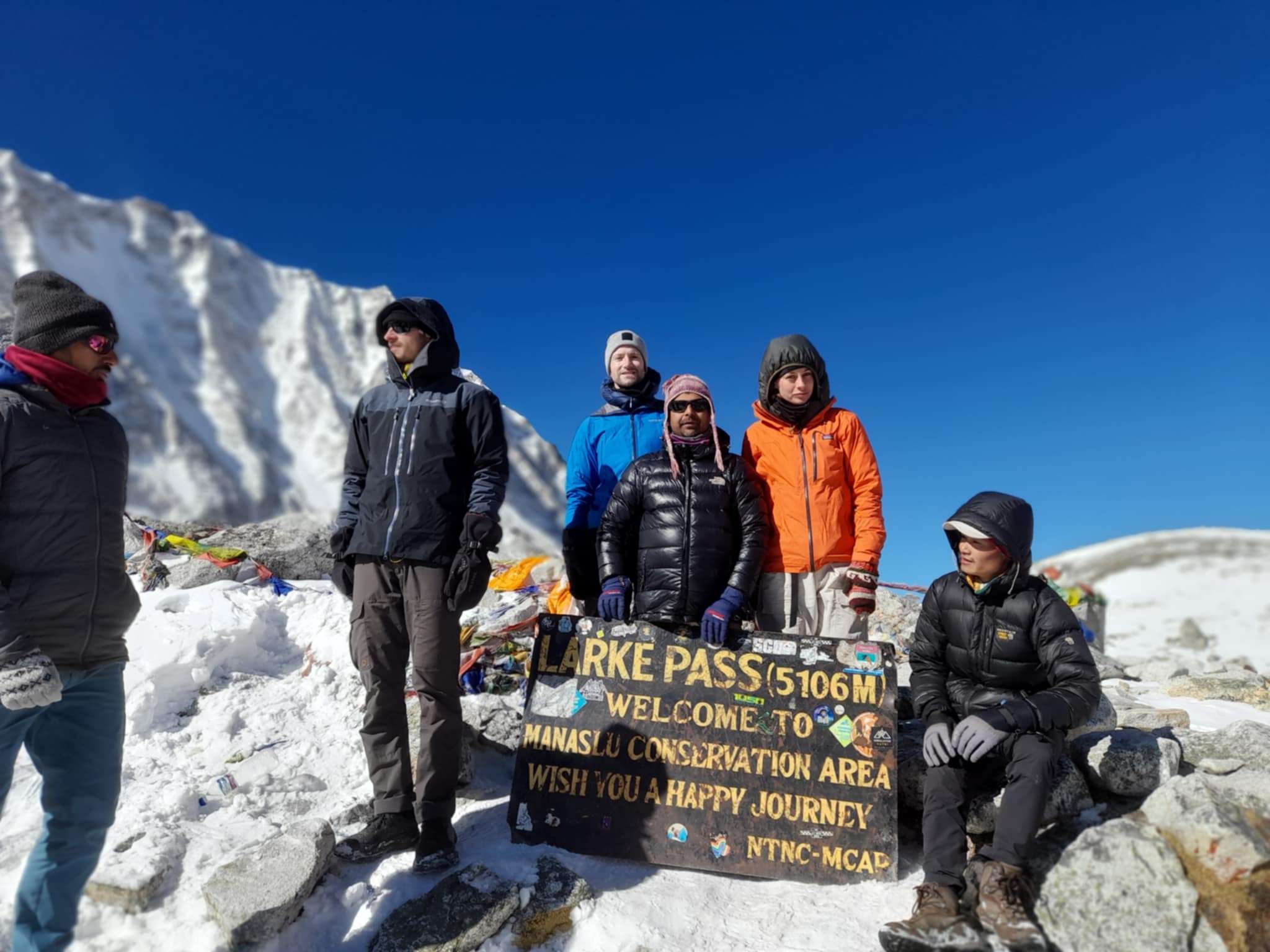
This is the most demanding day of the entire Manaslu Circuit Trek itinerary. Starting before dawn, trekkers climb roughly 650m over 4–5 hours to reach the summit of Larkya La Pass at 5,106m, where prayer flags mark the high point and, on clear days, views stretch across Himlung Himal, Cheo Himal, Kang Guru, and Annapurna II. The descent is long and steep, dropping nearly 1,400m over rocky moraine to reach Bimthang (3,720m), making this an 8–9 hour walking day and the true centerpiece of the Manaslu Circuit Trek itinerary.

Day 11: Bimthang to Tilije (2,300 m).
After the exertion of the pass, this 6-hour descending day feels like a reward. The trail drops through beautiful rhododendron, pine, and birch forest, and the Manaslu Circuit Trek itinerary now merges into landscapes similar to the Annapurna region. Waterfalls and mountain views of the Manaslu range accompany the descent toward Tilije.
Day 12: Tilije to Dharapani / Besisahar and same day to Kathmandu.
The final stage of the Manaslu Circuit Trek itinerary is typically covered by jeep or shared vehicle rather than on foot, taking around 9–10 hours along a rough but scenic road following the Marsyangdi River ‘/ Trishuli river.
Best Time to Follow This Manaslu Circuit Trek Itinerary.
Timing matters enormously when planning a Manaslu Circuit Trek itinerary, since the route crosses a high alpine pass that can become dangerous in poor conditions. The two prime windows are spring (March to May) and autumn (September to November).
| Season | Conditions | Suitability for This Itinerary |
|---|---|---|
| Spring (Mar–May) | Mild days, blooming rhododendron forests, occasional afternoon cloud | Excellent |
| Autumn (Sep–Nov) | Clearest skies, stable weather, cold nights at altitude | Excellent |
| Winter (Dec–Feb) | Heavy snow possible at Larkya La, extreme cold | Difficult, experienced trekkers only |
| Monsoon (Jun–Aug) | Heavy rain, leeches, landslide risk, poor visibility | Not recommended |
Autumn generally offers the clearest mountain visibility of the year, with crisp air and minimal rainfall following the monsoon, which is why most operators recommend booking a Manaslu Circuit Trek itinerary for September through November if your schedule is flexible. Spring runs a close second and adds the bonus of flowering forests at the lower elevations.
Permits Required for the Manaslu Circuit Trek Itinerary.
Because the route passes through a restricted border area, any Manaslu Circuit Trek itinerary requires three separate permits: the Manaslu Conservation Area Permit (MCAP), the Restricted Area Permit (RAP), and the Annapurna Conservation Area Permit (ACAP), since the trail exits into Annapurna territory near Dharapani. These permits can only be arranged through a registered trekking agency, and current regulations require trekkers to be accompanied by a licensed guide, with a minimum of two trekkers per group.
Permit fees vary by season, with higher rates typically applying during September to November, the peak window for a Manaslu Circuit Trek itinerary. You can verify current regulations directly through the Department of Tourism, Nepal and the Nepal Tourism Board before finalizing your booking.
Manaslu Circuit Trek Itinerary: Difficulty and Fitness Preparation.
This is a strenuous, high-altitude teahouse trek rather than a technical climb, but the combination of long daily walking hours, remote terrain, and the 5,106m pass crossing make prior trekking experience strongly recommended for anyone attempting this Manaslu Circuit Trek itinerary. Good cardiovascular fitness, several months of pre-trek training, and a realistic understanding of altitude sickness symptoms are essential preparation.
We recommend building a training plan at least eight weeks before departure that includes hiking with a loaded backpack, stair climbing, and long cardio sessions three to four times per week. Trekkers who arrive fit generally enjoy the Manaslu Circuit Trek itinerary far more than those who try to build fitness on the trail itself. Our guides, listed with the Trekking Agencies’ Association of Nepal (TAAN), are trained in altitude management and carry appropriate emergency equipment on every departure of this itinerary.
Altitude Sickness and Health on the Manaslu Circuit Trek Itinerary.
Because this Manaslu Circuit Trek itinerary climbs from 710m to 5,106m, altitude sickness is a genuine risk that every trekker needs to take seriously. The two built-in acclimatization days at Samagaon and Samdo exist specifically to reduce this risk, following the standard “climb high, sleep low” principle used across high-altitude trekking in Nepal.
Common symptoms of mild altitude sickness include headache, nausea, and fatigue, and these should never be ignored. Our guides monitor group members daily above 3,000m, and the itinerary includes built-in rest points precisely so that early symptoms can be addressed before they progress. Travel insurance that specifically covers high-altitude trekking and helicopter evacuation is a mandatory part of preparing for any Manaslu Circuit Trek itinerary.
What to Pack for This Manaslu Circuit Trek Itinerary.
Layering is critical on this route, since a Manaslu Circuit Trek itinerary moves from subtropical river valleys at 700m to alpine conditions above 5,000m within the same trip.
| Category | Items |
|---|---|
| Sleeping | Four-season sleeping bag (-15°C to -20°C rated) |
| Outer Layers | Insulated down jacket, waterproof shell jacket and pants |
| Base Layers | Thermal tops and bottoms, moisture-wicking t-shirts |
| Footwear | Broken-in waterproof trekking boots, camp shoes, wool socks |
| Accessories | Trekking poles, sun hat, warm hat, gloves, sunglasses with UV protection |
| Health | Personal first-aid kit, water purification tablets or filter, diamox (consult a doctor) |
| Electronics | Power bank, headlamp with spare batteries, camera |
Because teahouses above Samagaon have limited or paid charging facilities, a high-capacity power bank is one of the most useful items you can bring on a Manaslu Circuit Trek itinerary.

Food and Accommodation Along the Itinerary.
Every stop on this Manaslu Circuit Trek itinerary offers teahouse accommodation, ranging from simple twin rooms at lower elevations to very basic shared facilities near Dharamsala and Samdo. Menus typically include dal bhat, noodle soups, momos, porridge, and basic pasta dishes, with prices increasing gradually the further you travel from the roadhead. Hot showers, wifi, and charging are usually available for a small fee at lower elevations but become scarce or unavailable above Samagaon, which is worth planning for when budgeting your Manaslu Circuit Trek itinerary.
Guides and Porters for This Itinerary.
A licensed guide is legally required for this route, and most trekkers also hire a porter to carry the bulk of their gear, which makes the daily walking on a Manaslu Circuit Trek itinerary considerably more manageable. Guides handle permit checks, route-finding, accommodation arrangements, and altitude monitoring, while porters typically carry up to 20kg between two trekkers. Hiring local staff also directly supports the communities along the route that the Manaslu Circuit Trek itinerary passes through.
Manaslu Circuit Trek Itinerary Cost.
Total trip costs generally depend on group size, season, and the level of comfort selected, and typically include permits, guide and porter fees, teahouse accommodation, meals on trek, and ground transportation to and from the trailhead.
| Cost Component | Approximate Range (USD) |
|---|---|
| MCAP + RAP + ACAP Permits | $110–$160 depending on season |
| Guide (per day) | $25–$35 |
| Porter (per day) | $18–$25 |
| Teahouse + meals (per day) | $25–$40, increasing at higher elevation |
| Kathmandu– Machha Khola – Besisahar transport | $220–$300 depending on vehicle type |
Because permit costs are fixed by the government and vary by season, it is worth requesting a detailed, itemized cost breakdown before booking any Manaslu Circuit Trek itinerary. For an accurate, up-to-date quote tailored to your travel dates, visit our Manaslu Circuit Trek package page.
Responsible Trekking on the Manaslu Circuit.
The Manaslu Conservation Area protects fragile alpine ecosystems and traditional Tibetan Buddhist communities, and every trekker following a Manaslu Circuit Trek itinerary shares responsibility for minimizing their impact. Carry out non-biodegradable waste, avoid single-use plastic where possible, respect monastery photography rules, and support local teahouses and guides rather than bringing excessive outside supplies. Small choices made throughout the trek help preserve the very qualities that make this itinerary worth doing in the first place.
How to Book This Manaslu Circuit Trek Itinerary.
Because permits require a registered agency and a minimum group size of two, booking your Manaslu Circuit Trek itinerary at least 2–3 months in advance of your preferred spring or autumn dates is strongly recommended, particularly for October and April departures when demand is highest. Our team handles permit applications, guide and porter arrangements, and all logistics between Kathmandu, Soti Khola, and Besisahar, so you can focus on preparation rather than paperwork.
Frequently Asked Questions.
What is the best Manaslu Circuit Trek itinerary length?
Most trekkers follow a 12 days Manaslu Circuit Trek itinerary from Kathmandu back to Kathmandu, which allows for two dedicated acclimatization stops before the Larkya La Pass crossing.
How hard is the Larkya La Pass crossing?
It is the most physically demanding single day of the trek, involving an early start, roughly 650m of climbing to 5,106m, and a long, steep descent to Bimthang, totaling 8–9 hours of walking within the Manaslu Circuit Trek itinerary.
Do I need a guide for the Manaslu Circuit Trek itinerary?
Yes. Current regulations require all trekkers on this restricted route to be accompanied by a licensed guide, and permits cannot be issued to solo travelers attempting this itinerary.
When should I book my Manaslu Circuit Trek itinerary for 2026/2027?
For the popular spring and autumn seasons, booking 2–3 months in advance is recommended to secure permits and guide availability, particularly for October and April departures.
Can beginners complete this Manaslu Circuit Trek itinerary?
Trekkers with no prior high-altitude experience can complete this itinerary with adequate training, but a realistic fitness base and proper acclimatization are essential given the demands of the Larkya La Pass.
Final Thoughts on the Manaslu Circuit Trek Itinerary
Following a well-paced Manaslu Circuit Trek itinerary, with proper acclimatization days built in around Samagaon and Samdo, is the key to both safety and enjoyment on this remarkable route. From the subtropical trailhead at Soti Khola to the high alpine drama of Larkya La Pass and the gentler descent to Besisahar, this itinerary offers one of the most complete cross-sections of Nepal’s landscapes and cultures available on any single trail.
Ready to start planning? Contact our team for a customized Manaslu Circuit Trek itinerary and current 2026/2027 departure dates, or browse our Annapurna Circuit Trek and Langtang Valley Trek pages if you are comparing routes before you decide.


