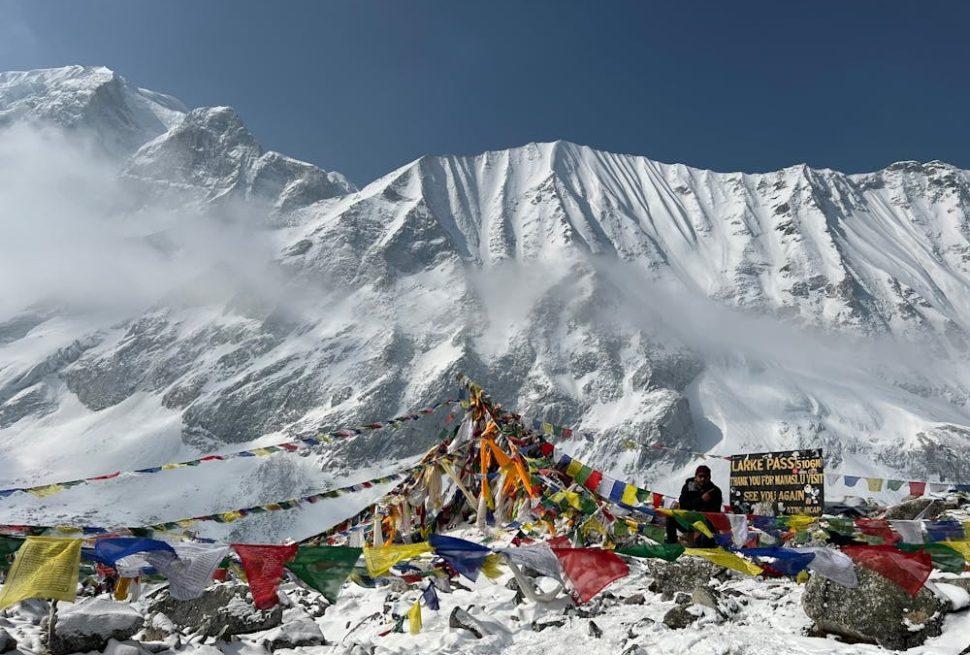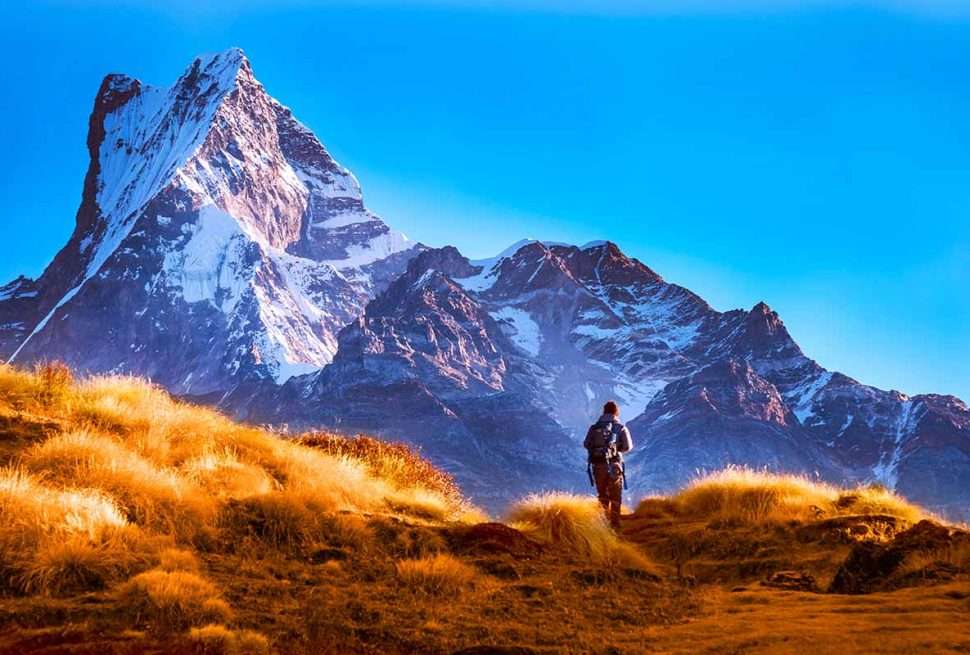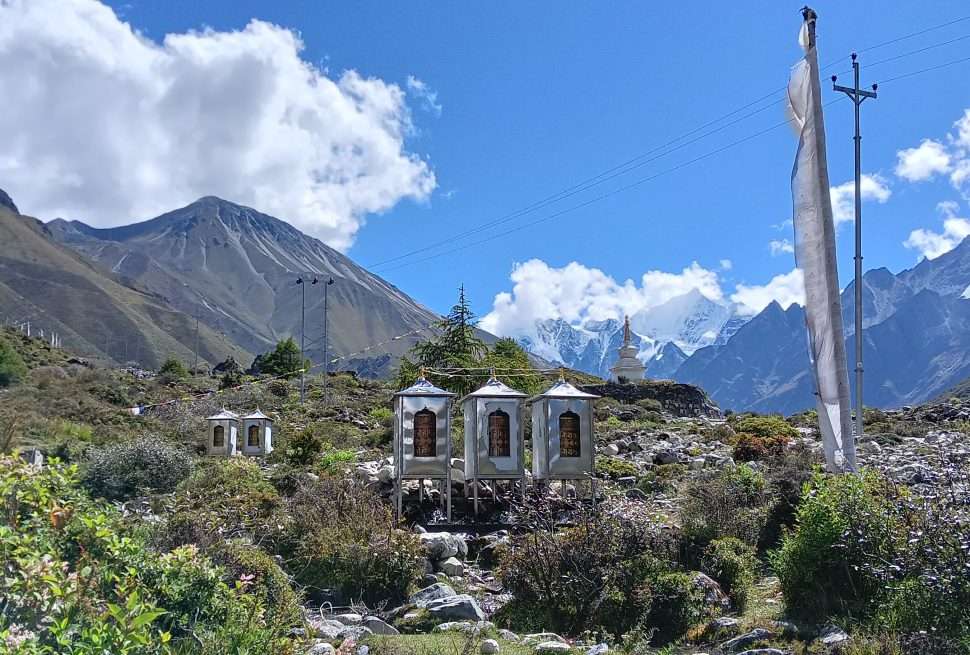

If you are planning a trek in Nepal this year, understanding the Nepal trekking permit 2026 rules is the most important preparation step you can take. The permit system changed more between 2023 and 2026 than in the previous decade — and trekkers using outdated information are being turned back at checkpoints before their adventure even begins.
At The Nepal Trekking Company, we handle the Nepal trekking permit 2026 process for every client we work with. In this complete guide, we break down exactly what has changed, what each permit costs by region, and how to make sure you are fully compliant before you set foot on the trail.
Here are the three most important changes at a glance:
- The TIMS card has been discontinued in the Everest/Khumbu region and is being phased out in Annapurna
- A mandatory licensed guide rule is now strictly enforced at all major trekking checkpoints across Nepal
- The old paper TIMS card has been replaced by a digital e-TIMS system with QR-code scanning
Read on for the full, region-by-region breakdown.
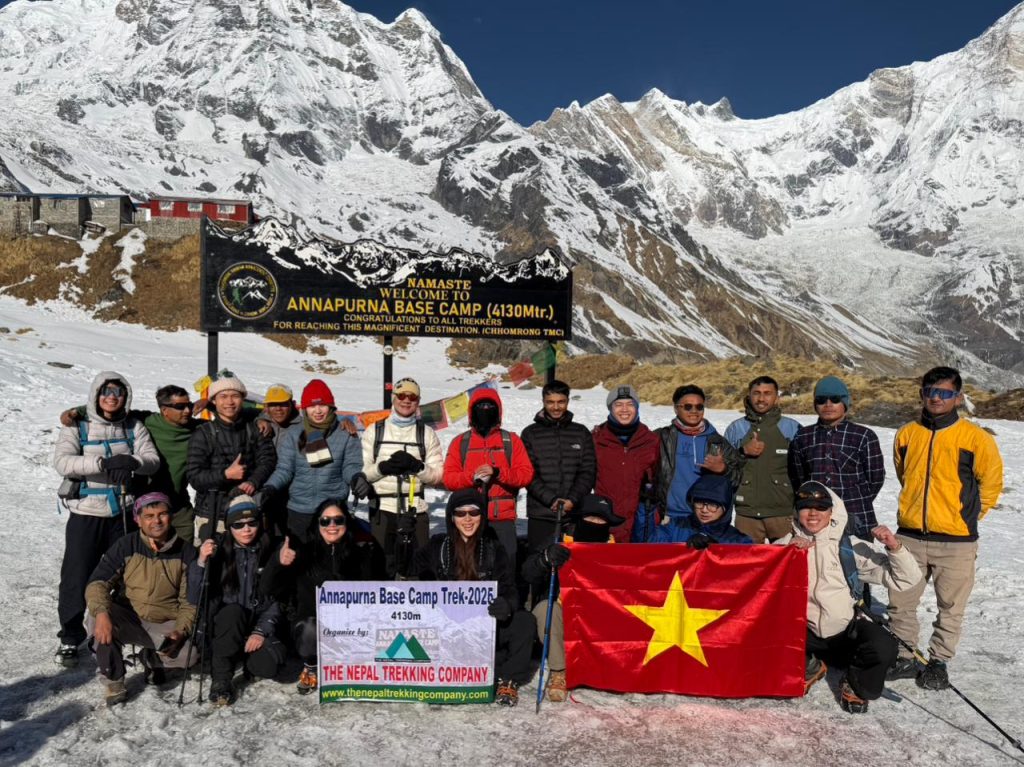
Table of Contents
1. Why Nepal Updated Its Trekking Permit Rules in 2026 {#why-nepal-updated}
Nepal’s Himalayas welcome hundreds of thousands of foreign trekkers every year. For much of trekking history, the Nepal trekking permit system was relatively simple — trekkers picked up a TIMS card in Kathmandu, paid a conservation area fee, and largely managed their own safety on the trail.
That approach led to serious problems. A growing number of solo trekker deaths from altitude sickness, disappearances on remote routes, and costly helicopter rescue operations placed an unsustainable burden on local emergency services. Between 2015 and 2025, search and rescue operations for unguided foreign trekkers increased by nearly 40%.
The Government of Nepal responded with sweeping regulatory changes starting in April 2023, with full enforcement now in place across all major trekking regions in 2026. The goals of the updated Nepal trekking permit 2026 system are:
- Trekker safety — ensuring every foreign trekker has a trained, licensed professional to recognise and respond to altitude emergencies
- Local employment — creating guaranteed income for Nepal’s thousands of licensed guides and porters
- Environmental conservation — directing permit fees toward trail maintenance, waste management, and protection of fragile high-altitude ecosystems
By 2026, these rules are actively enforced — not suggested. Checkpoints on the Everest Base Camp route, the Annapurna Circuit, Langtang Valley, and the Manaslu Circuit verify guide credentials and permit documentation on the spot. Trekkers who arrive without the correct permits are turned back without exception.
If you are using a blog post from before 2024 to plan your trek, the permit information it contains may no longer be accurate. This guide reflects conditions on the ground in 2026.
2. Mandatory Licensed Guide Rule — The Most Important Nepal Trekking Permit 2026 Change {#mandatory-guide}.
The single most significant aspect of the Nepal trekking permit 2026 system is the mandatory licensed guide rule. Here is what it means in plain terms:
Since April 1, 2023 — and strictly enforced in 2026 — all foreign nationals trekking in Nepal’s national parks and conservation areas must be accompanied by a licensed guide from a TAAN-registered trekking agency. Solo, unguided trekking is banned on all major routes.
This mandatory guide requirement applies to every popular trekking destination in Nepal, including:
- Everest Base Camp Trek (Khumbu region)
- Annapurna Circuit Trek
- Annapurna Base Camp Trek
- Langtang Valley Trek
- Manaslu Circuit Trek
- Poon Hill / Ghorepani Trek
- All restricted area treks — Upper Mustang, Kanchenjunga, Dolpo, Tsum Valley, Nar-Phu
What happens if you try to trek without a guide? Checkpoint officers actively verify guide credentials at entry points throughout every major trekking region. Trekkers found without a licensed guide have their permits voided and are turned back at the checkpoint. Repeated violations can result in fines and blacklisting from future Nepal trekking permit 2026 applications.
Why trekking with a licensed guide genuinely improves your experience.
Beyond legal compliance, a government-licensed guide provides real, practical value on every trek:
Altitude sickness detection: Licensed guides are trained to recognise the early warning signs of Acute Mountain Sickness (AMS), High Altitude Cerebral Edema (HACE), and High Altitude Pulmonary Edema (HAPE) — the leading causes of trekking deaths in Nepal. Early identification saves lives.
Trail expertise and local knowledge: Your guide understands current trail conditions, seasonal weather windows, emergency protocols, teahouse availability at every stop, and the cultural context of the communities you pass through. This knowledge is impossible to replicate from a guidebook.
Emergency coordination: In a rescue situation, your guide is your direct link to helicopter services, local emergency teams, and the rescue coordination infrastructure that Nepal’s trekking industry has built over decades.
Economic contribution: Every guide and porter employed through the Nepal trekking permit system supports a family in a mountain community. Booking through a registered, TAAN-affiliated agency ensures fair wages and proper working conditions.
All guides working with The Nepal Trekking Company are government-licensed and TAAN-registered, with extensive experience across all of Nepal’s major trekking regions. Contact us to start planning your guided 2026 trek →
3. TIMS Card 2026 — What Changed by Region {#tims-2026}.
The TIMS card (Trekkers’ Information Management System) has been part of Nepal trekking permit requirements for many years. It functions as a safety registration document, recording your name, nationality, trek route, guide details, and emergency contact so that authorities can locate you quickly if something goes wrong.
In 2026, the TIMS situation varies significantly by region. Much of the conflicting information you will find online comes from blogs that have not kept up with the recent changes. Here is the accurate, region-by-region picture.
Everest / Khumbu region — TIMS fully discontinued.
The TIMS card is no longer required anywhere in the Khumbu region. It has been completely replaced by the Khumbu Pasang Lhamu Rural Municipality permit (NPR 2,000–3,000), which is verified at Monjo — the checkpoint just before Namche Bazaar. This local fee funds community infrastructure, including trail maintenance, waste management, and essential services in Khumbu villages.
Trekkers in this region now receive a digital Trek Card with a QR code for checkpoint scanning, replacing the old laminated paper card entirely.
Important: If any blog or booking platform tells you that a TIMS card is required for your Everest Base Camp Nepal trekking permit 2026, that information is outdated. Do not pay for an unnecessary card.
Annapurna region — TIMS being phased out.
TIMS is no longer actively enforced at Annapurna checkpoints as of 2026. Checkpoints on the Annapurna Circuit and Annapurna Base Camp routes now verify the ACAP (Annapurna Conservation Area Permit). Some agencies still recommend obtaining e-TIMS as a precaution since enforcement can vary by specific checkpoint — your agency will confirm the current situation for your route and travel dates.

Langtang, Manaslu, and far-western Nepal — TIMS still required.
The Nepal trekking permit 2026 requirement for TIMS remains in effect across the Langtang region, the Manaslu Circuit, and in far-western Nepal, including the Rara Lake area. In all these regions, the old paper card has been replaced by the digital e-TIMS system described below.
The new digital e-TIMS system — how it works.
Wherever e-TIMS is still required as part of your Nepal trekking permit 2026, the old laminated paper card has been replaced by a fully digital system:
- Issued through registered trekking agencies only — individual trekkers can no longer obtain TIMS directly from the NTB office
- Takes the form of a QR code linked to your passport number, trek route, and guide credentials
- Checkpoint officers scan the QR code for real-time verification
- Enables live location tracking of trekkers for faster emergency response
- The old Green TIMS card for independent solo trekkers no longer exists
This last point matters: since the Green TIMS card has been discontinued, there is no longer a legal pathway to trek Nepal’s major routes independently without an agency. The e-TIMS is only issued to trekkers who are part of a registered, guided group.
4. Nepal Trekking Permit 2026 Fees — Complete Region-by-Region Guide {#permit-fees-2026}.
Nepal does not have a single unified trekking permit. Every region has its own combination of national park permits, conservation area permits, local municipality fees, and — for restricted zones — restricted area permits. The following tables give you an accurate picture of Nepal trekking permit 2026 costs across all major routes.
Note: All fees below are indicative for the 2026 season and subject to change. Always confirm current rates with your registered trekking agency or directly with the Nepal Tourism Board before departure.
Everest Base Camp Trek — Nepal trekking permit 2026 fees.
| Permit | Fee (foreign nationals) | Notes |
|---|---|---|
| Sagarmatha National Park entry | NPR 3,000 (~USD 22) | Required for all EBC trekkers |
| Khumbu Pasang Lhamu Municipality permit | NPR 3,000 (~USD 22) | Replaces TIMS in Khumbu region |
| Total approx. | USD 37–44 per person | Guide/porter fees not included |
TIMS card: Not required in the Khumbu region for Nepal trekking permit 2026.
See our complete Everest Base Camp Trek itinerary and packages →

Annapurna Circuit Trek and Annapurna Base Camp — Nepal trekking permit 2026 fees.
| Permit | Fee (foreign nationals) | Notes |
|---|---|---|
| ACAP (Annapurna Conservation Area Permit) | NPR 3,000 (~USD 22) | Mandatory for all Annapurna treks |
| e-TIMS | NPR 2,000 (~USD 15) | Confirm with agency — enforcement transitioning |
| Total approx. | USD 22–37 per person | Guide/porter fees not included |
Explore our Annapurna Circuit Trek and Annapurna Base Camp packages →
Langtang Valley Trek — Nepal trekking permit 2026 fees.
| Permit | Fee (foreign nationals) | Notes |
|---|---|---|
| Langtang National Park permit | NPR 3,000 (~USD 22) | Required |
| e-TIMS | NPR 2,000 (~USD 15) | Still required in Langtang |
| Total approx. | USD 29–37 per person | Guide/porter fees not included |
Explore our Langtang region treks →
Manaslu Circuit Trek — Nepal trekking permit 2026 fees.
The Manaslu Circuit requires four separate permits, making it one of the most permit-intensive treks in Nepal.
| Permit | Fee (peak season) | Notes |
|---|---|---|
| Restricted Area Permit (RAP) | USD 100 first 7 days, USD 15/day after | USD 75/week off-peak |
| Manaslu Conservation Area Permit (MCAP) | USD 15–22 | Varies peak/off-peak |
| ACAP | USD 22 | Required if route continues into Dharapani |
| Chumnubri Rural Municipality fee | NPR 2,000 (~USD 15) | Local trail maintenance levy |
| Total approx. | USD 152–196 per person (peak) | Guide/porter fees not included |
Explore our Manaslu Circuit Trek packages →
Upper Mustang Trek — Nepal trekking permit 2026 fees (major change).
| Permit | Fee | Notes |
|---|---|---|
| Restricted Area Permit (RAP) | USD 50 per day | Old flat USD 500/10-day fee scrapped in 2026 |
| 7-day trek total | USD 350 | Previously cost USD 500 minimum |
The new flexible per-day pricing makes Upper Mustang significantly more accessible — particularly for shorter itineraries of 7–9 days.
Explore our Upper Mustang and Mustang region treks →

Other restricted areas — Kanchenjunga, Dolpo, Tsum Valley, Nar-Phu.
Restricted Area Permits (RAP) are required for all these regions, with fees ranging from USD 10 to USD 100 per week depending on location and season. TIMS is generally not required in restricted areas, as the RAP includes trekker registration. All RAP applications must go through a registered trekking agency.
Explore our Kanchenjunga region treks →
5. Restricted Area Permits — The Major March 2026 Solo Update {#restricted-area-2026}.
One of the most significant Nepal trekking permit 2026 developments came in late March, when Nepal’s Department of Immigration made a policy change that directly affects solo travellers.
On March 22, 2026, Nepal’s DoI officially removed the two-person minimum for restricted area permit applications. Solo foreign trekkers can now apply for restricted area permits individually — without needing to find a second trekking partner.
What this means in practice:
- You can now apply as a sole applicant for permits to Upper Mustang, Manaslu, Kanchenjunga, Dolpo, Tsum Valley, and Nar-Phu
- A licensed guide and a TAAN-registered agency are still legally mandatory in all restricted areas — this has not changed
- “Solo” refers to the permit application, not unaccompanied trekking
- A maximum of 7 trekkers per licensed guide has been introduced under the 2026 rules
This change closes a long-running loophole where trekkers registered as a group of two but travelled independently on the trail. The new system formalises solo access while keeping the guide requirement fully in place.
How to apply for a restricted area Nepal trekking permit 2026:
- Contact a TAAN-registered agency (such as The Nepal Trekking Company) to begin your permit application
- Your agency submits the application through Nepal’s DoI portal at nepaliport.immigration.gov.np, generating a Submission ID you can use to track progress from your home country
- Collect your physical permit in person at the Department of Immigration, Maitighar, Kathmandu — processing takes 2–4 hours in peak season
- Payment is accepted in USD or NPR at the DoI office
Always carry physical copies of all permits in restricted areas. Digital connectivity in remote zones is unreliable, and checkpoint officers do not accept mobile screenshots as substitutes for official documents.
6. New Travel Insurance Requirement in 2026 {#insurance-2026}.
We strongly recommend travel insurance as part of responsible Nepal trekking permit 2026 preparation. In 2026, it became a verified requirement at both permit offices and major trail checkpoints.
Your insurance policy must specifically cover:
- Emergency helicopter evacuation to altitudes of at least 4,000–6,000 metres
- Medical treatment for altitude-related conditions, including AMS, HACE, and HAPE
- Trip cancellation and repatriation costs
Reputable trekking agencies — including The Nepal Trekking Company — will request a copy of your insurance certificate before your trek commences. Permit offices may also verify coverage at the point of application.
Standard travel insurance frequently excludes high-altitude activities. When comparing policies, look specifically for the phrases “high-altitude trekking coverage” and “helicopter rescue included.” If those phrases are not present, the policy likely does not meet Nepal’s 2026 requirements.
See our Travel Insurance information page for what to look for in a policy →
7. How to Get Your Nepal Trekking Permit 2026 — Step by Step {#how-to-get-2026}.
Option 1 — Book through a registered trekking agency (strongly recommended).
For most trekkers, booking through a registered agency is by far the simplest approach to obtaining your Nepal trekking permit 2026. When you trek with The Nepal Trekking Company, every permit is arranged on your behalf from start to finish.
What you provide:
- Passport copy (minimum 6 months remaining validity)
- Two passport-size photographs
- Your chosen trek route and travel dates
- Proof of travel insurance covering high-altitude evacuation
What your agency handles:
- Applications for all required national park and conservation area permits
- e-TIMS digital registration where applicable
- Restricted area permit applications via the DoI online portal, with Submission ID tracking
- In-person permit collection at DoI Maitighar, Kathmandu
- Permit fee payments and documentation for all checkpoints
The Nepal trekking permit 2026 process is completely handled for you when you book with TNTC — contact us to start planning →
Option 2 — Obtain permits independently in Kathmandu or Pokhara.
If you are not using a registered agency for your full trek (note: a licensed guide is still legally required on all major routes regardless of how you obtain permits), the main permit offices are:
- Nepal Tourism Board (NTB), Pradarshani Marg, Kathmandu (near Bhrikutimandap) — issues national park permits and e-TIMS. Arrive early in the morning during peak season (March–May, October–November) as queues build quickly after 11am.
- TAAN office, Damside, Pokhara — convenient for Annapurna region trekkers starting from Pokhara
- Department of Immigration, Maitighar, Kathmandu — restricted area permits only, and accessible only through a registered agency; individual applications are not accepted here
8. Old Rules vs New Rules — Nepal Trekking Permit 2026 Quick Comparison {#comparison-2026}.
| Regulation | Before 2024 | Nepal trekking permit 2026 |
|---|---|---|
| Solo trekking | Permitted on many routes | Banned — licensed guide mandatory on all major routes |
| TIMS card (Everest/Khumbu) | Required | Fully discontinued — replaced by the Khumbu Municipality permit |
| TIMS card (Annapurna) | Required | Being phased out — ACAP only verified at most checkpoints |
| TIMS card (Langtang/Manaslu) | Required — paper card | Required — digital e-TIMS with QR code |
| TIMS for independent trekkers | Green card available at NTB | No longer exists — agency-issued only |
| Restricted area solo permit | Minimum 2 foreign trekkers required | Solo applications now allowed (March 2026) |
| Upper Mustang RAP fee | USD 500 flat rate for the first 10 days | USD 50 per day — flexible, shorter treks are cheaper |
| Travel insurance | Strongly recommended | Verified at permit offices and major checkpoints |
| Checkpoint enforcement | Inconsistent by region | Strict — guide credentials are actively checked everywhere |
| TIMS format | Laminated paper card | Digital e-TIMS with QR code scanning |
9. Frequently Asked Questions About Nepal Trekking Permit 2026 {#faq-2026}.
Is the TIMS card still required for Nepal trekking permit 2026?
It depends on your specific region. The TIMS card has been fully discontinued in the Everest/Khumbu region, replaced by a local municipality permit. In Annapurna, enforcement is effectively being phased out at most checkpoints. In Langtang, Manaslu, and far-western Nepal, the e-TIMS digital system is still required. Your registered trekking agency will confirm exactly what applies to your route and departure dates.
Can I still trek solo in Nepal in 2026?
Unguided solo trekking is banned on all major routes within Nepal’s national parks and conservation areas. All foreign trekkers must be accompanied by a licensed guide from a TAAN-registered agency. However, as of March 22, 2026, solo trekkers can now apply for restricted area trekking permits as individual applicants — you no longer need a second trekking partner. The guide requirement in all restricted areas remains fully in force.

How much does a Nepal trekking permit 2026 cost?
Permit costs vary by region. The Everest Base Camp permit package is approximately USD 37–44 per person. Annapurna Circuit or Base Camp permits are around USD 22–37. The Manaslu Circuit can reach USD 152–196 in peak season due to its multiple required permits. Upper Mustang is now USD 50 per day under the 2026 fee structure. All costs exclude licensed guide and porter fees.
Where do I get my Nepal trekking permit 2026?
If booking with a registered agency such as The Nepal Trekking Company, all permits are arranged for you. If applying independently, national park and conservation area permits are available at the Nepal Tourism Board office in Kathmandu or the TAAN office in Pokhara. Restricted area permits must be applied for through a registered agency at the Department of Immigration, Maitighar, Kathmandu.
Do I need travel insurance for my Nepal trekking permit 2026?
Yes — and insurance is now actively verified. Your policy must cover emergency helicopter evacuation to high altitude and medical treatment for altitude-related conditions. Your trekking agency will require proof of insurance before your trek begins. Standard travel insurance often excludes high-altitude activities — always confirm your policy covers trekking above 4,000 metres before purchasing.
What is the digital e-TIMS and is it part of the Nepal trekking permit 2026 system?
Yes. The e-TIMS is the digital replacement for the old laminated paper TIMS card. It forms part of the Nepal trekking permit 2026 documentation in regions where TIMS is still required (Langtang, Manaslu, far-western Nepal). It takes the form of a QR code linked to your passport number, trek route, and guide details. Checkpoint officers scan the code for real-time verification. The old Green TIMS card for independent trekkers no longer exists — all e-TIMS is issued through registered agencies only.
What happens if I trek without the correct Nepal trekking permit 2026?
Checkpoint officers will turn you back, and your permits will be voided. Depending on the severity, you may face a fine or be blacklisted from future Nepal trekking permit applications. In restricted areas, consequences are stricter given the sensitive border locations involved. There are no exceptions to the guide rule or permit requirements on regulated trails.
Get Your Nepal Trekking Permit 2026 Sorted — We Handle Everything.
Understanding your Nepal trekking permit 2026 requirements is important, but managing the paperwork does not need to be your job. The Nepal Trekking Company is a TAAN-registered, government-licensed trekking agency with extensive experience navigating every permit office, checkpoint, and regulation update in Nepal.
When you book with us, we take care of every element of your Nepal trekking permit 2026 — national park fees, conservation area permits, restricted area applications, municipality levies, e-TIMS registration, and insurance verification — so you arrive at the trailhead completely prepared and fully compliant.
Contact The Nepal Trekking Company to plan your 2026 Himalayan trek →
Explore our most popular treks:
- Everest Base Camp Trek →
- Annapurna Circuit Trek →
- Annapurna Base Camp Trek →
- Manaslu Circuit Trek →
- Upper Mustang Trek →
- Langtang Valley Trek →
Last updated: May 2026 by The Nepal Trekking Company. Nepal trekking permit 2026 rules are reviewed by the government regularly — always confirm the latest requirements with your registered agency or the Nepal Tourism Board before departure.